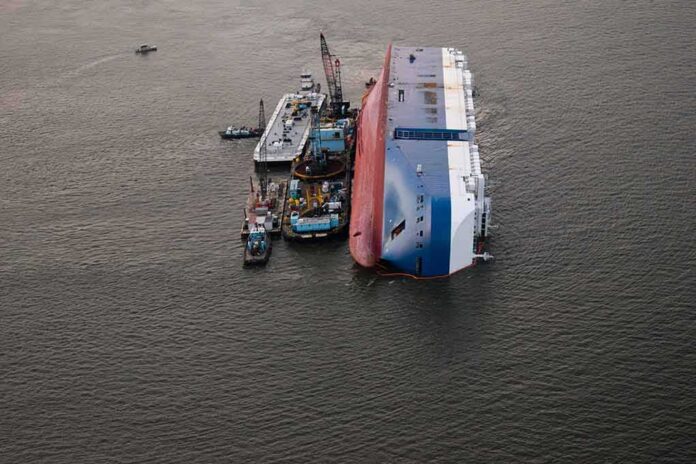
A packed Indonesian passenger ship vanished in a stormy Java Sea, leaving about 140 people unaccounted for as rescuers race the clock.
Story Snapshot
- Officials say 243 people were aboard the Virgo Transport 8; 103 have been evacuated, and one death is confirmed.
- The ship lost contact early Sunday during bad weather on a route from Surabaya to Banjarmasin.
- Indonesia’s search and rescue agency launched a large operation; a port emergency post now coordinates families and responders.
- Past data show passenger ship disasters in Indonesia often turn deadly during transit, with weather only one of several drivers.
Rescuers Search After Loss of Contact in Storm
Indonesia’s search and rescue agency reported that the Virgo Transport 8 lost contact early Sunday during rough weather in the Java Sea. The passenger ship had departed Surabaya for Banjarmasin with 243 people on board, according to officials. Rescuers said 103 people were evacuated and one person died, while about 140 remain missing as teams continue looking for survivors. Bad weather complicated the search in busy waters between Java and Kalimantan, where traffic and currents can slow response times.
Officials described a multi-agency push to find the missing. The National Search and Rescue Agency mobilized vessels and crews, and local units supported evacuations from the scene. Authorities emphasized that numbers could change as more people are found. Early tallies from local media and government statements matched on key details: the ship’s route, the storm, the rescue count, and the confirmed fatality. The focus remained on rapid recovery and family support while tracking reports from ships in the area.
Route, Weather, and Coordination Efforts
The Virgo Transport 8 sailed a well-used route between East Java and South Kalimantan when it ran into harsh conditions, prompting the loss of contact. Indonesia’s rescue leaders said they launched a major search once the alert came in, deploying resources along the probable drift path. Part of Banjarmasin Port was set up as an emergency coordination center to bring together search officials, port managers, navigation teams, the ship’s agent, and families seeking updates on loved ones.
Rescue planners weighed wind, waves, and currents to shape search grids and guide ship and aircraft sweeps. The window to find survivors in the water narrowed as hours passed, so teams prioritized areas where currents could carry life rafts or debris. Authorities urged commercial vessels along the route to stay alert for people in the water and to report sightings quickly. Families gathered at the port center received briefings as identities of the rescued were confirmed.
Why These Disasters Keep Happening
Indonesia has faced a long history of deadly passenger ship accidents, especially during transit. Studies show that sinkings and capsizes account for a large share of severe outcomes, with many deaths and people missing at sea. Research highlights that disasters often stem from several causes at once, including human error, mechanical issues, and rough weather. That pattern suggests safety depends on stronger standards in training, maintenance, and route decisions, not only on forecasts.
Search underway for about 130 people after Indonesian passenger ship overturns https://t.co/fqkOPfXziA
— Augusto Amato (@augusto_amato) September 13, 2026
Government data and prior advisories underscore that prevention during passage is critical. Analysts have found that the most catastrophic accidents often occur while ships are underway, where a small failure can grow fast. This reality points to better oversight, stricter loading controls, and clear go or no-go choices when storms build. Each tragedy also tests how well agencies coordinate under stress. Families want answers, but they also want proof that lessons turn into real change at sea.
Sources:
youtube.com, theweek.in, en.antaranews.com, today.line.me, cnn.com, jakartaglobe.id, garuda.kemdiktisaintek.go.id