
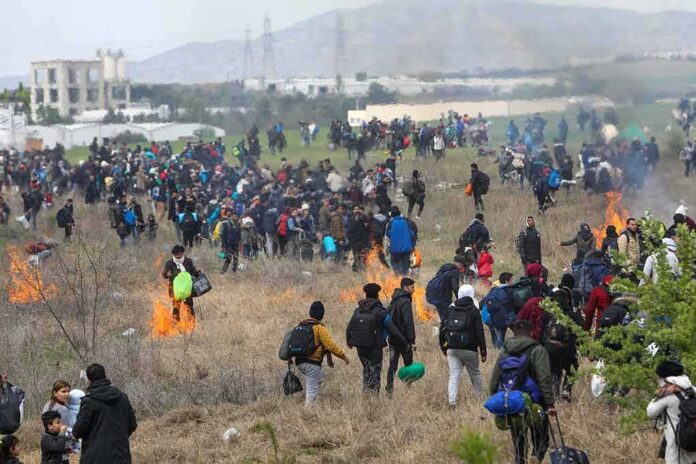
Hundreds of migrants formed a new caravan in southern Mexico and set off north, aiming for the United States as reports tied some travelers’ hopes to the U.S. midterm elections.
Story Highlights
- Hundreds departed Tapachula, Mexico, in a new caravan moving north.
- Reports say many intend to reach the United States and seek better lives.
- Counts vary from about 300 to more than 600 as groups merged.
- Some migrants reportedly voiced support for Democrats in the midterms.
Documented Departure From Tapachula and Stated Destination
Local outlets in Chiapas reported that a large group left Tapachula around October 19–20, heading toward central Mexico and then north. One report placed the departing group at roughly 500 people, including men, women, and children. Another account described about 400 people organizing under the name “Sin Fronteras,” with plans to continue north through Mexico and try to reach the United States. These reports align on the group’s direction and goal even as exact headcounts differ.
Earlier reports traced the route of a related contingent that started in San Pedro Sula, Honduras, around September 20. The group entered Mexico days later at the Rodolfo Robles International Bridge and moved toward Tapachula before pressing north. This timeline places Tapachula as a staging point, where migrants regrouped and received aid. The documented path fits the broader pattern of caravans that use known crossings and urban hubs along Mexico’s migration corridors.
Why People Joined: Family Ties and Economic Hopes
Reporting from Tapachula said migrants were seeking better living conditions, jobs, and safety. Some aimed to reunite with family already in the United States, including people who had been deported before. Local coverage also described humanitarian help in Tapachula’s Bicentennial Park, where health teams and civil groups offered food, water, medical care, and hygiene supplies. These accounts show material need as a central driver, not just politics or timing.
Caravan sizes shifted as people joined or paused. Outlets noted more than 200 new arrivals from Honduras, El Salvador, and Guatemala on one day, another 100 joining soon after, and totals rising into the several hundreds. Such swings are common as families rest, seek transit documents, or accept rides. The reports make clear that this mobility was dynamic, with headcounts reflecting a moving target rather than a fixed roster.
Election Talk and How It Fits the Record
A U.S. outlet reported that some Central American migrants told a journalist they hoped Democrats would win the midterm elections. That claim tied the caravan to U.S. politics. However, Mexican reports from the same period highlighted basic needs, family links, and the search for work as leading motives. The election-preference account names no speakers and does not show how common the view was, so it should be read as one reported strand within a larger mix of reasons.
Another Massive Migrant Caravan Marches Through Mexico Toward US Border – Migrants Say They Hope Democrats Win Midterm Elections (VIDEO) https://t.co/iK5hUBwF4F #gatewaypundit via @gatewaypundit
— Sonny (@saveamerica64) October 21, 2026
Academic studies say caravans arise again and again when danger, cost, and rule changes make solo trips harder. Groups move together for safety and visibility, while media and political calendars can shape when and how they form. Researchers documented at least 30 caravan iterations from 2017 to 2022 and found both “push” forces like poverty and crime and “pull” signals like policy shifts that influence routes and timing. This event fits that durable pattern.
What This Means for Policy and Public Trust
The caravan’s movement underscores a long-running strain on border systems in the region. It also feeds public worries on both left and right that leaders talk past each other while the problem grows. Conservatives see continued pressure on the border and the costs it brings. Liberals see families fleeing hard times and want humane answers. Both sides see a government that struggles to manage a predictable cycle that research has mapped for years.
Sources:
thegatewaypundit.com, chiapas.quadratin.com.mx, diariodechiapas.com, elorbe.com, elcongresista.mx, cuartopoder.mx, yournews.com