
Video, hospital records, and police arrests converged after U.S. photojournalist Heidi Levine was beaten and robbed while covering a West Bank olive harvest.
Story Highlights
- Footage and eyewitness accounts describe masked men kicking Levine and taking her equipment.
- Levine was hospitalized with serious injuries, including broken ribs and hand surgery.
- Israeli police opened an investigation and arrested 10 people tied to related violence.
- Officials voiced uncertainty about who initiated wider clashes, but not about Levine’s injuries.
What Happened To The Journalist
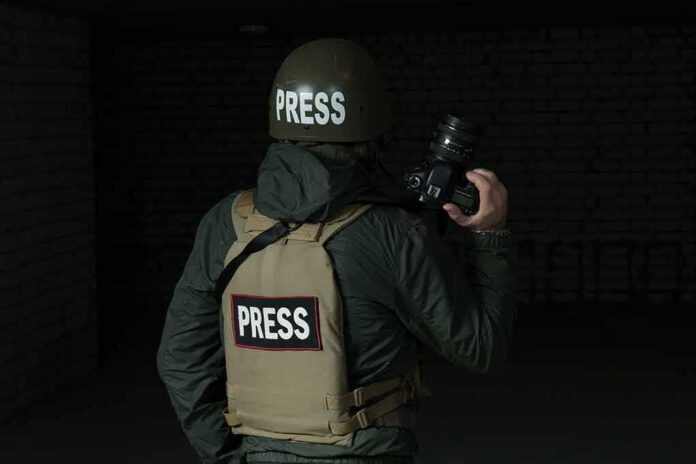
On Friday near the Palestinian village of Abu Falah, masked men surrounded Washington Post photographer Heidi Levine. Video shared with major outlets shows her shoved to the ground, kicked, and stripped of cameras and phone, despite a clear PRESS vest. From her hospital bed, Levine said the attack lasted about ten minutes. She described repeated kicking and the theft of her gear, passport, and phone cord broken from her neck.
Medical reports and outlet summaries described serious injuries. Levine underwent hand surgery and suffered broken ribs, spinal fractures, and cuts after the beating. The Washington Post confirmed she was knocked down, kicked multiple times, and robbed during the incident. Her account aligns with reports that Palestinians harvesting olives nearby were also injured, suggesting a broader sweep of violence around the fields that day.
Police Response And Official Statements
Israeli police announced arrests in the wake of the violence. Authorities said ten people were detained in connection with incidents involving Levine and a separate confrontation with European diplomats. Police said investigators were gathering evidence and taking statements to move toward charges. These steps signal a formal probe but stop short of naming suspects or detailing each person’s role in the assault as of the latest reports.
Israeli leaders struck a cautious tone on attribution. Prime Minister Benjamin Netanyahu condemned violence but called the assault “alleged” and said details of the confrontations remained unclear. An earlier government message described a clash between hundreds of Arabs and activists and dozens of Israeli youths, without assigning blame for who started it. Those statements did not dispute Levine’s injuries but framed the broader scene as fluid and under investigation.
Competing Claims And The Evidence We Have
Settler-aligned groups claimed the event was a provocation staged to spark a reaction. The Binyamin Regional Council alleged journalists positioned themselves to film Israelis, casting doubt on motives rather than on the beating itself. These claims have not been backed by specific counter-evidence that disproves the documented assault on Levine. The public record still lacks a full timeline and named suspects linked to each act on video.
Key facts do hold: multiple videos show a press-marked journalist beaten and robbed; Levine’s injuries match that account; and police have begun arrests tied to related violence. At the same time, masked attackers and limited disclosures make it hard to assign individual responsibility. That gap fuels political spin and deepens mistrust across audiences who already doubt institutions on all sides of this conflict.
Why This Matters For Press Freedom And Public Trust
Attacks on working journalists strike at the public’s right to know. When a clearly identified press worker is beaten and robbed on camera, it chills coverage and narrows what the world learns from the ground. The arrest announcements suggest the state recognizes the stakes. Yet slow attribution and mixed official messaging risk sending the opposite signal to would-be attackers and to communities who already feel unprotected by the system.
Israeli Police Arrest 10 After Settler Attacks on Journalist and Diplomats
Israeli police have arrested 10 people after settler attacks involving Washington Post photojournalist Heidi Levine and European diplomats, turning a local violence case into a test of Israeli… pic.twitter.com/WS4jf42voH
— Daniel Ball (@dball1126) October 19, 2026
The case also fits a wider rise in West Bank settler violence tracked by the United Nations. Monitors report more than 1,600 settler incidents causing injuries or property damage by September 2026, averaging about 6.7 per day across hundreds of communities. That backdrop does not prove every detail of Levine’s case. It does show a climate where attacks are more common, and where both Palestinians and outside observers say accountability is too rare.
What To Watch Next
Watch for police to name suspects and file charges that tie specific people to actions seen on video. Look for full, authenticated footage that clarifies the timeline and identities. Monitor medical documentation and sworn witness statements to lock down the facts. Transparent findings can calm partisan noise and show that beating a journalist will cost the attackers more than the public will ever pay in lost truth.
Sources:
youtube.com, bbc.com, abcnews.com, the-gazette.co.uk, timesofisrael.com, independent.co.uk, abc.net.au