

New Jersey’s second-highest official quit his job Friday, one day after a state investigation accused him of sexual harassment and misusing his office.
Story Snapshot
- Lt. Gov. Dale Caldwell resigned after a 61-page independent report substantiated sexual harassment and ethics violations.
- Gov. Mikie Sherrill gave Caldwell a one-day deadline to quit after the report came out Thursday.
- Caldwell denies wrongdoing and says his resignation is not an admission that the report is true.
- His attorney calls the investigation “one-sided” and says it lacked proper due process.
- The case adds to a growing string of harassment-related resignations in state and federal government.
Governor Sets a Deadline, Lieutenant Governor Complies
Governor Sherrill announced Thursday that an independent investigation found Caldwell “engaged in serious, repeated violations of state policy and failed to uphold the responsibilities of his office.” She gave him until Friday to resign. He submitted his resignation that afternoon, and Sherrill confirmed she accepted it.
The 61-page report came from an outside law firm hired to look into complaints against Caldwell. Investigators interviewed 17 people over roughly a month. They concluded Caldwell used sexually charged language, exploited his office to push a promotion for a woman he was dating, and tried to arrange dates for himself.
What the Investigation Found
The report said investigators found “credible evidence” of sexual harassment and other misconduct. It described Caldwell making inappropriate comments toward women he worked with. One allegation involved a remark to a staffer about young women, which the report treated as credible despite Caldwell’s denial.
Sherrill said the pattern of behavior “does not meet the standards of this administration.” She noted investigators found Caldwell had been warned before and continued the conduct anyway, which shaped her decision to demand a swift resignation rather than a longer review.
Caldwell Pushes Back Hard
Caldwell did not go quietly. He told a lawyer that his exit “should not be interpreted as an admission of wrongdoing” and said he believes the report is “inaccurate” with “unsubstantiated” claims. He separately told a reporter, “I’m not resigning because of the report. It’s false. I’m resigning because I don’t want to be a distraction to the administration”.
His attorney, Thomas Calcagni, went further, calling the process “unnecessarily protracted and one-sided” and saying it “lacked the requisite due process that should be afforded every citizen of this state”. Calcagni said the report’s conclusions “go further than the evidence supports” and that the legal team would keep challenging it through “all legal remedies”.
Caldwell specifically denied telling a staffer that “young women are looking for young sperm,” a comment cited in the report as evidence of harassment. His lawyer said a state police trooper riding in the car at the time did not hear the remark. Investigators still found the denial not credible, based on other witness accounts gathered during the probe.
A Pattern That Reaches Beyond New Jersey
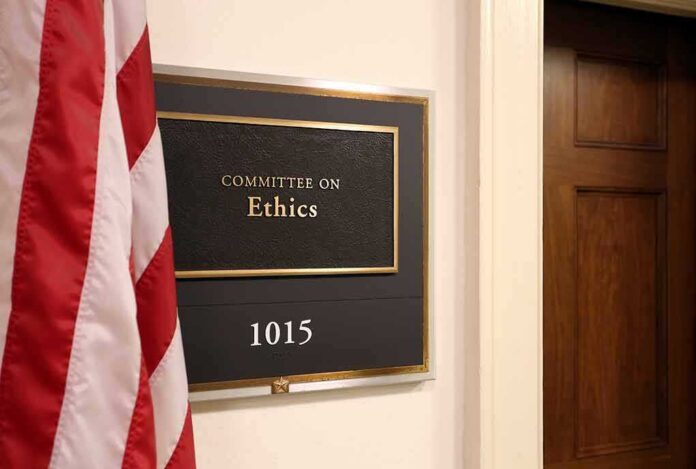
This isn’t an isolated event. The House Ethics Committee has disclosed 20 sexual-misconduct investigations into members of Congress since 2017, and several ended only because the accused resigned before a final finding. Reports also count roughly 90 state lawmakers nationwide accused of sexual misconduct since 2017, with outcomes ranging from resignation to loss of leadership posts.
Resignation often ends these cases before the full evidence gets tested in a courtroom or a full public hearing. That pattern cuts both ways politically. Governors and legislative leaders get to show they hold a hard line on workplace conduct, but the accused rarely get the kind of due process that critics on both the left and right say the system owes anyone facing serious public accusations.
Why This Story Matters to Voters
Both conservatives and liberals have grown weary of officials who seem to protect themselves and their allies rather than face accountability. Sherrill’s swift ultimatum could be read as a rare example of a governor acting fast on a substantiated report instead of stalling for political cover. At the same time, Caldwell’s insistence that the process was rigged echoes a common complaint from both sides of the aisle: that internal investigations run by insiders often produce outcomes the accused cannot meaningfully contest.
Caldwell’s departure leaves New Jersey without its second-in-command as Sherrill’s administration works to move past the controversy. Whether Caldwell pursues the legal challenge his attorney promised remains an open question, one that could keep this story in the headlines well past his resignation.
New Jersey Lt. Gov. Dale Caldwell resigned on 25 September 2026 after a 61 page independent report found he sexually harassed a staffer’s friend and broke state ethics rules.
Gov. Mikie Sherrill released the report on 24 September and gave him until Friday to quit. He submitted… pic.twitter.com/TczJOogwEr
— Davian (@dhaevian) September 26, 2026
For now, the facts on record are clear: an outside investigation substantiated harassment and ethics violations, the governor demanded resignation within a day, and Caldwell stepped down while continuing to dispute the findings against him.
Sources:
townhall.com, nbcnews.com, inquirer.com, abcnews.com, nj.gov, nytimes.com, latimes.com