
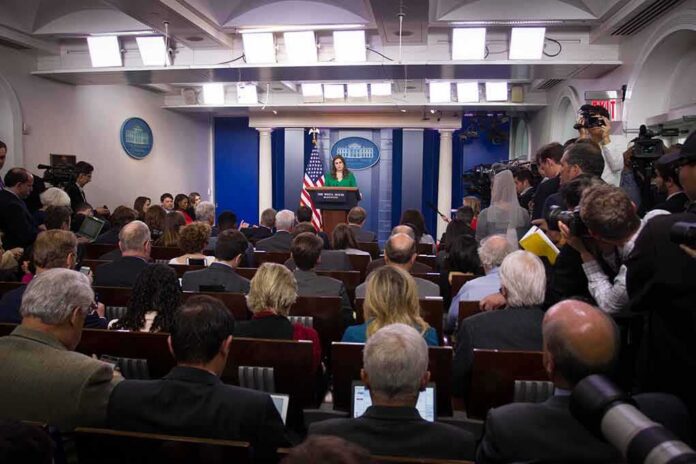
President Trump’s “effective immediately” ban on CNN, MS NOW, and Politico from White House access turns a long-running press fight into a live First Amendment test, with lawsuits likely next.
Story Snapshot
- Trump announced an immediate White House ban on CNN, MS NOW, and Politico over “fake news.”
- CNN and others called the move unconstitutional and vowed to resist.
- Key details on how the ban works day to day remain unclear.
- Recent court fights over Associated Press access set the legal backdrop.
What The President Announced
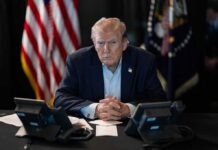
President Trump said he is banning CNN, MS NOW, and Politico from the White House “effective immediately.” He tied the move to what he called “constant ‘reporting’ FAKE NEWS!” The announcement named each outlet and said other outlets could follow. Multiple national outlets reported the statement and its timing. The message framed the decision as a response to false or biased coverage, not to a stated rules breach. The White House did not post a formal order alongside the announcement.
Time and other outlets described the move as setting up a new test of the First Amendment’s protection of a free press. The coverage drew a bright line between general access control and viewpoint-based punishment. Trump’s wording about “fake news” made the rationale clear and broad. That framing will matter if a court reviews motive and method. The announcement did not include a written access policy or a credential standard that explains the criteria for exclusion.
How The Outlets Responded
CNN said it stands behind its White House reporters and called any ban an illegal attack on a constitutional right. The network said the government cannot hinder reporting because it dislikes coverage. Politico reported that Trump said he would block its reporters due to “constant ‘FAKE NEWS’ reporting.” Reuters said the move was a crackdown likely to conflict with free speech protections and predicted a legal challenge. These responses preview the arguments courts will hear.
Some reports noted confusion inside the press area right after the announcement. CNN said its journalists remained in their assigned workspace near the briefing room. That suggests the practical scope was not yet fully enforced or defined. Without a written directive, agencies that control access, including the Secret Service, may face mixed signals. That gap increases the chance of uneven enforcement and fresh disputes at individual events, which courts often view as a warning sign.
What We Know And What We Do Not
Reporters cited Trump’s claim that Politico took about eight million dollars in federal funds to “keep them afloat.” The available reports repeat the claim but do not present contract records or invoices to verify it. The assertion, if wrong or overstated, could weaken the administration’s public case. The announcement did not specify whether the ban targets hard passes, pool rotations, or specific rooms. That missing detail will shape which legal rules apply to each space.
Recent court orders over press access set the stage. In the Associated Press case, a federal judge said the government cannot open events to some journalists and then shut the door to others because of viewpoint. The opinion emphasized that even in restricted spaces, rules must be reasonable and viewpoint neutral. Those rulings do not block all limits. They do push back when the record shows punishment for coverage or stance, which is what many see here.
Why This Fight Matters Beyond One Day’s Headlines
Both right and left distrust how powerful institutions shape information. Many believe the government protects itself first and answers hard questions last. This ban taps those fears. Supporters see a White House pushing back at media they view as unfair. Critics see the state punishing watchdogs. The deeper issue is whether access becomes a prize for friends and a penalty for critics. Courts have warned that such lines cut against core American principles.
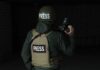
CNN and MSNOW being escorted off the White House media tent area and the grounds.
Trump isn’t messing around pic.twitter.com/FzZPlLmlih
— John John (@RenataScaq72342) September 19, 2026
If lawsuits arrive, judges will look for a clear policy, consistent enforcement, and evidence of viewpoint neutrality. They will also weigh the nature of each venue, like the briefing room, the Oval Office, or Air Force One. Past rulings show the government has some control over space. But when it picks winners and losers based on coverage, the government often loses. Until the White House releases a formal policy, uncertainty and conflict will likely grow.
Sources:
youtube.com, variety.com, dailysignal.com, fox17.com, commondreams.org, npr.org, politico.com