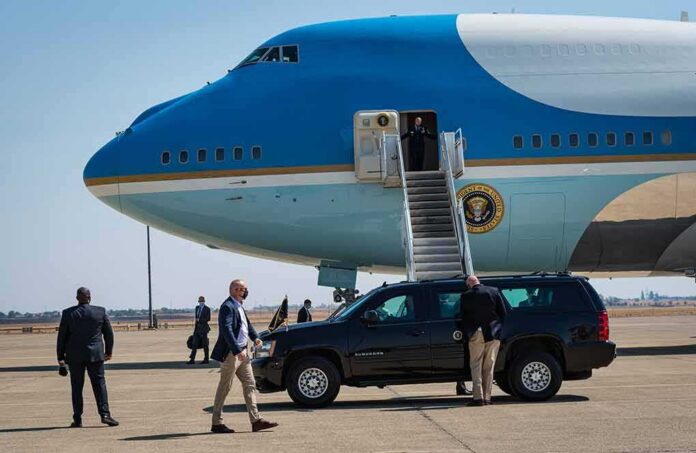
The White House removed CNN from the Air Force One press slot and listed a conservative outlet instead, shrinking independent TV access on a presidential trip to Tennessee.
Story Snapshot
- The White House signaled CNN would not board Air Force One for the Tennessee trip.
- Real America’s Voice News was listed in CNN’s place for travel coverage.
- Major TV networks refused to backfill CNN’s pool role, halting normal TV pool coverage.
- A judge’s order restored White House grounds access but did not resolve flight assignments.
What changed about the Tennessee trip coverage
Associated Press reported the White House signaled Friday night that CNN would be left off Air Force One for President Trump’s Saturday trip to Tennessee. Guidance to reporters listed Real America’s Voice News in CNN’s place for travel coverage. Reuters said two people familiar with the decision confirmed the change. This shift matters because the television pool seat is the main way one network shares video with all others when space is tight on the plane.
CNN had been scheduled to fly as part of the rotating television pool that covers the president in limited-space settings like Air Force One. The pool system exists so one crew can film and share material with all outlets that cannot fit. CNN reported the White House removed it from the assignment earlier in the week and, at times, listed no television network as the primary pool in daily guidance. That created gaps in the usual system that supports broad public coverage.
How this fits the broader media access fight
This flight decision follows weeks of conflict over media access. CNN, MS NOW, and Politico sued after they were barred from the White House grounds. A federal judge ordered the administration to temporarily restore their access, saying the badge revocations lacked due process. The order mentioned only access to White House grounds, not Air Force One seats, leaving the travel assignment question unsettled for now. That gap has become the latest pressure point in the fight.
CNN and other outlets framed the exclusion as part of a pattern that chills press freedom. Legal experts told Reuters that the government cannot punish news coverage by cutting access once it opens a channel, though logistics limits still matter. The optics of swapping CNN with a conservative outlet heighten concerns about viewpoint-based choices rather than neutral rotation or security needs. Public reporting has not included a detailed White House explanation for this specific swap.
Why the pool disruption affects both sides of the aisle
All major television networks refused to replace CNN in the pool after the earlier ban, which left the shared television pool unable to cover some events marked for pooled access. The BBC reported that the networks’ stance meant the pool became non-operational without CNN’s participation. When the pool stalls, everyday viewers lose the shared video feed that helps keep leaders accountable. That hurts citizens who already feel Washington serves insiders first, not the public good.
Americans on the right and left often disagree on media bias. But many agree the system should not pick winners and losers in access. A fair pool protects the public’s right to see what a president does, even during routine travel. When rules are unclear, people see power at work, not principle. That deepens distrust of institutions and fuels the belief that the powerful, not the people, decide who gets to inform the country about its government.
Sources:
cnn.com, abc17news.com, washingtonpost.com, apnews.com, reuters.com, 2news.com, bbc.com, fr.jpost.com, transcripts.cnn.com