
Iran’s president says the hidden supreme leader is “completely” healthy after a seven-hour meeting, but offers no proof beyond his word.
Story Snapshot
- President Masoud Pezeshkian said Mojtaba Khamenei is “completely” healthy and in charge.
- Pezeshkian said he last saw Khamenei about a month ago for roughly seven hours.
- Months of public absence have fueled rumors of injury or incapacity in Iran’s media sphere.
- No medical records, photos, or official readouts were released to back the health claim.
On-the-record claim from Iran’s president
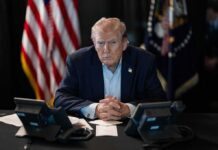
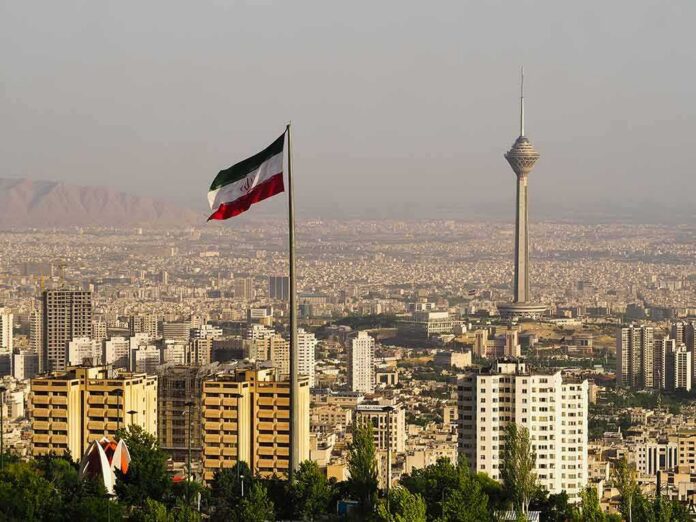
President Masoud Pezeshkian told U.S. media that Supreme Leader Mojtaba Khamenei is “very much so, completely” healthy. He said the leader gives direction to his government and remains active in decision making. The on-air exchange placed the president’s credibility on the line. The claim matters because it addresses months of speculation about who runs Iran day to day. The Hill reported the quote and context from the interview during United Nations week in New York.
Pezeshkian also gave a timeline. He said he last met Khamenei about a month to a month and a half ago and that they spoke for around seven hours. He said Khamenei could sit and discuss for seven to eight hours without issue. Newsmax summarized those details from the same media swing, tying them to broader questions about control inside Tehran. The length of the meeting, if accurate, aims to signal stamina as well as presence.
Why the proof gap keeps doubts alive
The public still has not seen new photos, video, or a doctor’s note to verify the health claim. That leaves the story resting on one person’s word, even if that person is the sitting president. Iran’s media environment is closed, and official releases are scarce. Iran International and other outlets have noted that Khamenei’s long absence led to conflicting stories, from “in good health” to reports of serious injury or even limb loss, none confirmed by hard evidence.
This information gap fits a known pattern. In past years, long stretches without public appearances sparked rumors about the leader’s health and succession. Analysts say this happens because power in Iran centers on one figure and the system reveals little. When leaders go unseen, rivals float claims and denials to shape public mood. Western and regional media then mirror those claims, which can mislead when solid records are missing. The cycle feeds fear and guesswork on all sides.
What both sides in America should watch
U.S. conservatives worry that hostile regimes hide weakness to buy time, shape oil markets, or stall talks. U.S. liberals worry that secrecy and disinformation raise the risk of war and hurt human rights. Both can agree on this: opacity forces Americans to react to shadows. That is costly. When a top leader’s health is unclear, missteps can spread from energy prices to troop moves. Clear facts help avoid errors. Vague claims, even if true, leave the public flying blind.
The current claim could still be right. Pezeshkian repeated it across weeks, including earlier state-linked interviews that said Khamenei was in “full physical health.” Anadolu reported similar language in August, tied to a long in-person meeting. Still, a simple fix would help confidence. A short official readout, a current photo set, or a limited medical attestation would go far. Until then, markets and ministries will price in uncertainty, and rumor will keep filling the void.
What comes next if doubts persist
If Khamenei stays out of sight, pressure will grow to show proof of life and fitness. If new images or records appear and are trusted, that will calm talk of a power vacuum. If not, questions will shift from health to control. Who signs off on security moves? Who steers talks abroad? These are not academic. They touch sanctions, oil flows, and the safety of U.S. troops and allies. One credible update could lower the temperature fast.
Pezeshkian also said he met Supreme Leader Mojtaba Khamenei in person about a month ago, for around 7 hours, and saw "no major challenges" with his health or appearance — his first direct account since injury speculation began after the war's Feb 28 outset. #Hormuz
— Hormuz Watch (@HormuzWatch) September 25, 2026
For now, take the claim for what it is: a direct presidential assurance, echoed by earlier press, with no public documentation to match it. That does not make it false. It makes it unverified. In an age of edited video and staged messages, citizens on the right and left are right to ask for more than words. Open records build trust. Secrecy keeps the deep-state narrative alive. Iran’s leaders know that. We will watch for evidence, not echoes.
Sources:
members.jpost.com, thehill.com, newsmax.com, timesnownews.com, economictimes.indiatimes.com