Los Angeles logged 12,241 fires tied to homeless encampments in under nine months, straining fire crews citywide.
Story Snapshot
- Los Angeles Fire Department recorded 12,241 “homeless or encampment related” fires from Jan. 1 to Sept. 20, 2026.
- The total equals about 47 such fires every day across the city, according to local reporting.
- The count is about 6% lower than the same period last year, but the daily load remains heavy.
- Trash fires dominate, but car, structure, and brush fires are also in the mix.
What The Data Shows About Fire Volume And Type
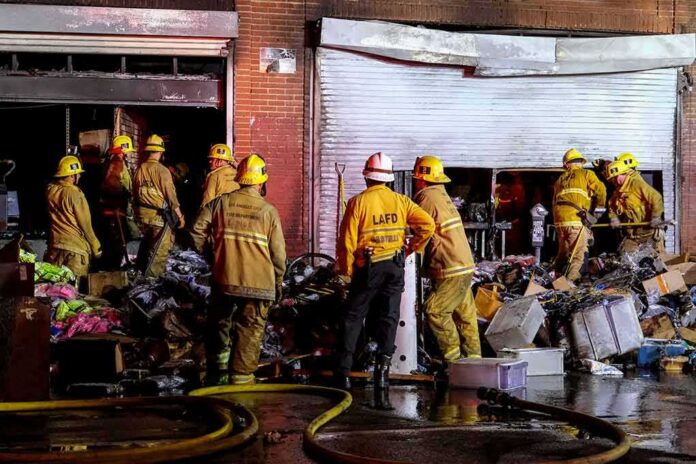
Los Angeles Fire Department records show 12,241 fires classified as “homeless or encampment related” between January 1 and September 20, 2026. Local reporting says that averages to about 47 such fires each day, which signals a large and steady workload for fire crews. The count is about 6% lower than the same period last year, showing slight improvement but not relief. Most incidents were trash fires, with smaller numbers of brush, car, and structure fires also reported.
Reporters identified hot spots, including Skid Row and stretches along the 110 freeway, where clusters of fires appeared in close reach of homes and businesses. Firefighters assigned to rapid response units described back-to-back calls, including a shopping cart blaze near an improvised grill, which can pull engines away from other emergencies. These details show how frequent, lower-level fires still stress the system. The mayor’s office called the fires a danger and said the city has removed more than 1,000 encampments this year.
How This Fits A Larger, Long-Running Pattern
Past reporting places these numbers in a broader pattern. Over multiple years, Los Angeles officials and fire data have linked many fires to homelessness or encampments, even as the exact causes vary by case. Between 2018 and 2024, homelessness was cited as a factor in about one-third of fires citywide, according to the Los Angeles Fire Department as reported by the Los Angeles Times. The continuing link helps explain why both public safety and housing policy now shape fire prevention plans.
City leaders and fire commanders have moved to address known high-risk areas. Proposals advanced in early 2026 would give the city more power to clear encampments from steep, brushy hillsides that pose severe fire danger, even when property owners are slow to act. The goal is to cut hazards before hot, dry weather turns small flames into fast-moving brush fires. This push reflects a basic fact of fire risk: ignition sources and fuel loads in the wrong place can create outsized harm.
Why It Matters For Residents, Businesses, And Crews
High call volume stretches crews thin and adds overtime, which can slow response to other emergencies. Frequent trash and small structure fires near busy corridors raise smoke, traffic delays, and public health risks. The mayor’s office says the city is working to end street homelessness and reduce these dangers, but did not provide detailed metrics beyond encampment removals in the cited report. The situation hits both pocketbook and safety concerns across neighborhoods.
Firefighters stretched to breaking point after homeless people spark over 12K fires in Los Angeles https://t.co/QJHno1mZps pic.twitter.com/6ALeaexreT
— New York Post Metro (@nypmetro) September 26, 2026
Readers across the political spectrum see a system that fails at basic duties: public order, fair use of streets, and reliable emergency response. Conservatives point to weak enforcement and permissive street camping. Liberals point to a shortage of treatment, mental health care, and housing supports. Both agree that fires near homes, shops, and roads are unacceptable. Clear data, faster cleanup of hazards, targeted services, and steady enforcement can reduce the fire load while protecting rights and safety.