China’s aggressive military maneuvers surrounding Taiwan, coupled with vehement opposition to a record-breaking $11 billion US arms sale, underscore escalating tensions that could reshape regional dynamics.
Story Highlights
- China condemns a record US arms sale to Taiwan valued at $11 billion.
- Simultaneous military drills by China’s PLA heighten regional tensions.
- The sale includes advanced military systems, stirring Beijing’s fury.
- China warns of unspecified “countermeasures” against US actions.
China’s Outcry Against US Arms Sale
On December 18, 2025, the United States announced its largest-ever arms sale to Taiwan, valued at approximately $11 billion. This monumental deal includes advanced military systems, such as rocket artillery, long-range missiles, and unmanned surveillance platforms. In response, Chinese Foreign Minister Wang Yi condemned the sale, labeling it a blatant interference in China’s domestic affairs. Beijing considers Taiwan a breakaway province and views external military support as a direct threat to its sovereignty.
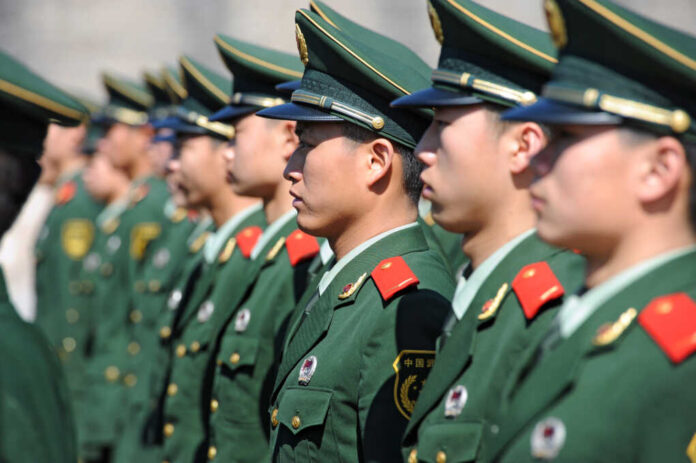
Wang Yi’s strong condemnation coincided with the Chinese People’s Liberation Army (PLA) conducting military exercises around Taiwan. These drills, marking the second consecutive day, demonstrated China’s readiness to defend its interests through coordinated military-diplomatic actions. The PLA’s maneuvers serve as both a warning and a show of force, reinforcing China’s claim over Taiwan while challenging US influence in the region.
Military Drills Intensify Regional Tensions
The PLA’s military exercises around Taiwan highlight China’s strategic approach to countering perceived threats. By integrating military actions with diplomatic rhetoric, Beijing aims to pressure Taiwan and deter further US involvement. The exercises also serve as a warning to regional stakeholders, such as Japan and South Korea, about the potential consequences of supporting Taiwan. China’s actions underscore its commitment to safeguarding its core interests, even at the risk of escalating tensions with the US and its allies.
Simultaneously, China has launched an information warfare campaign targeting the perceived weaknesses in Taiwan’s defense capabilities. State-affiliated media and military commentators disseminate narratives suggesting Taiwan’s inability to withstand a PLA attack. This psychological warfare aims to undermine confidence in Taiwan’s defenses and sway international opinion in favor of China’s stance.
Global Implications and Strategic Considerations
The US arms sale to Taiwan and China’s subsequent response have significant implications for global stability. The deal reinforces the US commitment to Taiwan’s defense, potentially prompting China to accelerate its military modernization efforts. As the US and China vie for influence in the Indo-Pacific, the region faces increased risks of conflict and destabilization. Taiwan’s strategic importance, particularly in semiconductor production, adds further complexity to the geopolitical landscape.
Top Chinese diplomat rips record US arms sale to Taiwan amid drills near island https://t.co/9UyskuVyjO
— Mammoth (@Captainmanic22) December 30, 2025
As tensions rise, the US must navigate the delicate balance between supporting Taiwan and avoiding direct confrontation with China. The Pentagon’s assessments highlight potential vulnerabilities in a Taiwan conflict scenario, suggesting a need for strategic repositioning. Regional allies, including Japan and South Korea, must also consider the broader implications for their security architectures and alliance structures.
Sources:
Top Chinese diplomat rips record US arms sale to Taiwan amid drills near island
China drills feed info war targeting faith in Taiwan’s defenses
China’s top diplomat blasts US arms sale to Taiwan, military drills around