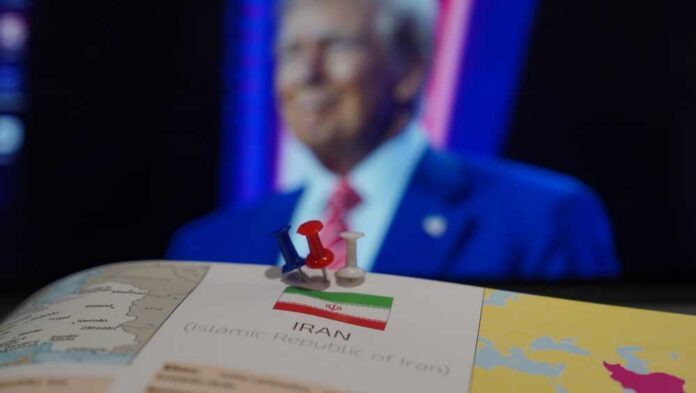
Americans are being asked to trust a secret Iran peace deal that even Congress has not seen yet.
Story Snapshot
- President Trump says he is willing to send the new U.S.-Iran agreement to Congress for review, but has not set a date.
- Key lawmakers from both parties say they are “in the dark” because the 14‑point memo has not been shared with them or the public.
- The deal extends a fragile ceasefire and reopens the Strait of Hormuz, while promising Iran sanctions relief if it behaves.
- Both supporters and critics worry that powerful insiders, not the American people, are steering a secret process.
What Trump is Promising About the Iran Deal
President Donald Trump is telling the country he has secured a breakthrough with Iran that will help end the war, protect shipping, and make sure Tehran “never” gets a nuclear weapon.[3][8] At the G7 summit in France, he praised a new memorandum of understanding as a step toward “normal” relations after months of fighting and said he has “no problem” sending it to Congress for review.[1][2][3] He also hinted the text could be made public after a formal signing ceremony planned for Friday in Switzerland.[1][3][9]
According to reporting based on U.S. and Iranian officials, the memo is short—about 14 points—and is meant to freeze the battlefield, not settle every issue.[10][11][24] It would extend an April ceasefire by 60 days, reopen the vital Strait of Hormuz to shipping, and lift the U.S. naval blockade that has helped drive up global energy prices.[1][6][18][24] In return, Iran would get limited sanctions relief and access to some oil revenue, but more serious nuclear steps would wait for a second, longer agreement.[1][10][24]
What Is Actually in the Deal – and What Is Not
Early leaks and diplomatic briefings suggest the memo gives Iran clear near‑term benefits while pushing the hardest nuclear questions into the future.[1][18][24] The text reportedly says Iran must pledge never to build a nuclear weapon and address its growing stockpile of highly enriched uranium, but any concrete limits or inspections would be negotiated during the 60‑day window.[1][20][24] Experts note that this looks more like a framework than a final settlement, and that Iran has a long history of dragging out talks while keeping its leverage.[20][24]
For many Americans, this structure feels familiar and frustrating. The 2015 Joint Comprehensive Plan of Action under President Barack Obama also traded sanctions relief for promises and technical limits that most voters never read.[4][20][21] That deal was sold as a historic safeguard, yet Iran’s nuclear capacity later surged, and Washington politics around it turned bitter and partisan.[4][19][21] Today’s memo again relies on complex nuclear details, phased sanctions waivers, and side understandings that are easy for elites to spin and hard for citizens to verify without seeing the actual text.[4][19]
Congress Left in the Dark – Again
Even with Republicans running both chambers, many lawmakers say they know far less about this agreement than foreign governments and media commentators do.[4][6][11] Reuters reporting says the text has not been released or sent to Congress, and Senate leaders such as John Thune are still “in the dark” about the specifics.[4][6][11] Members from both parties are now demanding briefings, the full 14‑point document, and a chance to vote once a final deal on Iran’s nuclear program is reached.[11][13]
The legal backdrop is important. The Iran Nuclear Agreement Review Act, passed in 2015, says any agreement on Iran’s nuclear program must be submitted to Congress, and it limits how much sanctions relief a president can give during that review.[13] Another law, known as the Case Act, requires the State Department to send international agreements to Capitol Hill as well.[13] Democrats warn that the White House or party leaders might try to dodge a full vote, while conservatives fear leadership could rubber‑stamp a weak deal that helps Iran’s rulers and big business more than ordinary Americans.[13][24]
Why Both Left and Right See a Deeper Problem
Across the political spectrum, frustration with this process taps into a larger belief that foreign policy is run by a small circle of insiders who rarely level with the public.[19][21] For conservatives, secretive Iran talks sound like another globalist fix that could trade real security for flimsy promises while rewarding a hostile regime that funds terror groups.[1][22][24] For many liberals, the worry is that the deal could entrench an authoritarian government abroad while Washington continues to underinvest at home in wages, health care, and social support.[21][24]
There's no deal until it's signed. Iran is going to destroy Trump in the mid-terms. They want a US president not in the Epstein files and a Congress to restore the adult guardrails.
— LongOptimist (@LongOptimist23b) June 17, 2026
Both sides also remember past cases where presidents talked tough about Iran, then shifted the burden onto Congress without giving lawmakers the tools or time to solve the problem.[12][16] Ordinary Americans see a pattern: wars and sanctions are launched in their name, energy prices soar, and then elite negotiations unfold behind closed doors while regular families pay the bill. That is why demands to release the full text, hold open hearings, and force a real vote resonate far beyond the usual partisan lines.[7][13][24]
Sources:
[1] YouTube – Washington Today (6-16-26): Pres. Trump says he will send U.S.-Iran …
[2] Web – What’s in the Iran deal Trump says he’s ready to sign – Axios
[3] Web – President Trump shared details of a memorandum of understanding …
[4] Web – Trump, Vance, Iranian official sign US-Iran peace memo – The Hill
[6] YouTube – US, Iran sign memorandum of understanding
[7] Web – Iran media publish purported details of Iran-US draft agreement
[8] Web – Release the Text of the Iran Deal | National Review
[9] Web – Joint Comprehensive Plan of Action – State.gov
[10] Web – US lawmakers in the dark on Iran deal as Trump says he will send it to …
[11] YouTube – Trump to send Iran deal to Congress
[12] YouTube – Congress Demand Details, Vote on Trump-Iran Deal
[13] Web – President Trump Put the Iran Nuclear Deal in Congress’ Hands
[16] YouTube – The Iran Deal Under Trump
[18] Web – Iran’s Strategic Options: Rethinking Negotiation with America
[20] Web – Documenting Iran-U.S. Relations, 1978-2015
[21] Web – Fact Sheet: The Iran Deal, Then and Now
[22] Web – US-Iran Relations: A Complex History of Conflict and Change
[24] YouTube – The history of US-Iran relations – from friendly to violent | The …