

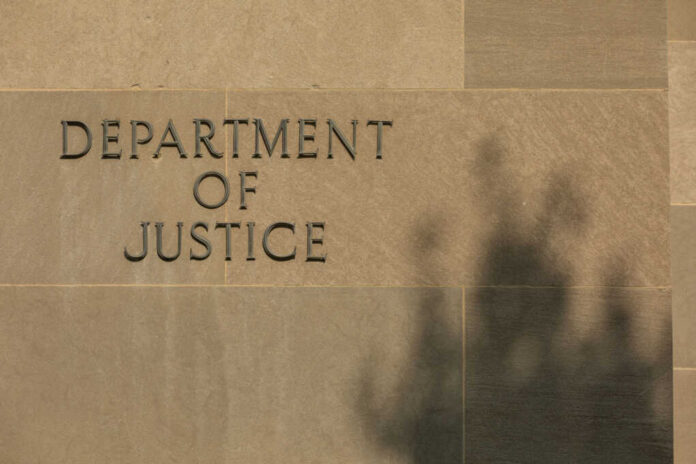
The federal government is now suing Maryland over a sanctuary law that both sides claim is about public safety, but each defines “safety” in very different ways.
Story Snapshot
- The Department of Justice is suing Maryland to overturn the new Community Trust Act as illegal sanctuary policy.
- Maryland’s law sharply limits local police and jail cooperation with federal immigration agents, including transfers on detainers.
- Federal officials say the law blocks immigration enforcement and puts communities at risk, while supporters say it builds trust and fairness.
- The case highlights a larger fight over who really controls immigration policy and whose safety the system protects.
What Maryland’s Community Trust Act Actually Does
Maryland’s new Community Trust Act redraws the lines between local police work and federal immigration enforcement. The law bars most informal communication with federal immigration officers such as Immigration and Customs Enforcement and Border Patrol, including routine status checks and sharing information about people in local custody. It generally stops local jails from holding or transferring immigrants to federal agents based only on civil detainers, unless there is a specific court order. Officers also are blocked from asking about citizenship or immigration status during stops or arrests, except in narrow cases.
Supporters say these rules are meant to keep immigrant families from fearing that any contact with local police could lead to deportation. They argue that when people feel safe reporting crimes and serving as witnesses, everyone in the community is safer, not just immigrants. Opponents, including many sheriffs and the Department of Justice, see the same rules as a direct barrier to federal law enforcement. They say the law turns local jails into revolving doors for people federal agents are trying to remove from the country.
Why the Department of Justice Is Suing Maryland
The United States Department of Justice filed its lawsuit against Maryland and Attorney General Anthony Brown on July 9, arguing that the Community Trust Act violates the United States Constitution’s Supremacy Clause. That clause says federal law is the “supreme law of the land,” and the Justice Department claims Maryland’s rules stand in the way of immigration laws passed by Congress. The complaint says Maryland facilities have refused to transfer immigrants to federal custody even when federal officers issue standard detainers asking jails to hold someone up to 48 hours past release.
Federal lawyers say this is not just about politics, but about real-world operations. They argue that when jails ignore detainers and release people back into the community, it makes it harder and more dangerous for federal officers to arrest those same individuals later in homes or on the street. The lawsuit frames Maryland’s law as “deliberate, disruptive action” that “jeopardizes the public safety of all Americans,” language that echoes similar lawsuits the Department of Justice has filed against cities like New York and Chicago. At the same time, the public complaint does not list specific examples of crimes tied to released detainees, which critics say leaves a gap between the warning and hard proof.
Maryland, Local Sheriffs, and the Larger Sanctuary Battle
Maryland is not only facing pressure from Washington; it is already being sued by its own sheriffs. Seventeen of twenty-three county sheriffs recently filed a separate lawsuit in federal court, arguing that the Community Trust Act forces them to “harbor” criminal offenders by blocking transfers to immigration agents and even basic notifications. Their complaint mirrors the Justice Department’s language, claiming the law is “blatant defiance” of federal immigration rules and violates the Supremacy Clause in several ways. This means Maryland’s leaders now face legal fire from both local law enforcement and the national government.
Maryland officials and immigrant advocates respond that states have the right to decide how their police use limited resources. They point to legal experts and prior cases in other states where courts questioned federal attempts to force local officers into federal duties. For many on the left, the lawsuit looks like another “America First” push to crack down on immigration at any cost, even if it harms community trust. For many on the right, the law itself looks like one more example of “woke” policy that favors noncitizens over citizens and ignores the rule of law.
What This Fight Reveals About the System
This Maryland case sits inside a much bigger pattern that has repeated across the country for almost a decade. Under both Trump terms, the Justice Department has repeatedly targeted what it calls “sanctuary jurisdictions” with lawsuits and threats to cut federal grants if local leaders do not cooperate. Cities and states have fired back with their own lawsuits, arguing that the Constitution blocks the federal government from forcing them to use local police and jail staff as immigration officers. Courts have sometimes sided with the local governments, especially when Washington tried to tie broad funding to immigration rules.
For ordinary Americans watching from the sidelines, the Maryland lawsuit can feel like another sign that the system is serving the powerful, not them. Many conservatives see a state government they believe is protecting people who break immigration laws while their taxes go up and crime feels higher. Many liberals see a federal government they believe is using law-and-order talk to expand control and target minorities instead of fixing deeper problems like wages, housing, and health care. Both sides share one growing belief: the people in charge are fighting each other in court rather than working together to make communities safer and the law clearer.
Sources:
townhall.com, justice.gov, facebook.com, cbsnews.com, boston.com, constitutioncenter.org, law.yale.edu, forumtogether.org, ilrc.org