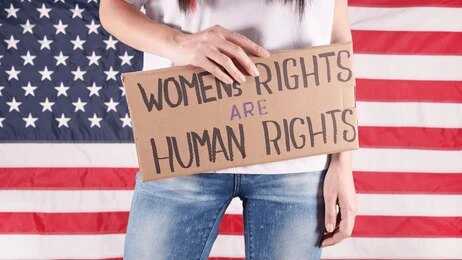
A pop star’s Fourth of July message just exposed how confused and divided America has become over whether women’s equal rights are truly guaranteed in the Constitution.
Story Snapshot
- Alicia Keys’ holiday video about women’s rights and the Equal Rights Amendment sparked fierce backlash across partisan lines.
- The Equal Rights Amendment was first proposed 100 years ago and, despite new ratifications, is still not officially part of the Constitution.
- Critics say women are already protected by the Fourteenth Amendment, while supporters argue those protections are weaker and incomplete.
- The fight over the Equal Rights Amendment highlights broader anger at a government seen as slow, divided, and captured by elites on both left and right.
Alicia Keys’ video and the instant Fourth of July firestorm
On this Fourth of July, singer Alicia Keys posted a short video saying that after 250 years, American women still do not have an explicit constitutional guarantee of equal rights. She pointed to the Equal Rights Amendment, first introduced in 1923, and noted that it has never been fully ratified into the Constitution. In the clip, she stressed that “women are not asking for special rights, just equal rights,” and linked her message to a campaign called “People’s Bill of Rights 250,” which invites people to help imagine new laws for the nation’s 250th anniversary. Almost immediately, her message drew sharp reactions online and in the media, with outlets like Fox News and AOL describing her as facing “backlash” and “MAGA outrage” for claiming women lack guaranteed equal rights.
Much of the anger focused less on what Keys actually said than on who she is and what she represents. Critics on social media mocked her as “stupid” and insisted the Constitution already protects women, pointing to the Fourteenth Amendment’s Equal Protection Clause. Supporters, including legal advocates and women’s groups, pushed back and argued she was simply stating a basic legal fact: the Equal Rights Amendment is still not recognized as part of the Constitution, even after 38 states have now voted to ratify some version of it. This clash shows how a single celebrity video can become a lightning rod for deeper frustrations about law, power, and who gets to define “truth” in modern America.
What the Equal Rights Amendment is — and why its status is so murky
The Equal Rights Amendment is a proposed change to the Constitution that would say, in clear language, that equality of rights cannot be denied on the basis of sex. It was first written by suffrage leader Alice Paul and introduced in Congress in 1923, but failed year after year to gain enough support. Congress finally passed a version in 1972 and sent it to the states, setting a seven-year deadline for ratification, later extended to 1982. By that time, only 35 of the needed 38 states had ratified it, and the effort was declared dead, with strong opposition led by conservative activist Phyllis Schlafly, who warned it would erase traditional protections for wives and mothers.
Starting in 2017, three more states—Nevada, Illinois, and Virginia—ratified the 1972 Equal Rights Amendment, bringing the total to 38, the number the Constitution requires for adoption. Supporters argue that this meets all the requirements of Article V and that the deadline, placed in the preamble rather than the amendment text, should not block it. Groups such as the League of Women Voters and more than 140 nonprofits have declared the Equal Rights Amendment the 28th Amendment and “law of the land,” and former President Joe Biden issued a statement in 2025 saying the same. But the National Archives, which must certify new amendments, has refused to do so, citing legal decisions that treat the original deadline as binding. As a result, the Equal Rights Amendment sits in limbo: passed by Congress, ratified by 38 states, but not officially part of the Constitution.
Do women already have equal rights — or is there still a gap?
The heart of the fight over Keys’ claim is whether women need an explicit Equal Rights Amendment when courts already use the Fourteenth Amendment to strike down sex discrimination. Since the 1970s, the Supreme Court has applied “intermediate scrutiny” in such cases, which is a weaker standard than the “strict scrutiny” used for race. Equality Now and other legal groups argue this means sex is still treated as less protected than race, and that a clear constitutional text would strengthen women’s position in future court battles. They also note that many countries now have explicit gender equality guarantees in their constitutions, and that the United States is behind on this global norm.
Opponents respond that adding the Equal Rights Amendment could have unintended side effects, including on issues like military service, abortion policy, or laws that recognize biological differences between men and women. Some conservative scholars warn it could be used to challenge special protections for women or religious liberty claims, while others say it is simply unnecessary because existing laws and court rulings already ban sex discrimination. What Alicia Keys tapped into, perhaps without laying out all the legal detail, is this unresolved question: are current protections strong and clear enough, or does the lack of simple, explicit language in the Constitution leave too much up to judges, agencies, and political elites?
Why this fight resonates with wider distrust of Washington and “the elites”
The Equal Rights Amendment battle is not happening in a vacuum. Today, Republicans control the White House and both chambers of Congress, but many Americans on both the right and left feel the federal government is failing them. Conservatives see decades of “woke” agendas, globalism, high spending, and confusing gender policies that seem to ignore common sense. Liberals see harsh immigration enforcement, cuts to social programs, widening inequality, and what they view as ongoing discrimination. Both sides, however, share a growing belief that powerful insiders in Washington, the courts, and major corporations care more about their own careers and donors than about ordinary citizens.
She’s so stupid
No, women’s rights are guaranteed in the Constitution. The 14th Amendment’s Equal Protection Clause + Supreme Court cases (Reed v. Reed 1971, Craig v. Boren, US v. Virginia) prohibit sex discrimination with intermediate scrutiny. The 19th Amendment guarantees…
— Shanna Carroll (@ShannaCarroll80) July 6, 2026
The Equal Rights Amendment story fits that larger pattern. For a century, politicians of both parties have promised equality, held hearings, and used women’s rights in campaigns, yet somehow the amendment remains stuck between “almost there” and “not quite.” Congress has not clearly resolved the deadline issue, the courts have not forced a decision, and the Archivist has refused to certify the amendment without clear orders. In the meantime, activists and celebrities are left to argue over social media while regular Americans watch another complex, emotional issue get bounced around by lawyers and talking heads. Whether one agrees with Alicia Keys or not, her video highlighted something many Americans already suspect: when it comes to basic questions of rights and fairness, the system seems more comfortable dragging its feet than giving straight answers.
Sources:
facebook.com, instagram.com, washingtonexaminer.com, yahoo.com, tiktok.com, mexc.co, aauw.org, library.oconnorinstitute.org, lwv.org