
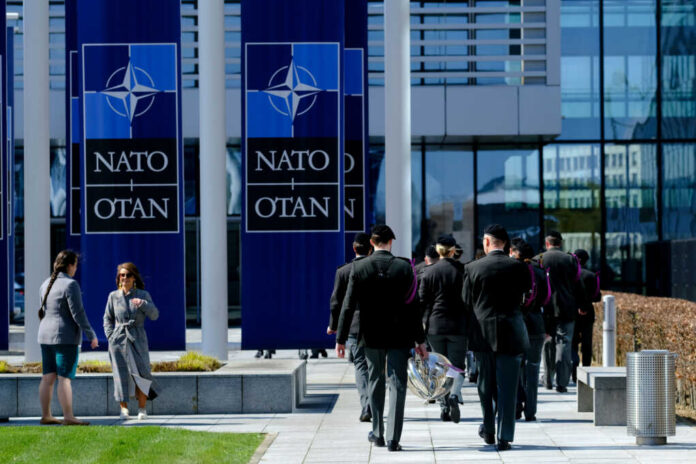
NATO’s Ankara summit is turning years of big promises into hard military spending, and ordinary taxpayers on both sides of the Atlantic will be sending the bill.
Story Snapshot
- NATO leaders in Ankara are shifting from talk to action on huge defense spending pledges.
- Allies plan to deliver about €70 billion in military support for Ukraine in 2026, mostly funded by Europe.
- A new 5% of Gross Domestic Product defense target by 2035 locks in long-term military budgets.
- Pressure from President Donald Trump and deep tensions over Iran and Greenland fuel mistrust of elites.
Ankara summit focuses on “delivery,” not just promises
NATO leaders are meeting in Ankara, Turkey, for the alliance’s thirty‑sixth summit, and this time the buzzword is “delivery.” NATO’s own overview says the task now is to turn past commitments into “concrete results,” with more investment, more industrial production, and steady support for Ukraine. This follows years of meetings where leaders announced new goals but often fell behind on real follow‑through. Many citizens, both conservative and liberal, now ask if this summit will truly be different.
NATO Secretary General Mark Rutte previewed the Ankara summit by stressing that leaders will review progress since the 2025 meeting in The Hague and set a roadmap to keep delivering on key objectives. That Hague summit produced a major decision: allies agreed to reach defence spending of 5% of Gross Domestic Product by 2035, far above the older 2% benchmark. For people already worried about government overspending or cuts to social programs, this long‑term military promise raises serious questions about national priorities.
Huge money for Ukraine and Europe’s new defense role
At Ankara, NATO members are expected to reaffirm their support for Ukraine and pledge more help as the war with Russia drags on. A draft summit text seen by reporters says that for 2026, allies will provide €70 billion in military equipment, assistance, and training to Ukraine, and aim to keep at least that level in 2027. Much of this money links to existing European Union loan facilities, while the United States is not expected to contribute new funding in this package.
This shift is part of a broader pattern where European countries take on more of the burden for the continent’s defense. Analysts note that Europe has already increased its share of military, financial, and economic support to Ukraine as United States aid fell. Supporters say this helps balance the alliance and fits Trump’s demand that Europe stop relying on American taxpayers. Critics, on the other hand, see another example of elites locking in high military budgets while many families struggle with inflation, energy prices, and gaps between rich and poor.
From spending targets to real weapons and industry deals
The Ankara summit is also about weapons factories, not just speeches. NATO describes its Defense Industry Forum in Ankara as a top event on defense production, investment, and innovation, focused on how the new 5% spending plan is being turned into joint procurement and higher output. Officials expect tens of billions of dollars in contracts to be announced, as European nations seek more tanks, missiles, drones, and other gear. This push for industrial capacity aims to make NATO forces faster, stronger, and more ready for future wars.
Turkey’s contested role and growing alliance tensions
The choice of Ankara as host puts Turkey’s complex politics in the spotlight. Experts describe a “Turkey paradox,” where the country is both a key ally and a politically contested member whose internal moves often clash with wider Western values. Turkey sees itself as a stabilizing power in regions like the Black Sea and Eastern Mediterranean and wants NATO to deepen cooperation with Gulf partners and strengthen southern security dialogues. Yet these ambitions come amid concerns about democracy, rights, and regional power plays.
🏢 Leaders begin arriving at the Presidential Complex in Türkiye's capital Ankara for the 36th NATO Summit
📌 Turkish President Erdogan and NATO Secretary General Rutte welcome heads of state and government from 32 member states
🔴 Follow our live blog for the latest updates:… pic.twitter.com/zN4KUzm5bu
— Anadolu English (@anadoluagency) July 8, 2026
On top of this, the summit unfolds under heavy transatlantic strain. Reports say the meeting comes after months of friction over the Iran war and a heated dispute involving Greenland, adding stress to already shaky trust inside the alliance. President Trump has again pressed Europe hard to raise defense spending, and media framing often presents Ankara as a response to United States pressure rather than a fully independent European choice. For many Americans and Europeans who distrust global elites, this looks like another closed‑door deal where leaders trade threats and contracts while ordinary people are left in the dark.
What this shift means for everyday citizens
Think about what 5% of Gross Domestic Product for defense by 2035 means in daily life. That is money that will not go to schools, health care, border control reforms, or debt relief. Supporters argue strong defense is the first duty of government and that Russian aggression and the Iran crisis prove the need for hard power. Skeptical citizens see a pattern: when it comes to wars and weapons, leaders from both parties find the cash quickly, but when families ask for help with basic costs, the answer is often “there is no money.”
The Ankara summit, in this light, is about more than tanks and missiles. It shows how Western governments are locking in long‑term defence spending, deepening ties between states and large defense firms, and shifting military weight from the United States to Europe. Whether you lean conservative or liberal, if you worry that the federal government serves powerful interests before regular people, this gathering in Turkey offers fresh reasons to ask who really benefits when NATO summits move from planning to implementation—and who pays.
Sources:
youtube.com, nato.int, aljazeera.com, reuters.com, atlanticcouncil.org