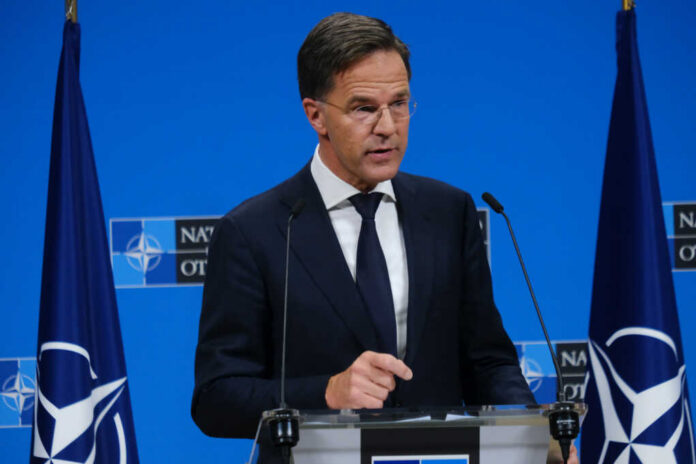
Mark Rutte’s latest warning on Ukraine is blunt: the peace track is moving, but Russia still has not shown it is ready to meet halfway.
Quick Take
- Rutte said peace talks need both sides, and Russia is not yet ready to engage.
- He linked any real deal to stronger pressure on Moscow and stronger support for Kyiv.
- Russia’s own public remarks still frame peace around Ukrainian concessions and legal excuses.
- The gap between battlefield claims and real diplomacy keeps the war tied to power, not trust.
Rutte Says Peace Needs Two Sides
NATO Secretary General Mark Rutte used a simple phrase to describe the deadlock: “you need two to tango.” In his public remarks, he said Ukraine wants peace, but Russia still has not shown the same readiness. Rutte also said current efforts are not enough to push Vladimir Putin into serious talks, even as Ukraine keeps blunting Russian advances and holding the line.
That message matters because it strips away the usual diplomatic fog. Rutte is not saying talks are impossible. He is saying the key problem is Russia’s choice, not Ukraine’s willingness. That distinction matters for allies who want an end to the war without rewarding force. It also fits a wider pattern in this conflict, where battlefield change has not yet produced a clean path to negotiation.
What Moscow Has Said So Far
Russian President Vladimir Putin has not issued a clean public rejection of peace talks in the material provided here. Instead, he has said Russia is willing to make compromises if Ukraine reciprocates, and he has said peace documents could be signed if the right representatives are involved. He also questioned Volodymyr Zelenskyy’s legitimacy, which turns the debate into a legal fight as much as a military one.
That position gives Moscow room to say it is open to peace while still setting terms Ukraine is unlikely to accept. Putin’s comments about legitimacy and constitutional signatories suggest the Kremlin wants the table arranged on its terms first. Rutte’s warning cuts against that approach. He argues that a real opening will not come from speeches alone, but from pressure that changes Moscow’s incentives.
Why the War Still Shapes the Talks
Rutte’s case is backed by the broader war picture described in the research. Ukrainian officials say Russia has kept up heavy attacks, including large drone and missile strikes, while still claiming it wants peace. The research also notes that no neutral international body in the package, such as the United Nations or the Organization for Security and Co-operation in Europe, has publicly verified Russia’s true negotiation intent. That leaves much of the public case to NATO and Ukraine.
The larger lesson is that this fight is not just about borders. It is about whether force can be used to shape future talks. Many readers on the left and right already distrust elites, global institutions, and endless war spending. This story feeds that distrust because it shows how little public language means when the guns keep firing and the core dispute stays unresolved. The war’s next phase may depend less on speeches than on who can absorb more pain.
Sources:
youtube.com, censor.net, voanews.com, nato.int, facebook.com, president.gov.ua, europarl.europa.eu, tandfonline.com, csis.org, linkedin.com, inclusivepeace.org, atlanticcouncil.org, daviscenter.fas.harvard.edu, cirsd.org, cfr.org, 2021-2025.state.gov