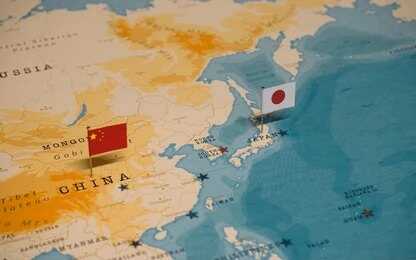
As Japanese and Chinese coast guard ships circle the same rocky islands with rival stories and loaded guns, one mistake could drag the United States — and the rest of us — into a war nobody voted for.
Story Snapshot
- Chinese and Japanese coast guards now routinely face off around the Senkaku/Diaoyu Islands, each claiming the other is trespassing.
- Japan says Chinese armed ships keep entering its 12‑mile territorial waters, while China insists its patrols are “legal” and that Japan is the intruder.
- The standoffs fit a 50‑year pattern of slow, steady pressure that stops just short of open war but keeps raising the risk of an accident.
- Both governments control the data and the story, leaving regular people in all countries in the dark while the danger quietly grows.
Fresh Incidents Near the Islands
Japan’s coast guard reports that Chinese coast guard ships have entered what Japan calls its territorial waters around the Senkaku Islands multiple times in 2025, sometimes staying for hours before leaving when ordered out by radio. Japanese officials say these ships came as close as a Japanese fishing vessel, forcing Japanese patrol boats to move in between. Chinese ships often carry deck guns, which makes every close pass tenser than the last.
Chinese officials tell a very different story. A spokesman for the China Coast Guard, Liu Dejun, claims a Japanese fishing boat “illegally entered” what Beijing calls Chinese territorial waters and says Chinese ships took “necessary law enforcement measures” to drive it away. Chinese government statements describe their sailings near the islands as routine “rights-protection patrols” that are “legitimate and legal,” directly rejecting Japan’s protests. Each side uses legal words, but they cannot both be right at the same time.
One Dispute, Two Maps, No Referee
The small islands at the center of this feud are controlled day to day by Japan, but China and Taiwan also claim them. Under sea law rules, whoever has real sovereignty over the islands gets a wide zone of resource rights around them, including possible oil and gas. That gives both governments a strong reason to push their maps and to send ships, even if that raises the chance of a crash or miscalculation.
Researchers who track this dispute say it has shifted over fifty years from a simple fight over energy to a “gray-zone” struggle for control without open war. Instead of battleships trading shots, coast guard vessels and planes come close, test the other side, and then pull back. That pattern grew sharper after 2012, when Japan brought several of the islands under direct state ownership and China answered by sending maritime law enforcement ships into the surrounding waters on a regular basis. The risk is that habits built in peacetime can snap during a crisis.
Conflicting Accounts, Hidden Evidence
One of the most troubling parts of these clashes is how little hard proof the public ever sees. Officials on both sides talk about “territorial waters” and “illegal entry,” but neither side has released radar logs, ship GPS tracks, or neutral satellite proof so outsiders can check whose story lines up with the exact 12‑mile limit. Reporters from outlets like the BBC and ABC News are left quoting two governments that flatly contradict each other, with no independent referee on the scene.
This information gap is not new. In 2010, a video of a Chinese trawler colliding with Japanese coast guard ships near the same islands leaked online, was confirmed as real, and then quickly vanished from major platforms. That older case showed both how dangerous these waters can be and how tightly governments and large companies can control what the public sees. People on both the right and left who already distrust “the elites” see another example of powerful players owning the evidence while everyone else is told to “just trust us.”
Why Americans Should Care
For many Americans, a fight over uninhabited rocks in the East China Sea feels far away. But the United States has a treaty with Japan that could pull American forces into any clash that turns into open conflict. Analysts warn that what looks like a local coast guard scuffle is really part of a wider pattern, where China steadily raises pressure around its borders — in the East China Sea against Japan and in the South China Sea against the Philippines. If something goes wrong, it will not stay “local” for long.
🇨🇳🇯🇵 BREAKING: China and Japan traded conflicting claims after a confrontation near the disputed Senkaku/Diaoyu Islands.
China says it expelled a Japanese fishing vessel, while Japan says it drove away two Chinese Coast Guard ships.
Tensions remain high in the East China Sea. pic.twitter.com/WdE75lEh4d
— NATO NEWS (@NATO307287741) July 7, 2026
Meanwhile, people in all three countries face the same basic problem. They pay the taxes, they send their kids to serve, yet they get only fragments of the truth. Key data stays locked in government systems. Social media clips appear and then vanish. Leaders in Beijing, Tokyo, and Washington talk about “law enforcement,” “rights defense,” and “strategic stability,” while the real costs — in risk, in money, and possibly in lives — fall on ordinary families. That is exactly the kind of distant, unaccountable decision-making many Americans believe is hollowing out their own democracy.
Sources:
insiderpaper.com, stripes.com, facebook.com, sipri.org