
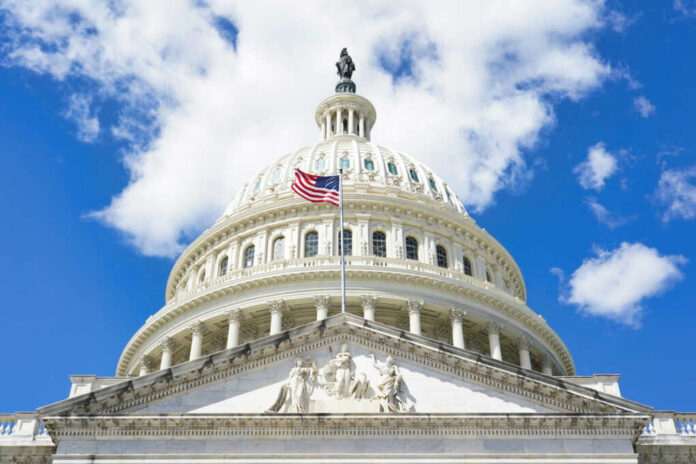
President Trump’s push to make the Supreme Court “try again” on birthright citizenship turns a settled constitutional right into a fresh test of how much power Washington’s elites have over who counts as an American.
Story Snapshot
- President Trump says he will ask the Supreme Court to rehear its ruling that struck down his executive order ending birthright citizenship.
- The Court’s Trump v. Barbara decision ruled that most babies born on U.S. soil are citizens, even if their parents are here illegally or only temporarily.
- Trump and key Republicans argue birthright citizenship fuels illegal immigration and “birth tourism,” while critics say he is attacking the 14th Amendment.
- Both parties’ base voters see the fight as more proof that Washington protects itself, not ordinary Americans, whatever their views on immigration.
What Trump Is Demanding From The Supreme Court
President Donald Trump has announced that his legal team will quickly ask the Supreme Court to rehear its recent birthright citizenship ruling, Trump v. Barbara, after the Court struck down his executive order. That order, signed on January 20, 2025, said children born in the United States would not be treated as citizens if their parents were in the country illegally or only on temporary visas. Trump now claims the justices “got it wrong” and misread the Fourteenth Amendment’s Citizenship Clause.
The executive order rested on a narrow reading of the phrase “subject to the jurisdiction thereof” in the Fourteenth Amendment, arguing that parents must owe “sole allegiance” and be legally settled in the country for their children to qualify. In the Barbara case, dissenting justices Clarence Thomas, Samuel Alito, and Neil Gorsuch backed that view, warning the current rule grants citizenship to “virtually anyone” born here, including birth tourists who intend to leave. Trump now points to that dissent as a roadmap for a rehearing, even though it did not command a majority.
What The Supreme Court Already Decided About Birthright Citizenship
In Trump v. Barbara, a five-justice majority held that the Fourteenth Amendment grants citizenship to nearly all children born on U.S. soil, regardless of their parents’ immigration status. Chief Justice John Roberts wrote that the Citizenship Clause incorporates long-standing common law and reaffirmed the 1898 case United States v. Wong Kim Ark, which said children of resident aliens are citizens at birth. The Court ruled that Trump’s order conflicts with both the constitutional text and decades of precedent on birthright citizenship.
The Court also found the order unlawful under federal immigration statutes, making it invalid even aside from constitutional issues. Roberts rejected Trump’s claim that “allegiance” requires parental domicile, saying there is “scant evidence” that the Fourteenth Amendment was meant to exclude children of people here illegally or temporarily. Civil liberties groups called the ruling a landmark victory for immigrant families and a clear message that presidents cannot rewrite the Constitution by executive action. For now, that decision stands as binding law, which is why many experts doubt the Court will rehear it.
Why Birth Tourism And Immigration Anger So Many Voters
Speaker Mike Johnson and other Republicans backing Trump say the birthright rule has turned into a magnet for abuse. They cite estimates from the Center for Immigration Studies that 20,000 to 26,000 foreign “birth tourists” come each year, many using paid maternity homes in states like California so their children can gain U.S. passports. Johnson calls this a national security problem and supports the “Anchors Away Act,” which would limit citizenship to babies born to citizens or lawful permanent residents.
Conservatives who feel burned by decades of illegal immigration, rising costs, and broken border promises see Trump’s fight as overdue. To them, automatic citizenship for anyone born here looks like another elite policy that ignores real-world strain on schools, hospitals, and wages. On the other side, liberals who fear the America First agenda see Trump’s move as one more attack on minorities and immigrant families, and say it risks creating a stateless underclass of children. Both sides, though, share a deeper anger: they believe the federal government talks about “values” while failing to fix the system.
Courts, Congress, And The Sense Of A Rigged System
Many constitutional scholars argue that ending birthright citizenship would likely require either a constitutional amendment or a significant shift in Supreme Court precedent. Yet Congress has shown little will to attempt such an amendment, even with Republican control of both chambers, and recent efforts like the Anchors Away Act stalled. That gridlock feeds the common belief that lawmakers avoid hard choices that might upset donors or risk reelection, whether on immigration, welfare, or corporate power.
President Donald Trump said he will ask the Supreme Court to rehear its recent birthright citizenship decision, calling the ruling "absolutely insane" in a Truth Social post. https://t.co/8tPM4iBMzt
— FOX 5 DC (@fox5dc) July 9, 2026
Media coverage of the Barbara ruling has mostly framed it as a “major blow” to Trump and a “clear rejection” of his reading of the Fourteenth Amendment. Many videos and posts on platforms like YouTube and Facebook describe his push for a rehearing as a “losing hand” and “out of touch.” For Americans who already suspect the “deep state” and big media are aligned, this feels like more proof that any challenge to long-standing rules gets buried under much media coverage characterized the ruling as a significant legal defeat for Trump.
Sources:
facebook.com, bbc.com, aljazeera.com, supremecourt.gov, davidlat.substack.com, asianlawcaucus.org, constitutioncenter.org, fam.state.gov