

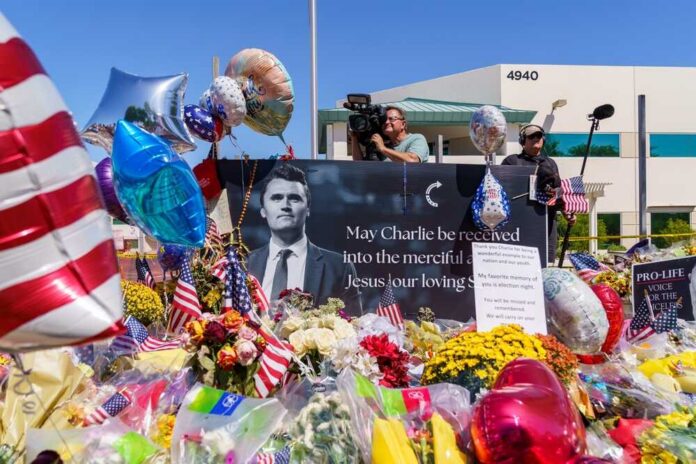
As Tyler Robinson faces a death‑penalty hearing for Charlie Kirk’s assassination, the case is exposing how political violence, media spin, and justice system distrust are colliding in today’s America.
Story Snapshot
- Prosecutors say DNA, ballistics, and a recorded confession link Tyler Robinson to Charlie Kirk’s killing.
- The defense is attacking hearsay evidence, ballistics limits, and media comments while trying to block the death penalty.
- The preliminary hearing is livestreamed, raising fears about jury bias and “trial by media” on both right and left.
- The case highlights a wider rise in political violence and deep frustration with how the system handles high‑profile crimes.
What Prosecutors Say Happened in the Kirk Assassination
Ten months after conservative activist Charlie Kirk was shot and killed while speaking at Utah Valley University, Tyler Robinson is in a Utah courtroom for a five‑day preliminary hearing on aggravated murder and related charges. Prosecutors say Robinson fired a single shot from a campus building rooftop, striking Kirk in the neck as he spoke to thousands of students at a Turning Point USA event. They describe the killing as a planned, politically motivated assassination carried out by a lone gunman.
Law enforcement recovered an older Mauser‑type bolt‑action rifle in nearby woods, along with a screwdriver and other physical evidence tied to the rooftop firing spot. Federal Bureau of Investigation (FBI) officials say Robinson’s DNA was found on a towel that wrapped the rifle and on the screwdriver from the roof, linking him directly to the suspected murder weapon. Prosecutors plan to present forensic analysis, surveillance video, witness statements, and autopsy findings to show there is enough evidence to move the case to a full trial and seek the death penalty.
Defense Challenges: Hearsay, Ballistics, and Media Pressure
Robinson’s lawyers are not mainly claiming “wrong man”; instead they are attacking how the state is building its case. They argue that key evidence comes through hearsay, including a video interview of Robinson’s roommate, Lance Twiggs, who allegedly says Robinson confessed, hid the weapon, and told him not to call police. The defense says using a recorded interview instead of live testimony blocks their right to cross‑examine an important witness and weakens the reliability of the confession evidence.
The defense is also pushing back on the gun evidence. A filing cites a Bureau of Alcohol, Tobacco, Firearms and Explosives report that could not conclusively match the bullet fragment taken from Kirk’s body to the specific rifle found in the woods. Prosecutors answer that the caliber is consistent and a spent casing is a match, but the official tool‑mark analysis is described as “inconclusive,” which the defense uses to question how “airtight” the case really is. Robinson’s team further says they have not had enough time to review full DNA reports, arguing that delays by agencies make it hard to fairly test the state’s science before the hearing.
Open Courtroom, Cameras, and the Fear of Trial by Media
The courtroom fight is not only about evidence; it is also about who gets to watch. Judge Tony Graf has ruled that the July preliminary hearing will stay open to the public and media, rejecting defense requests to close parts of it and seal exhibits. Pool cameras are allowed to livestream from the back of the courtroom, turning what is normally a low‑profile step into a nationally watched “mini‑trial.” Robinson’s lawyers warn that wall‑to‑wall coverage will poison the future jury pool and reward people who want fame from serving on a high‑profile case.
At the same time, Kirk’s widow Erika and his parents support cameras, saying the killing itself was caught on video and that the public has a right to see how the system responds. Defense attorneys have gone further, asking the judge to punish prosecutors for talking to the media about ballistics evidence, and even to remove the death penalty from the case because of those comments. Judge Graf has held an evidentiary hearing on whether the Utah County Attorney’s Office violated gag rules, underscoring how much this case now centers on media management as well as facts.
Political Violence, System Costs, and Shared Public Distrust
Kirk’s assassination did not happen in a vacuum. It came only months after the murder of Representative Melissa Hortman in Minnesota and other recent attacks, part of what experts describe as a “long, dark history” of rising political violence in a polarized era. Analysts say three forces are driving this trend: seeing political opponents as “enemies of the nation,” easy access to guns, and constant harsh rhetoric on social media and cable news. All of that makes lone actors more likely to act on their anger and feel famous for doing so.
⚡🚨 TRENDING: Erika Kirk along with Charlie Kirk's parents have arrived at the courthouse in Provo, Utah, for the preliminary hearing of Tyler Robinson . pic.twitter.com/N8U9URRufW
— Jody Chase (@JodyChaseTN) July 6, 2026
The Robinson case also shows how expensive and complex capital murder prosecutions have become. Utah County has already approved more than $1 million for the prosecution and defense in this and other death‑penalty cases, with officials expecting hundreds of thousands more each year. For many Americans, both conservative and liberal, that cost feeds a sense that the system spends more on process than on fixing root problems like mental health care, campus security, or political hate. Experts note that lack of mental health funding leaves dangerous people without help, increasing the risk of tragedies like Kirk’s killing.
Why This Case Hits a Nerve Across the Political Spectrum
For conservatives, Kirk’s death is a shocking symbol of how unsafe it has become to speak openly about hot‑button issues such as gender and gun rights; he was killed while debating mass shootings and transgender topics at a college event. For many liberals, the case highlights fears about unchecked gun access, the spread of extreme rhetoric, and the use of the death penalty in a justice system they already doubt. Both sides see the intense media spin and courtroom games as proof that elites and institutions are more focused on optics and careers than on truth and fairness.
As Robinson’s preliminary hearing unfolds on live video, viewers are watching more than one man’s fate. They are watching how the justice system handles a rare, high‑profile political assassination at a time when faith in government is low and anger at “the system” is high. The strong forensic evidence claimed by the state, the procedural attacks by the defense, and the unusual level of public exposure will shape whether people believe this was a careful search for justice or another example of a broken machine grinding through a tragic crime.
Sources:
youtube.com, ksl.com, livenowfox.com, rev.com, cbsnews.com, apnews.com, heraldextra.com, facebook.com, cnn.com, kutv.com, bbc.com, abcnews4.com