

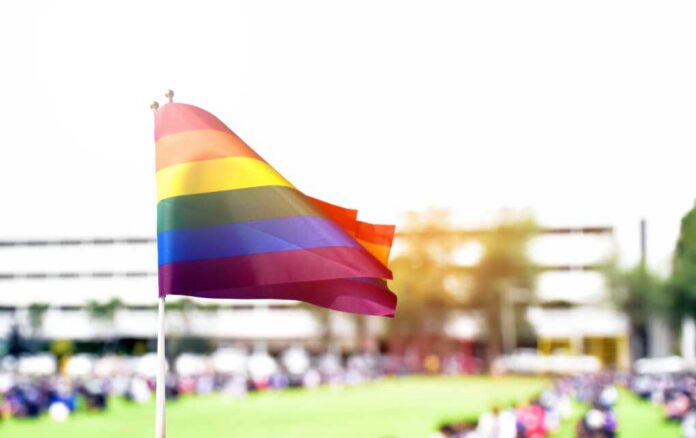
The Supreme Court’s new transgender sports ruling is being celebrated by supporters and condemned by critics, highlighting one of the country’s most divisive debates over fairness, civil rights, and school athletics.
Story Snapshot
- Supreme Court upholds Idaho and West Virginia laws that base girls’ sports on sex at birth, not gender identity.
- Trump celebrates the 6-3 decision as a victory for women’s sports and for his “sex-based” athletic policies.
- Civil rights groups warn the ruling will harm transgender youth and deepen discrimination claims under federal law.
- The ruling is expected to intensify national debate over fairness in girls’ sports, transgender rights, and the role of states in setting school athletic policies.
What the Supreme Court Just Decided
The Supreme Court ruled 6-3 to uphold state laws in Idaho and West Virginia that limit girls’ and women’s sports to athletes whose sex at birth is female. The justices said these bans do not violate the Constitution’s Equal Protection Clause or Title IX, the 1972 law that bans sex discrimination in education. The majority treated “sex” in Title IX as biological, not as gender identity, and accepted arguments that sex-based teams can be used to keep competition fair for girls.
The two cases came from a college runner in Idaho and a middle-school girl in West Virginia, both transgender, who were blocked from their teams by state law. Lower courts had sided with them and paused the bans, finding that categorical rules likely discriminated based on sex and transgender status. The Supreme Court reversed that path, saying states can draw clear lines by sex at birth for sports without automatically breaking federal civil rights rules.
Why Trump Is Calling It a ‘Big Win’
Former President Donald Trump quickly praised the ruling as a major win for women and girls in sports, and for his broader “keep men out of women’s sports” agenda. His administration’s lawyers had told the court that sex strongly tracks athletic traits like size, muscle mass, bone strength, and lung capacity, and that ignoring these differences would erase fifty years of progress for female athletes under Title IX. Supporters argue the decision recognizes biological differences that they believe are relevant to competitive athletics and preserves sex-based sports categories established under Title IX.
Trump’s 2025 executive order pushed federal agencies to pull funds from schools that allow male participation in women’s sports, and to press global sports bodies to use sex at birth, not gender identity, for female events. The Court’s ruling does not turn that order into law nationwide, but it does give political and legal momentum to the same idea in the 27 states that now restrict transgender girls’ access to girls’ sports. Supporters say the ruling strengthens states’ authority to adopt sex-based eligibility rules for school athletics.
How Many States Are Affected and What It Means for Families
Since Idaho first passed a transgender sports ban in 2020, similar laws have spread fast across the country. By early 2026, 27 states had laws or regulations that stop transgender students from playing on teams that match their gender identity. About half of transgender teens now live in states with such limits. The decision is expected to influence challenges to similar laws across numerous states, although future lawsuits may still address how specific statutes are applied.
For many parents of cisgender girls, this ruling feels like long-awaited protection for their daughters’ chances at scholarships, records, and basic fairness on the field. Over 100 athletes and coaches, including several Olympians, backed the bans, saying they want equal opportunity for female athletes who grow up and train inside the women’s category. For parents of transgender kids, though, this decision deepens fear that their children will be pushed out of normal school life, labeled as problems, and used as talking points by politicians far away from their communities.
The Civil Rights Clash and What the Data Shows
Civil rights groups like the American Civil Liberties Union (ACLU) argue the ruling conflicts with earlier Supreme Court logic that treats gender identity discrimination as a form of sex discrimination. They say categorical bans ignore important details, such as whether a transgender athlete has taken hormone blockers or suppression therapy that could reduce any physical edge. The majority primarily relied on constitutional and statutory interpretation rather than conducting an extensive review of scientific literature, while critics argue that more individualized assessments would better reflect current research.
The U.S. Supreme Court on Tuesday kept in place state laws banning transgender athletes from participating on women’s and girls’ sports teams, @jacob_fischler and @ShauneenMiranda report. https://t.co/yLzlJL59BM
— Kathie Obradovich (@KObradovich) June 30, 2026
Research from the Williams Institute at the University of California, Los Angeles and a review hosted by the National Institutes of Health report that current evidence does not support a simple, blanket claim of athletic advantage for all transgender women compared with cisgender women, and that many exclusion policies are not rooted in strong medical data. This gap between the legal reasoning and the available science fuels the sense on both left and right that decisions are driven less by careful evidence and more by politics, pressure groups, and the need for elected officials to look “tough” in culture wars.
What This Fight Reveals About the System
The ruling underscores how questions about school sports have become part of a broader national debate over education, civil rights, parental involvement, and the role of government. Whatever readers think of the outcome, the decision is unlikely to end the legal or political disputes surrounding transgender participation in athletics.
Sources:
[1] Web – BREAKING: Supreme Court Upholds Schools’ Right to Ban Biological Boys …
[2] Web – Supreme Court arguments on transgender athletes in sports – CNN
[4] YouTube – Supreme Court seems likely to allow state bans of transgender …
[6] Web – 5 takeaways from the Supreme Court’s showdown over transgender …
[7] YouTube – Supreme Court weighs transgender athletes bans | full video
[8] Web – Supreme Court Concludes Oral Arguments in Historic Transgender …
[9] Web – US Supreme Court to review bans on trans athletes in female sports
[10] Web – Ban on Transgender Women From Female Sports Is Challenged in …
[11] Web – What’s at Stake as the Supreme Court Takes Up Transgender Sports …
[13] YouTube – Supreme Court weighs challenges to state bans on transgender …
[15] Web – US Supreme Court conservatives lean toward allowing transgender …
[19] Web – Transgender exclusion in sports – American Psychological Association
[20] Web – Keeping Men Out of Women’s Sports – The White House