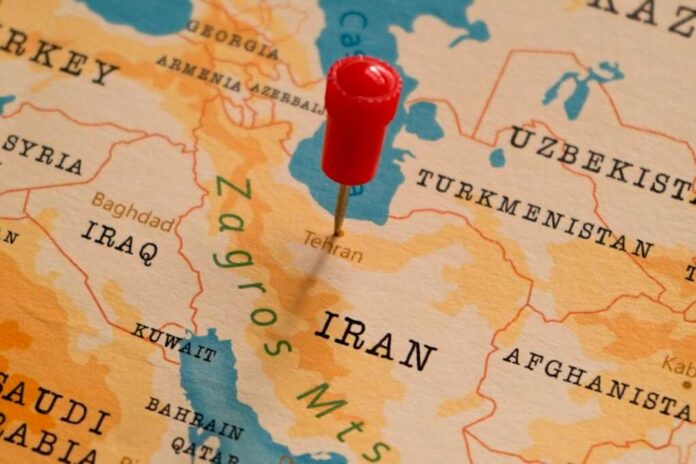
President Donald Trump has escalated the U.S. standoff with Iran, delivering a clear warning to Tehran: abandon the nuclear program and cease the killing of anti-regime protesters, or face a significant projection of U.S. power. This shift in posture includes a visible military buildup in the region, aimed at creating credible deterrence and operational options beyond mere rhetoric. The move forces a moment of decision for Iran’s leadership, which is simultaneously issuing threats of retaliation while signaling an openness to negotiation.
Story Highlights
- President Trump confirmed talks with Iran while also ordering a visible U.S. military buildup meant to create real options, not just rhetoric.
- Trump publicly set two core demands: no Iranian nuclear program and an end to the regime’s killing of protesters.
- Reporting describes strike options ranging from targeted attacks on security forces and leadership to potential raids by troops on nuclear-related sites.
- Iran issued threats of an “all-out” response, even as its foreign minister signaled openness to negotiations.
Trump’s Two Demands Put Tehran on Notice
President Donald Trump has framed the current U.S.-Iran standoff around two explicit conditions: Iran must end its nuclear program and must stop killing anti-regime protesters. Those demands matter because they connect national security to human rights in a way that clarifies U.S. intent. Trump also confirmed the U.S. is moving major military assets into the region, signaling deterrence backed by capability rather than the “talks-only” approach that repeatedly failed to change Tehran’s behavior.
Iran’s posture has shown sharp contrasts across the same news cycle. A senior adviser to Supreme Leader Ayatollah Ali Khamenei warned of an immediate, war-like response if the United States acts, while Iran’s foreign minister publicly indicated readiness for nuclear negotiations. That combination—threats paired with diplomatic signaling—is familiar to regional observers and helps explain why U.S. planners are emphasizing credible military readiness while leaving space for talks through intermediaries.
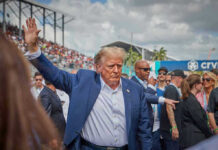
Donald Trump confirms he’s been in direct, ongoing communication with Iran, pairing diplomacy with force as U.S. warships move into position.
"I told them two things: 1) no nuclear 2) stop killing protesters."pic.twitter.com/vtE5WaYVAJ
— Brandon Straka #WalkAway (@BrandonStraka) January 30, 2026
Military Buildup Creates Leverage, Not Just Headlines
U.S. deployments in recent weeks—warships, aircraft, and other assets—have been described as building a deterrent shield while also giving the president real operational choices. Trump later referenced a “large armada” heading toward Iran and said it would be “great” if force does not have to be used. The sequence is significant: positioning forces first reduces bluffing and reduces the temptation for Tehran to assume Washington will hesitate in a crisis.
According to reporting, potential strike packages under review are not limited to symbolic hits. They include attacks aimed at degrading Iran’s security apparatus and leadership nodes—moves that U.S. officials believe could weaken the regime’s ability to suppress protests. Separately, the reporting also discusses options for raids by troops on nuclear-related facilities, including sites that may have avoided prior damage. None of these options guarantee outcomes, but each signals a more serious posture than empty “red lines.”
Iran’s Internal Crisis Collides With Nuclear Escalation
Iran’s leadership is facing what has been described as its most serious internal pressure in years, driven by economic strain and widespread anti-regime protests. Rights groups have verified deaths in the thousands, with higher estimates reaching into the tens of thousands, though exact figures remain disputed. The key point for U.S. policy is that Iran’s internal crackdown is not occurring in isolation; it is unfolding alongside nuclear tensions and long-running regional aggression, raising the stakes for allies and U.S. forces.
Recent history also shapes the risk calculation. The timeline referenced in reporting includes the U.S. withdrawal from the JCPOA, the 2020 strike on Qassem Soleimani, and a 12-day U.S.-Israel war in June 2025 that targeted Iranian nuclear and missile sites. Reporting indicates some facilities were damaged, while Iran’s ballistic missile program showed signs of recovery afterward. That context helps explain why U.S. options now reportedly include actions designed to reach capabilities that survived earlier blows.
Diplomacy Runs Through Gulf Mediators as Israel Presses for Action
Gulf states are described as active intermediaries, with Saudi messages highlighted as part of a regional effort to manage escalation. At the same time, Israel is portrayed as pressing for joint operations focused on Iran’s missile threat and broader military capability. This puts Washington in a familiar but delicate position: protecting American personnel and allies, preventing a nuclear breakout, and managing the regional spillover that could follow any strike or miscalculation by Tehran.
Analysts at the Atlantic Council have argued for a “whole-of-government” approach, pairing military options with sanctions enforcement and other tools, including cyber operations intended to narrow the regime-versus-protester power gap. The analytical debate in the reporting is not whether Iran is dangerous—the sources broadly agree it is—but what kind of pressure actually changes behavior without drifting into open-ended conflict. That is why Trump’s emphasis on narrowed demands and credible deterrence is central to the current moment.
What’s Clear—and What Remains Uncertain
Reporting consistently shows three confirmed facts: U.S. assets are moving into place, Trump is keeping the strike option available while leaving the door open to talks, and Tehran is simultaneously threatening retaliation and signaling diplomacy. What remains uncertain is timing and decision: accounts describing an imminent directive are still speculative, and no final order has been publicly confirmed. If force is used, the immediate test will be whether deterrence holds—or whether Iran chooses escalation against U.S. or Israeli targets.
For Americans who watched the prior administration project weakness abroad while spending recklessly at home, this episode highlights a different governing philosophy: strength first, diplomacy second, and clear demands tied to U.S. security interests. The constitutional responsibility of the commander in chief is to defend the nation and its forces, not to manage Tehran’s feelings. The open question is whether Iran will meet the demands—or gamble that the West no longer has the will to enforce them.
Watch the report: Donald Trump LIVE: Iran Wants To Make Deal Rather Than Face Military Action, Trump Says
Sources:
Trump confirms talks with Tehran, is reportedly mulling raids by troops on Iranian facilities
Tehran braces for war while testing the limits of diplomacy | Iran International
Trump confirms talks with Tehran, is reportedly mulling raids by troops on Iranian facilities | The Times of Israel
Trump says Iran already has US terms as military strike clock ticks