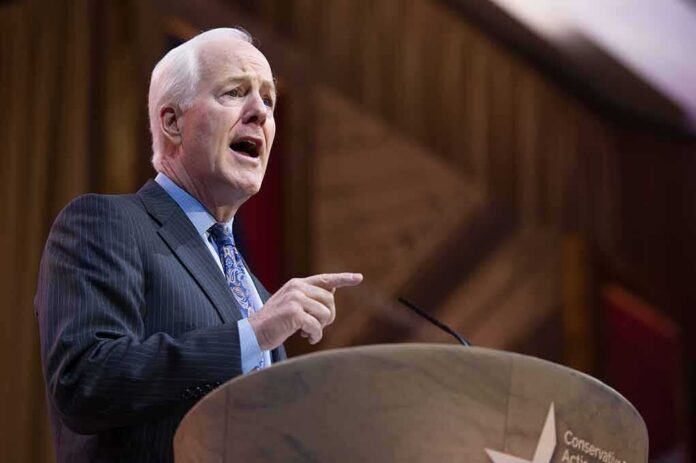
A sitting Republican senator publicly urged his own party to condemn a statewide GOP nominee’s post as “intolerance and racism,” warning it is how parties “self-destruct.”
Story Snapshot
- Senator John Cornyn called a GOP nominee’s social post racist and asked Republicans to denounce it.
- The post reportedly tied a crowd of mostly people of color to a University of Texas graduation.
- Some Republicans have condemned similar incidents before, while others stay silent or defend allies.
- The original post is not included in full, limiting independent review of context.
What Senator Cornyn Said And Why It Matters
Senator John Cornyn, a Republican from Texas, criticized a Republican nominee for Texas railroad commissioner over a social media post. Cornyn wrote that the post showed “intolerance and racism” and asked other Republican officials whether they would condemn it or “look the other way.” He warned that silence normalizes bad behavior and “is how great political parties self-destruct.” His comments aired a family fight in public and signaled a test for party standards ahead of the election cycle.
The post at issue reportedly used a photo from a Texas–Ohio State football game. The image showed many people of color in the stands celebrating a touchdown. The caption said, “I heard UT graduation this year looked like this.” Critics read that pairing as mocking a diverse student body. Supporters might see it as crude satire. The original post is not reproduced in full in the available report, which limits outside checks on exact wording and timing.
The GOP’s Choice: Condemn, Defend, Or Stay Silent
Party leaders often face three paths after a racially charged flap. They can condemn and distance, defend and risk blowback, or say nothing and hope the story fades. Texas Republicans have split in past dustups. In another case, Lieutenant Governor Dan Patrick urged a local party chair to resign after a controversial post, calling it against Republican values. The official refused but said people misunderstood his intent and that he regretted posting it, showing the push-pull inside the party.
Research on political communication shows parties often try “damage control” when racism claims arise. Leaders may reject the behavior to show standards, even if they back the person on policy later. Social media can inflame these fights by rewarding outrage and dunk culture. That makes quick, clear responses more important, but also harder. In this climate, Cornyn’s call becomes more than a tweet. It becomes a measure of whether norms still hold when clicks drive the news.
Why This Resonates Beyond One Post
Voters on the right and left are tired of leaders who dodge hard choices. Conservatives resent culture war taunts and elite scolding. Liberals resent “America First” rhetoric they see as dismissive of minorities. Many in both camps think leaders protect power over principle. A party’s reaction to a charged post is a small but clear test. Do leaders set lines that match their stated values, or do they bend them for a win today and a bigger headache tomorrow?
America’s broader debate over race online is not going away. Reports highlight how social media amplifies division and blurs context, making fast judgment easy and careful review rare. That weakens trust. It also feeds the view that elites spin every story. Clear facts, a consistent standard, and transparent follow-through can help. Here, that means confirming the original post, weighing intent and impact, and stating a firm response that puts country and community above clicks.