

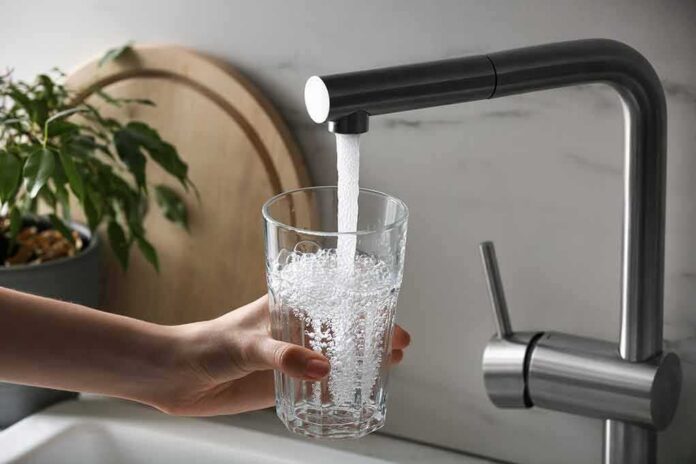
EPA scientists just launched a nationwide water-screening study that will look for abortion drugs alongside more than 1,000 other potential contaminants — a broad test that puts politics aside to ask a basic question: what’s in our water?
Story Snapshot
- EPA announced a broad screening of drinking water for pharmaceuticals, PFAS, and 1,000+ contaminants.
- The method is non-targeted analysis designed to flag whether substances are present.
- Coverage says mifepristone and misoprostol are included among screened drugs.
- EPA has not released sampling sites, counts, or full detection limits yet.
What EPA Announced And Why It Matters
On September 9, the Environmental Protection Agency announced a new scientific study to screen U.S. drinking water for a broad set of pollutants. The agency said it will look for pharmaceuticals, per- and polyfluoroalkyl substances, and more than 1,000 potential contaminants. The goal is to learn what is in finished tap water systems across the country and inform future actions under the Safe Drinking Water Act. The announcement came through an agency news release and social media post.
The study uses a non-targeted analysis approach. That technique can scan water samples for many compounds at once. It flags possible chemical “hits,” even if they were not on a short list. This approach is useful when the list of emerging pollutants keeps growing. It focuses on detection, not on setting health risk levels. The agency framed the effort as a science step that can guide later, targeted testing if needed.
What Is On The List, And What Is Not Settled Yet
News coverage reports that the screening will include mifepristone and misoprostol among many pharmaceuticals. That has drawn strong reactions because abortion policy is intense today. The Environmental Protection Agency’s own release emphasized breadth, not any single drug. The public material did not post a full list of analytes, sampling locations, or sample counts. Those details will matter for understanding the reach and limits of the study’s findings.
Reports differ on the total size of the screening list, with some writing “more than 1,000” and others citing higher counts above 1,400. That gap could reflect different ways to count or later edits. The Environmental Protection Agency has not published a final, public list tied to this study in the available materials. Until methods and site plans are posted, the exact scope remains broad by design but not fully defined for outside review.
Science First, Politics Second
The Environmental Protection Agency said the study will help “shed light on this issue” and support actions under the Safe Drinking Water Act. That signals an information effort, not a rule by itself. A non-targeted screen can say if a compound appears present. It does not by itself say how much is there or what the health risk is. Later phases can use targeted lab methods to measure exact levels and compare them to health benchmarks.
Your tap water is now getting more research funding than women’s health.
Trump's EPA just caved to anti-abortion groups and will start testing drinking water for abortion pills and birth control—there’s no evidence of this whatsoever. https://t.co/8bm9DpFcZj
— Democratic Women's Caucus (@DemWomenCaucus) September 18, 2026
Americans across the spectrum worry that agencies chase headlines while basic services falter. Many also fear that elites use science as a weapon in culture fights. This move can be read another way. A broad, transparent look at what we drink is a basic public duty. If the Environmental Protection Agency releases methods, sites, and results in full, it will help rebuild trust. Clear data can cut through spin from either side and keep the focus on safe water.
Sources:
lifesitenews.com, thecut.com, liveaction.org, commondreams.org, waterwelljournal.com