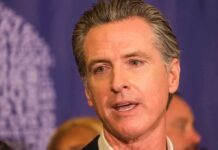
A Silicon Valley entrepreneur told Congressman Ro Khanna to put his own money where his mouth is before taxing anyone else’s fortune.
Story Snapshot
- Investor David Friedberg publicly challenged Rep. Ro Khanna to donate 5% of his family’s $200 million net worth before pushing a billionaire wealth tax.
- Khanna and Sen. Bernie Sanders introduced the “Make Billionaires Pay Their Fair Share Act,” a 5% annual tax on roughly 938 billionaires.
- Khanna says the tax could raise $4 trillion over ten years for childcare, college, and Medicare expansion.
- Billionaire investor Mark Cuban separately called a related California wealth tax plan “insane.”
A Public Feud Over Fair Shares
David Friedberg, an entrepreneur and co-host of the “All-In” podcast, mocked Khanna’s wealth tax idea online before turning the argument personal. He wrote that he wanted Khanna to “make a voluntary contribution of 5% of your family’s $200M net worth to the government for important healthcare, childcare, and jobs”. The exchange quickly spread across social media as a test of consistency.
Friedberg did not stop at sarcasm. He pushed the disagreement further, framing Khanna’s proposal as something closer to government seizure of private property rather than ordinary tax policy. That shift, from mocking a policy idea to accusing a lawmaker of hypocrisy and overreach, is what turned a niche tax debate into a viral moment watched by people well outside politics or finance.
Khanna’s Case for Taxing Extreme Wealth
Khanna, a Democrat representing California’s Silicon Valley district, has pushed the wealth tax for months. He says about 900 billionaires hold 22% of the country’s economic output, calling it a “second Gilded Age”. His bill with Sanders would apply a 5% annual tax on the roughly 938 billionaires in America, money he says would fund free childcare, public college, trade schools, and expanded Medicare.
Khanna argues billionaire wealth sits untaxed for years because it isn’t treated as regular income. “They are just sitting there without ever paying an income tax,” he said in one interview. He has also pointed to economists Emmanuel Saez and Gabriel Zucman, who told him billionaire wealth grew 158% over three years, making a one-time tax reasonable to offset expected Medicaid cuts.
Khanna rejects the idea that supporting the tax hurts him politically. He noted he won his primary election 63% to 6% after coming out in favor of the 5% billionaire tax, using that result as proof voters back the idea even in a tech-heavy district. He has also pushed back on rival proposals, arguing some competing plans from other Democrats aren’t real wealth taxes at all.
Critics Question Consistency and Legality
Friedberg isn’t the only wealthy critic pushing back. Billionaire investor Mark Cuban called a related California billionaire tax plan “insane” in a lengthy public exchange with Khanna, questioning how the state would even collect the money without founders simply handing loaned funds right back. The pattern of billionaires challenging Khanna directly, instead of through lobbyists or think tanks, has kept the fight visible and personal.
Beyond the personal jabs, legal scholars remain split on whether any federal wealth tax could survive a court challenge. Some argue the Constitution requires direct taxes to be divided among states by population, making an unapportioned wealth tax unconstitutional. Others say a modern reading of the Sixteenth Amendment would allow Congress to tax unrealized gains without that restriction, leaving the legal question unsettled even as the political fight rages on.
What makes this dispute resonate beyond tax policy is the broader pattern it fits. Wealth tax fights routinely turn into arguments about hypocrisy and elite self-interest rather than staying focused on tax design. Supporters frame the tax as fairness for fortunes that go lightly taxed for years, while critics frame it as confiscation dressed up as fairness. Both sides accuse the other of protecting a system that already favors the powerful, whether in Washington or Silicon Valley boardrooms.
Sources:
yahoo.com, aol.com, youtube.com, hotair.com, x.com, rokhannausa.substack.com, sanders.senate.gov