
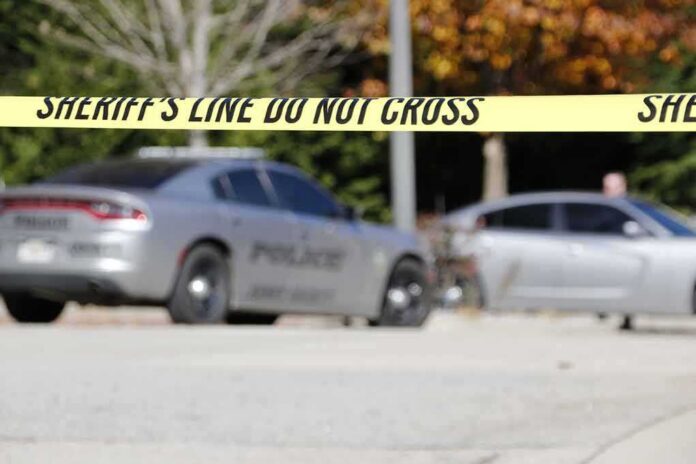
An immigration enforcement operation in North Austin ended with a man shot and in the hospital, and four agencies now say they are investigating what happened.
Story Snapshot
- A U.S. Immigration and Customs Enforcement agent shot a man in North Austin
- Officials say the man was hit once in the torso and is stable
- Local police, Texas Rangers, and federal investigators opened parallel probes
- Early reports cite a brief foot pursuit before the shooting near Anderson Square
Confirmed facts from the scene in North Austin
A U.S. Immigration and Customs Enforcement agent shot and wounded a man near the 8000 block of Anderson Square in North Austin on Sunday, just before 1 p.m. Austin-Travis County emergency medical staff treated the man for a single gunshot wound to the torso and took him to a hospital in serious but stable condition, according to local reports citing emergency leaders. Multiple outlets placed the scene near U.S. 183, with traffic closures as officers secured the area and collected evidence.
Austin Police Chief Lisa Davis said preliminary information pointed to a short foot chase before the shooting. City officials said Austin police were not part of the federal operation and did not fire shots. The Austin Police Department’s Special Investigations Unit began a probe and requested help from the Texas Rangers. Homeland Security Investigations leaders signaled they would cooperate with local investigators, according to statements reported by city-briefed media.
What officials said about roles and next steps
Mayor Kirk Watson and Chief Davis told reporters that local officers handled scene control while investigative teams launched parallel reviews. They said the Austin Police Department would evaluate use of force and evidence alongside the Texas Rangers. They also said they were seeking cooperation from federal partners, including Homeland Security Investigations. Federal officials did not appear at the city briefing, but news reports identified U.S. Immigration and Customs Enforcement as the agency involved in the encounter.
Officials said they did not yet know what led to the initial contact before the chase. Reporting differed on whether the event began as a traffic stop or another enforcement action. One outlet, citing a law enforcement source, identified the wounded man as a Venezuelan national with a final order of removal, but other reports did not confirm his identity. Those details remain limited in the public record as of the first day of coverage.
Public response and the wider policy backdrop
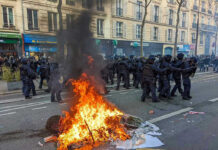
Dozens of people gathered near the scene to protest soon after the shooting. Chants focused on immigration enforcement and demands for answers. This pattern has repeated in Texas as immigration cases draw fast attention and emotions while investigations unfold over weeks or months. Reporters noted this marked at least the third shooting by an immigration agent in Texas since March 2025, raising pressure for quicker transparency and clearer timelines from local and federal officials.
The federal agency’s body camera policy also shapes expectations. The Department of Homeland Security documented a program to equip immigration officers with body cameras. Recent coverage reported that the agency decides when to release video, often citing what it calls the agency’s best interests. That stance has drawn calls from city leaders and advocates for faster, public release of footage after serious force events like the one in Austin.
Why the investigation process matters to both sides
Residents who back strong border enforcement want clear proof that force was lawful, targeted, and necessary. Residents who fear abuse of power want quick evidence sharing and independent reviews when someone is shot. Austin officials said the Special Investigations Unit and the Texas Rangers will examine the scene, witness accounts, and digital records. They also said they want cooperation from federal partners to fill gaps, including video, radio logs, and reports tied to the operation.
ICE Agent Shoots Venezuelan Man During Austin Traffic Stop
• ICE agent shot and wounded a man during a traffic stop in Austin, Texas.
• Victim identified as 28-year-old Venezuelan Wilber Rafael Garcés Pérez; shot in torso, serious but stable.
• Anti-ICE protesters gathered… pic.twitter.com/WAkVBuWIUc— The Unbiased Update (@unbiased_update) September 21, 2026
This division of labor can slow disclosures because city, state, and federal agencies each control pieces of the file. Still, the basic facts are firm: an immigration agent fired, a man was hit once in the torso, and he survived to reach a hospital in stable condition. Officials said they aim to map the exact sequence from first contact to the shot. As that record comes together, Austin’s leaders face a familiar test: show the work, share what they can, and do it on the clock.
Sources:
fox7austin.com, yahoo.com, independent.co.uk, statesman.com, abc7news.com, bbc.co.uk, ap.org, chicagotribune.com