
Europe is moving to police the world’s most vital oil chokepoint—while deliberately sidelining the United States.
Quick Take
- The EU’s top diplomat says the bloc could expand its Operation Aspides naval mission from the Red Sea to the Strait of Hormuz after Iran reopened the passage.
- Germany is preparing deployments to the Mediterranean, signaling the EU is getting serious about a larger maritime security role.
- The stated focus is defensive: escorting commercial ships and potential mine-clearing to restore confidence in global trade routes.
- The plan is politically sensitive because it is framed as “neutral” and reportedly excludes the U.S. and regional belligerents—raising questions about deterrence and accountability.
EU Floats Hormuz Expansion as Iran Reopens a Global Energy Lifeline
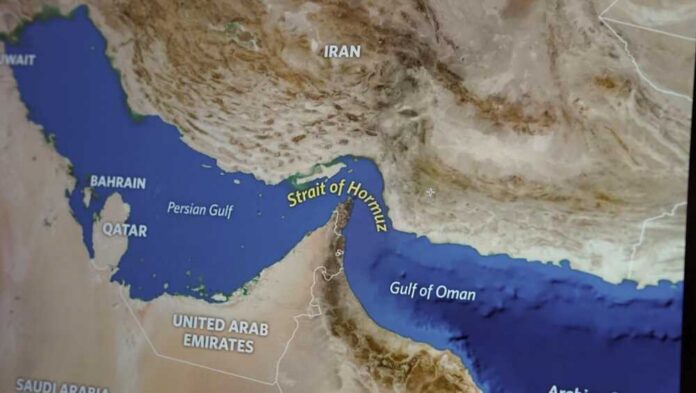
EU foreign policy chief Kaja Kallas said the European Union could expand Operation Aspides—its naval mission created to protect shipping in the Red Sea—to the Strait of Hormuz. The timing follows Iran’s reopening of the strait after a period of closure tied to regional conflict. Hormuz is a narrow waterway between Iran and Oman that handles roughly a fifth of global oil trade, so even short disruptions can hit fuel prices and supply chains quickly.
Operation Aspides was launched in late 2023/early 2024 as attacks and threats in the Red Sea spiked risks for commercial shipping. In the research provided, Aspides is described as having escorted hundreds of vessels by mid-2025 and performing defensive tasks such as protecting routes and countering airborne threats. EU officials are now discussing whether that model—escorts, situational awareness, and potentially mine-clearing—can be adapted to Hormuz if the security picture stabilizes enough to deploy safely.
Germany’s Preparations Signal the EU Is Positioning for a Bigger Role
Germany has announced plans to deploy naval units to the Mediterranean ahead of any potential Hormuz mission, a practical step that suggests planning is moving beyond talk. In maritime operations, staging matters: positioning command-and-control assets, logistics ships, and specialized vessels in nearby waters reduces response time if a mission is approved. The research also highlights European strength in mine-countermeasures, an area that becomes critical when reports circulate that mines may have been laid during a closure.
Mine-clearing is slow, technical, and expensive—but it is also one of the most concrete ways to prove a mission is about protecting commerce rather than escalating conflict. For ordinary Americans and Europeans watching energy and inflation, the immediate significance is straightforward: safer passage reduces the odds of a prolonged shipping backlog, insurance spikes, or panicked futures markets.
A “Neutral” EU Mission Without Washington Raises Deterrence Questions
France, under President Emmanuel Macron and senior officials including Jean-Noël Barrot, is pushing a concept described as a post-hostilities security mission that excludes the United States as well as the main conflict parties. Supporters present that as “neutral” burden-sharing that lowers the political temperature and attracts broader buy-in, potentially including countries like India or China. The EU’s message is strategic autonomy—Europe acting independently to protect trade routes central to its own economic security.
For U.S. audiences in 2026, that framing lands in a complicated place. Many conservatives argue allies should carry more of the load rather than relying on American taxpayers and sailors for every international crisis. At the same time, deliberately excluding the U.S. can reduce mission credibility if adversaries believe Europe will avoid confrontation at all costs.
What This Means for Energy Prices, Markets, and Public Trust
Because the Strait of Hormuz is so central to global oil flows, the main near-term metric to watch is whether shipping traffic normalizes without new seizures, drone incidents, or mining scares. The research notes that traders are highly sensitive to signals from key players and that market volatility can move fast on incomplete information. If escorts and demining are executed effectively, the payoff is less price whiplash—something households feel at the gas pump and through broader inflation pressures.
EU says could expand naval mission to Strait of Hormuzhttps://t.co/CAp5KVOWaq
— Economic Times (@EconomicTimes) May 13, 2026
Politically, the story also reinforces a broader trend: the public sees major institutions jockeying for influence while everyday people absorb the costs of instability. Europeans debate strategic autonomy; Americans debate why disruptions abroad keep punishing domestic budgets. The facts in the research show a mission still in the planning stage, with open questions about mandate, timing, and regional coordination. Until those details are public, voters are left judging leaders by results—stable trade, lower risk, and fewer crises.
Sources:
EU to Expand Naval Mission After Iran Reopens Strait of Hormuz
EU says could expand naval mission to Strait of Hormuz
Germany to deploy naval units to the Mediterranean ahead of potential Strait of Hormuz mission