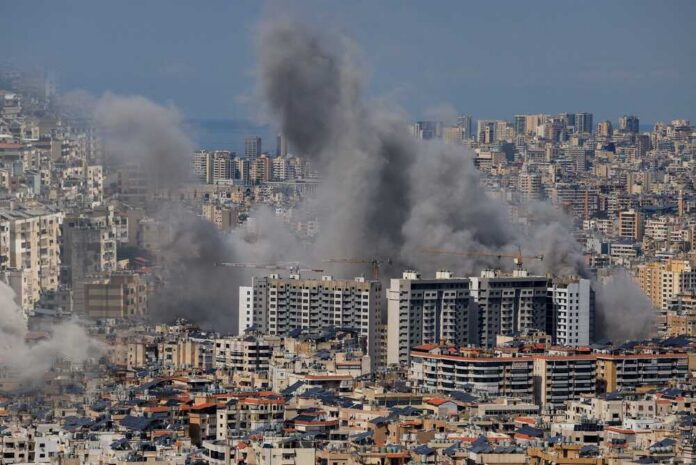
Israeli forces have demolished over 1,250 residential buildings in Gaza City since August 2024, raising urgent questions about whether military objectives justify the mass displacement of civilians and the wholesale destruction of neighborhoods.
Story Snapshot
- At least 30 residential towers destroyed in recent operations, with Israeli military claiming buildings housed Hamas surveillance infrastructure
- Building managers and Palestinian officials dispute military use claims, stating structures primarily housed civilian families including displaced persons
- Approximately 1 million Gaza City residents remain under evacuation pressure amid famine conditions and ongoing bombardment
- Evacuation orders issued immediately before strikes, with explosive-laden robots used to demolish buildings at foundation level
Systematic Demolition Campaign Targets Gaza City Infrastructure
The Israeli Defense Forces launched systematic demolitions of Gaza City residential towers in August 2024, transitioning to full-scale ground invasion by September 16. The campaign has destroyed approximately 1,250 buildings across neighborhoods including Al-Zeitoun, Sheikh Radwan, Tal al-Hawa, and Al-Mukhabarat areas. Israeli military officials claim targeted buildings contain Hamas observation posts and weapons storage, justifying strikes under military necessity doctrine. Palestinian officials counter that structures primarily house civilians, with the recent Al-Ru’ya tower demolition displacing over 30 families plus additional displaced persons who had sought shelter there.
Disputed Claims Over Military Use Versus Civilian Protection
Israeli military statements assert demolished buildings served Hamas surveillance and weapons storage functions, positioning destruction as necessary to eliminate terrorist infrastructure. Building managers flatly deny these claims, describing structures as residential towers occupied by civilian families. This fundamental disagreement highlights broader questions about proportionality when military operations destroy civilian infrastructure at massive scale. The pattern of last-minute evacuation warnings before demolition suggests Israeli forces attempt to minimize casualties, yet vulnerable populations including elderly and disabled residents may lack adequate time to evacuate safely. The destruction of roughly 10-15% of Gaza City’s built environment to target Hamas raises serious questions about whether military gains justify civilian displacement costs.
Humanitarian Crisis Intensifies Amid Continued Operations
Approximately 1 million residents remain in Gaza City facing famine conditions, with thousands newly displaced from demolished buildings seeking shelter in already-damaged structures. The ongoing demolition campaign compounds an existing humanitarian emergency, disrupting civilian services and creating psychological trauma from constant bombardment and forced evacuation. Healthcare systems strain under casualty loads while children experience educational disruption. International organizations document violations but lack enforcement mechanisms to compel civilian protection. U.S. Secretary of State Marco Rubio’s recent visit to Israel during active operations suggests continued American diplomatic support, despite mounting international concerns about proportionality and distinction between military versus civilian targets under humanitarian law.
Long-Term Reconstruction Challenges and Governance Questions
The systematic destruction of 1,250 buildings creates reconstruction needs estimated in the billions, with urban recovery timelines projected at 10-20 years minimum. Beyond immediate displacement, the operation fundamentally alters Gaza City’s demographic patterns and urban landscape. Displaced populations create resource strain on southern Gaza communities receiving refugees, while destroyed commercial and residential property eliminates livelihoods and economic activity. International humanitarian law experts debate whether evacuation procedures meet adequacy standards for vulnerable populations and whether the scope of civilian infrastructure destruction exceeds proportionality principles. The operation’s long-term governance implications remain unclear, as do accountability mechanisms for addressing civilian harm. What’s certain is that ordinary Palestinian families bear the immediate costs of military operations justified as necessary for Israeli security, while questions about who rebuilds and who governs post-conflict remain unanswered.
The fundamental tension between military necessity and civilian protection crystallizes in Gaza City’s demolished neighborhoods. Israeli forces assert operational justification while Palestinian civilians lose homes, possessions, and community ties. International observers document destruction while diplomatic channels appear unable or unwilling to enforce protection standards. The pattern reveals a disturbing reality: military objectives consistently override civilian welfare concerns, with ordinary people paying the price regardless of which narrative proves correct about building usage. Reconstruction costs and governance challenges will outlast current operations by decades, creating burdens future generations must shoulder.
Sources:
UN Media: Gaza City building destruction documentation
Jerusalem Post: IDF operations in Gaza City
The New Arab: Israel destroys Gaza City residential buildings using robots