
A drone incursion over Moldova shut down airspace and delayed President Volodymyr Zelenskyy’s flight, while a “near-hit” claim split officials on how close the danger came.
Story Snapshot
- Norway’s prime minister said Zelenskyy’s plane was almost hit by a drone during takeoff from Moldova.
- Moldova confirmed an airspace closure due to a drone alert, delaying Zelenskyy’s departure.
- Ukrainian officials pushed back, calling the “near-hit” claim exaggerated.
- Reports placed a drone crash about 160 kilometers from Chișinău airport.
What officials say happened in Moldovan airspace
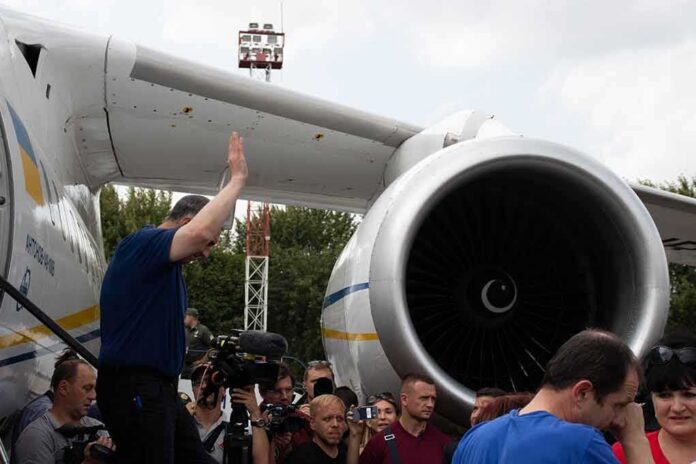
Norway’s Prime Minister Jonas Gahr Støre told a public broadcaster that Zelenskyy’s plane was almost hit by a drone as it prepared to take off from Moldova. His comment set the tone for headlines across Europe and beyond. Moldova said something else that is not in dispute. Authorities closed national airspace due to a drone incursion, which held up several flights, including the aircraft carrying Zelenskyy to Norway for planned events. The flight left once the alert ended.
Moldovan officials described a real security event. They cited drones violating regional airspace and explained the closure was to protect aircraft in the sky at that time. Regional reports added that one drone went down and exploded on Moldovan territory, which reinforced why controllers kept planes on the ground until the risk cleared. These facts explain the delay. They do not, on their own, prove that a drone passed close to the presidential aircraft during takeoff.
Why the “near-hit” claim is contested
Ukrainian officials challenged the near-collision framing. A source from the presidential office said there was no immediate threat to the plane and called the claim exaggerated. The same source said the delay followed standard steps during an alert: clear the airspace, track the drones, and lift the hold after the danger passed. That account fits Moldova’s timeline and reason for the closure. The strongest version of the near-hit claim still rests on the Norwegian leader’s remark alone.
Location details also raise questions. Reporting placed a drone crash site about 160 kilometers from Chișinău airport. That supports that drones were inside Moldovan airspace and created risk. It does not, by itself, place a drone on the jet’s departure path. Without released radar tracks, tower logs, or flight data, the gap remains. The core confirmed fact is a safety shutdown and a late takeoff, not a proven near-collision.
Why this matters for safety, media, and trust
Airspace closures for drones are becoming a regular test for civil aviation. Detecting an object is often easier than proving what it was, who controlled it, or how close it came to a specific plane. That gap feeds fast, dramatic headlines and slower, careful records. Industry observers warn that authorities can confirm intrusions quickly but need more time to map a precise flight path and risk picture.
The departure from Moldova of a plane carrying Ukrainian President Volodymyr Zelenskiy to Norway was delayed when authorities closed the country's airspace over a drone alert, a Moldovan government spokesperson said https://t.co/BUkUdFm5ru pic.twitter.com/IYwNDfveHm
— Reuters (@Reuters) September 10, 2026
For citizens, this split fuels a broader worry: leaders speak in absolutes, records arrive late, and media jumps to the sharpest line. That cycle erodes trust across the spectrum. Conservatives see hype used to steer foreign policy and spending. Liberals see opacity that shields officials from scrutiny. Both sides agree that clear data should rule. Releasing air-traffic logs, radar plots, and a formal incident report would settle what happened and help keep politics out of aviation safety.
Sources:
ua.news, foxnews.com, kyivpost.com, news.inbox.lv, bbc.com