

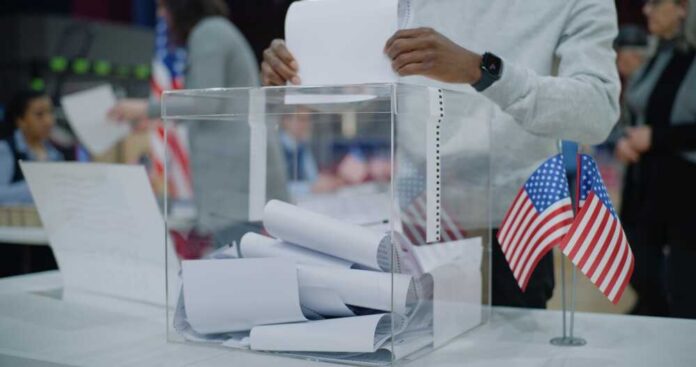
Declassified White House files claim China obtained 220 million U.S. voter records, reviving a years-long fight over what counts as election “interference.”
Story Snapshot
- White House releases declassified documents alleging China got 220 million voter files
- Intelligence from 2018 cites a Chinese push to reduce Trump’s votes, with caveats
- Prior assessments say no foreign actor changed votes or systems in 2020
- Key gaps remain on how the data was obtained and which states were affected
What The White House Released And Why It Matters
White House documents declassified on July 16 allege China acquired about 220 million U.S. voter files and formed a special data unit to do it. The files include names, addresses, phone numbers, and party ties. The release spans intelligence from 2020 to 2026 and says hostile nations can target election systems. President Trump highlighted a Department of Homeland Security review that found noncitizens on voter rolls. The public release aims to prove a pattern of risk to election data and trust.
Central Intelligence Agency reporting from 2018, quoted by the President, described a Chinese policy to reduce his votes and block reelection. The same stream of reporting also added that China did not intend to covertly interfere to sway the result at that time. These two statements pull in different directions. They show motive and awareness on one hand, and restraint on methods on the other. That tension sits at the core of this fight over meaning and proof.
What Experts And Past Assessments Say
Several prior assessments drew a bright line between influence and interference. A 2021 intelligence review reported no evidence that any foreign actor altered votes, registrations, tallies, or results in 2020. A 2020 notice from federal cyber and investigative agencies said that acquiring registration data did not change voting or outcomes. These findings do not deny data exposure. They do argue that exposure, by itself, did not change how Americans voted or how votes were counted.
Election researchers also stress that much voter data is public. States sell or share lists with names, addresses, and party. Campaigns use these files in every cycle. That context weakens claims that any giant list, by itself, proves a hack or a breach. It does not settle the case, though. The White House claims point to a dedicated data exploitation program and a scope of 220 million records. Those specifics need forensic proof to confirm method and harm.
The Unanswered Questions Driving The Debate
Key gaps block firm conclusions. Officials have not shown how China got the data. Was it a hack of state systems, scraping from public files, or private purchases? The document set cites eighteen affected states in broad terms, but state-by-state proof has not been published. The government has not released logs, indicators, or technical reports that would let independent teams verify access paths or dates. Without that, arguments lean on inference and trust in briefed summaries.
@GregAbbott_TX we must ditch every
Voting machine.
"Trump Says China Illicitly Obtained 220 Million US Voter Files Since 2020 Election
China carried out ‘what is believed to be the largest compromise of election data in history,’ the president said."
https://t.co/oufgW5Jngz.— Bill Raschen (@braschen1) July 17, 2026
The stakes are larger than one cycle. People on the right and left see a system that feels opaque and self-protective. Some fear foreign powers can profile and target voters at scale. Others worry leaders inflate threats to score points, while core problems like data hygiene, list maintenance, and clear audit trails go unfixed. Both concerns point to the same remedy: transparent evidence, state audits of alleged exposures, and public timelines for fixes that voters can track.
Sources:
pjmedia.com, washingtontimes.com, timesofindia.indiatimes.com, amp.dw.com, youtube.com