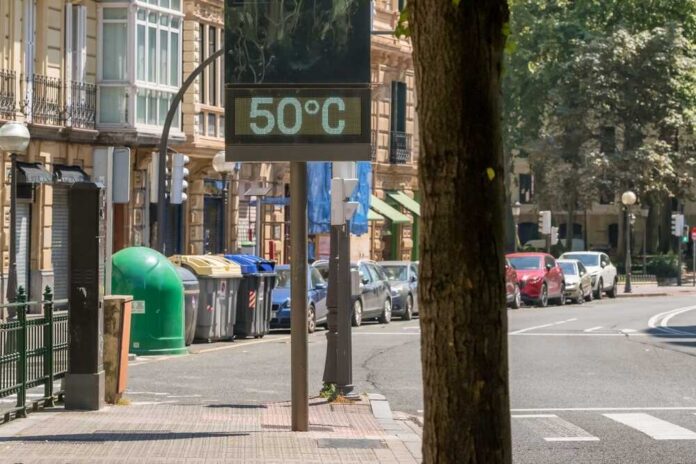
Germany’s late-June heatwave pushed deaths up by nearly one-third in a single week, exposing how fragile modern societies remain when basic protections like cooling, health care, and honest government planning fall short.
Story Snapshot
- Germany logged about 23,900 deaths in the last full week of June, a roughly 32% jump over normal levels.
- Public health officials estimate about 5,120 heat-related deaths this year, with over 4,300 in the week of June 22–28 alone.
- Most deaths came as temperatures broke records above 40°C and many people, especially older adults, lacked protection.
- The spike fits a long pattern of deadly heatwaves and raises hard questions about whether governments and elites are truly preparing for known risks.
Record Heat, Record Deaths in a Single Week
German data agencies say the last full week of June brought one of the deadliest short periods in recent memory. The Federal Statistical Office reported 5,486 more deaths than the 2022–2025 median in that week, pushing total deaths to about 23,900 and marking roughly a 32% jump over normal levels. The Robert Koch Institute, Germany’s main public health body, estimates 5,120 heat-related deaths so far in 2026, and says more than 4,300 of them occurred between June 22 and 28, the hottest week of the year.
These are not small, abstract numbers. They mean thousands of families lost loved ones in just a few days of extreme heat. The Federal Statistical Office also reported that overall deaths in June were up about 30% compared to recent years, underscoring how sharply mortality rose when temperatures spiked. Health officials link this surge to average weekly temperatures far above 20°C, a level where past studies show deaths begin to rise as bodies struggle to cope.
Heatwave Details: Temperatures, Timing, and Europe-Wide Impact
The June heatwave hit Germany as part of a broader European pattern of extreme weather. According to reports, Germany set a new national temperature record of 41.7°C in Coschen, in the eastern state of Brandenburg, during this period. The World Health Organization said more than 1,300 excess deaths were recorded across Europe after June 21, linked to high temperatures, highlighting that Germany’s toll was among the worst on the continent. Neighboring countries like France and Spain also reported sharp increases in deaths as heat pushed above 40°C.
The German report notes that the estimates are based on statistical models that compare expected deaths to actual deaths, rather than on every death certificate listing heat as the direct cause. This method is standard in public health because many causes interact, and heat often worsens heart, lung, and other long-term illnesses. The numbers are labeled as preliminary, meaning they may be revised as more detailed death records come in, but officials say they already show a clear and worrying pattern.
A Deadly Pattern: Why Older and Vulnerable People Keep Paying the Price
Researchers have tracked deadly heatwaves in Germany for decades and warn that what happened in June 2026 fits a wider trend. Past analyses show that heatwaves in 1994 and 2003 caused roughly 10,200 and 9,600 extra deaths, with more recent summers like 2018, 2019, and 2022 also logging thousands of heat-related fatalities. Studies find that about three-quarters of heat-related deaths typically occur among people aged 75 and older, who often live alone or in care homes without strong cooling systems.
Experts say many of these deaths are preventable with basic steps: cooler buildings, clear warning systems, visits to older neighbors, and medical staff ready for heat stress. Yet the same pattern keeps repeating. Heat arrives, infrastructure fails, and those with the least power pay the highest price. For many Americans watching from afar, this looks familiar. Whether the issue is heat, storms, or blackouts, citizens see governments and large institutions talk about “resilience” while the most vulnerable die first.
What the Spike Reveals About Modern Systems and Public Trust
The sharp rise in German deaths during the June heatwave points to deeper concerns that echo across political lines in the United States. On one side, environmental groups argue that climate change is driving more frequent and intense heatwaves and that governments have been slow to harden the grid, upgrade housing, and protect seniors and people with low incomes. On the other side, many conservatives worry that leaders use climate disasters to push sweeping policies while failing at the basics, like keeping power reliable and hospitals staffed.
🚨 “Germany records 23,900 deaths during record-breaking June heatwave, a 32% increase from previous two weeks."
• The heatwave affected western Europe, with temperatures in parts of Germany reaching 41 degrees Celsius (106 degrees Fahrenheit).
• The statistics agency…
— PolyInsight 📊 (@cotopiapark) July 14, 2026
Both views share a core frustration: powerful elites keep promising long-term plans while citizens watch short-term crises kill thousands. The German numbers show how fragile life becomes when extreme heat meets aging populations, crowded cities, and systems not built for this strain. The data do not prove every political claim about climate or energy policy, but they do show something simple and sobering. When the temperature rises and the system fails, it is ordinary people, not the well-insulated ruling class, who pay with their lives.
Sources:
insiderpaper.com, reuters.com, lemonde.fr, latimes.com, telegraph.co.uk, trtworld.com, theguardian.com, di.aerzteblatt.de