When a Republican senator helped shut down most federal immigration traffic stops after two deadly shootings, she exposed a deep split inside Trump’s own government over safety, power, and accountability.
Story Snapshot
- ICE halted most vehicle stops nationwide after agents fatally shot two men in Texas and Maine.
- Homeland Security Secretary Markwayne Mullin ordered the pause after talks with Senator Susan Collins.
- The pause was framed as temporary, to allow new training on vehicle-stop tactics and use of force.
- President Trump quickly pushed back, calling traffic stops a vital tool that should not be abandoned.
Deadly shootings trigger an unprecedented ICE traffic stop pause
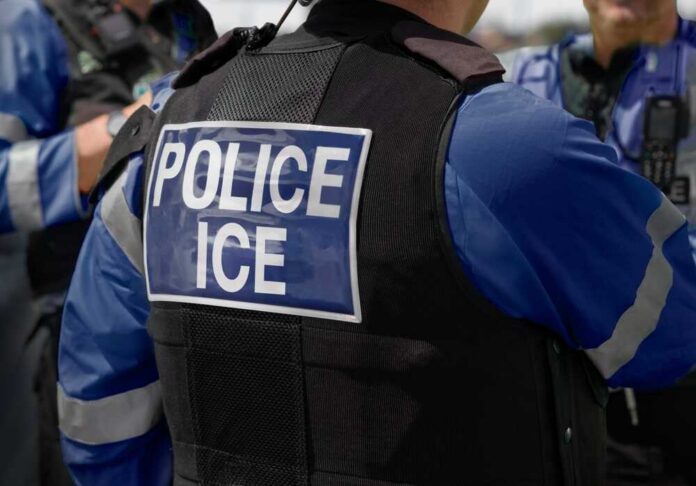
Federal immigration agents were told to halt most traffic stops across the country after two fatal shootings in Texas and Maine within a single week. The directive applied to officers in Enforcement and Removal Operations, the branch that handles civil immigration arrests, and allowed stops only for serious criminal targets or when working with partner agencies serving criminal warrants. Officials described the change as a shift in arrest tactics made “until further notice,” signaling a nationwide pause rather than a quiet local adjustment.
News reports from outlets like CBS, CNN, and ABC said the order required agents to stop initiating routine vehicle stops and instead use other ways to locate and arrest people, such as home visits or coordination with local police. The move followed public anger and media scrutiny after one man in Biddeford, Maine, was killed during a traffic stop, and another driver was shot in Houston days earlier. These back-to-back deaths raised sharp questions about training, use of force, and whether pressure to boost arrests was making encounters more dangerous.
Markwayne Mullin and Susan Collins steer the pause as a “temporary” safety review
Homeland Security Secretary Markwayne Mullin was identified by ABC News as the official who directed Immigration and Customs Enforcement to halt most vehicle stops in response to the shootings. Maine Senator Susan Collins said she spoke with Mullin three times and urged him to stop “non-urgent” traffic stops, pushing for a focus on serious criminal cases while investigations played out. Her role meant a senior Republican lawmaker helped drive a major enforcement change that many conservatives would see as softening the government’s stance on illegal immigration.
Trump border adviser Tom Homan, often described as the White House’s border “czar,” tried to calm fears on the right by stressing that this was not a permanent retreat. In an interview, he said, “It’s not a policy change, it’s a temporary pause,” explaining that officers would undergo a short review and receive additional training on traffic stop tactics and safety. Homan added that deportations would continue using other methods, showing how the Department of Homeland Security aimed to cut legal risk and public anger without fully backing away from Trump’s tough enforcement posture.
Trump pushes back, exposing tensions inside his own administration
The pause did not last long before President Trump publicly pushed back, saying Immigration and Customs Enforcement should not give up traffic stops as a tool. In a social media post reported by Axios, he argued that “we CANNOT give up one of I.C.E.’s most important and effective crime fighting tools, THE TRAFFIC STOP!” That statement clearly clashed with the memo obtained by reporters, which told officers that “all ERO-initiated enforcement vehicle stops are suspended until further notice.” The result was rare: a sitting president undercutting his own department’s safety directive.
This clash fed a familiar frustration shared by many Americans on both the right and the left. People who worry about illegal immigration and crime saw a deadly-force problem met with a brief pause and a promise of training, then quickly reversed under political pressure. People who fear abuse of power and lack of accountability saw federal agents kill two men during routine stops, yet the main debate in Washington focused on preserving a “tool,” not on deep reform. In both cases, the message was that lives and rights are secondary to politics and bureaucratic turf.
What this fight reveals about power, safety, and a drifting government
These events fit a wider pattern in immigration enforcement. When deadly incidents occur, agencies often announce short pauses or reviews, then quietly return to business as usual within days once the headlines fade and political leaders demand tougher action. In this case, the Department of Homeland Security moved to limit vehicle stops, citing agent safety and the need for better training, while the president insisted the tactic must continue in the name of law and order. That tug-of-war reflects a deeper struggle over who really controls federal power.
For conservatives, the story touches raw nerves about crime, border security, and a sense that elites cave to media pressure instead of enforcing the law. For liberals, it underscores long-standing fears that vulnerable people, often immigrants, die during aggressive enforcement with little lasting change. For many in the middle, the key takeaway is simpler and more troubling: Washington’s first instinct is to protect itself. Whether it is a “temporary pause” or a presidential reversal, the system seems more focused on avoiding blame than on fixing the failures that cost real people their lives.
Sources:
thegatewaypundit.com, cbsnews.com, reuters.com, thehill.com, facebook.com, youtube.com