Federal immigration agents have been ordered to halt most traffic stops after two deadly shootings, but President Trump is already signaling that this aggressive tool “won’t stay off the table” for long.
Story Snapshot
- ICE has temporarily stopped most vehicle traffic stops nationwide after two fatal shootings in Texas and Maine.
- Both men killed were not the original targets of the operations, deepening public anger and distrust.
- The pause comes after years of rising use-of-force incidents and growing reliance on vehicle stops in Trump’s mass deportation push.
- Trump and his allies still see traffic stops as a key weapon in a promised mass deportation campaign, setting up another clash between safety and enforcement.
ICE Traffic Stops Paused After Two Deadly Shootings
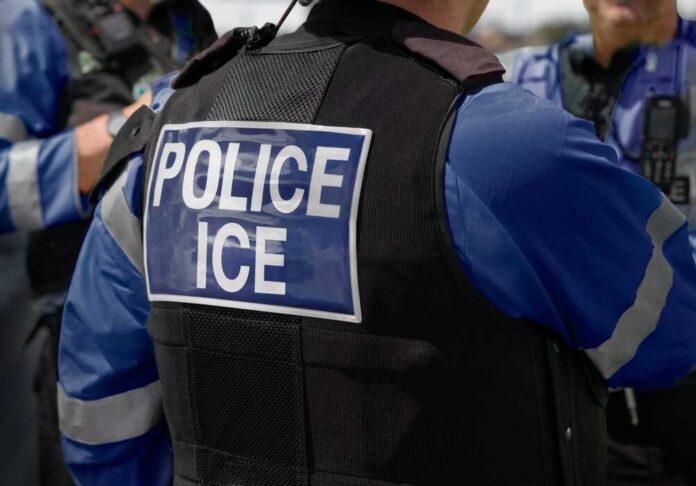
United States Immigration and Customs Enforcement has ordered agents to stop most vehicle traffic stops across the country after two men were shot and killed during immigration operations in Texas and Maine. Officials say the pause applies to routine enforcement and will last while agents receive more training on how to conduct vehicle stops safely. Agents may still join stops tied to criminal warrants with local police, but they are told to avoid starting traffic stops on their own in most cases.
The two shootings happened just six days apart and involved agents firing into civilian vehicles. In Houston, an agent killed a man during a stop linked to a deportation crackdown, and in Biddeford, Maine, an agent killed a Colombian driver on a quiet coastal road. The Department of Homeland Security later said both victims were in the country illegally, but also admitted neither was the main target of the operations that led to their deaths. These details have fueled protests and calls for answers in Maine and beyond.
Mass Deportation Agenda And Supreme Court Backing
The traffic-stop pause comes in the middle of President Trump’s second-term push for mass deportations, a core promise of his return to the White House. Federal data and outside investigations show immigration arrests and use-of-force incidents have climbed sharply under this agenda, including a more than threefold jump in reported use of force in the early months of the term. To feed this system, Immigration and Customs Enforcement officers have leaned more on traffic stops, catching people while driving to work or home instead of at jails or workplaces.
That shift gained legal cover in 2025, when the United States Supreme Court, in a six-to-three ruling, allowed federal agents to resume wide immigration sweeps in the Los Angeles area. The court said officers must still have “reasonable suspicion” that someone is in the country illegally, but the majority and a concurrence by Justice Brett Kavanaugh gave the administration room to treat race and ethnicity as one factor in that suspicion. Civil rights advocates warned the decision would open the door to racial profiling in vehicle stops and roadside checks.
Training Gaps, Body Cameras, And Growing Public Outrage
Former officials and watchdog groups say these deadly shootings expose deeper problems in how Immigration and Customs Enforcement trains agents to use force and handle roadside encounters. Past guidance shows agents only need reasonable suspicion of an immigration violation to initiate a car stop, a lower standard than many drivers expect. At the same time, American Oversight found that reported Department of Homeland Security use-of-force incidents jumped by 353% in the first two months of Trump’s current term, suggesting a rough adjustment between training materials and field tactics.
Critics are especially angry that neither of the agents involved in last week’s shootings was wearing a body-worn camera, even though Congress set aside $20 million for cameras and the department promised a national rollout. Delays tied to budget fights and internal debates left many agents without cameras as vehicle stops expanded. Now the Maine shooting is under review by the Department of Homeland Security inspector general, the Federal Bureau of Investigation, and the Maine attorney general, but investigators are working without key video evidence that could show exactly how the confrontation unfolded.
Trump Signals Hard Line As Both Parties Question Tactics
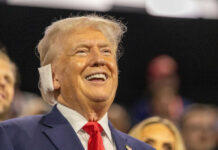
While Homeland Security officials describe the halt in traffic stops as a “temporary pause” to improve training, President Trump and his allies have already praised vehicle stops as one of Immigration and Customs Enforcement’s most “important and effective” tools for finding undocumented immigrants. Trump has publicly argued that America cannot abandon traffic stops if it wants to carry out mass deportations at the scale he promised. That message resonates with many conservatives who see the federal government as too soft for years on illegal immigration and border security.
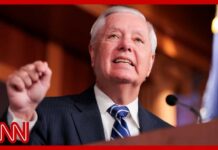
At the same time, anger over the shootings crosses party lines and feeds a wider belief that Washington’s enforcement machinery is dangerous, unaccountable, and tilted toward elite interests rather than ordinary people’s safety. Senator Susan Collins of Maine, a Republican, has asked Homeland Security leaders to stop “non‑urgent” vehicle stops until key questions are answered, while Democrats running in swing states talk openly about cutting back or even abolishing Immigration and Customs Enforcement. Civil rights groups warn that aggressive traffic-stop tactics, backed by Supreme Court rulings and used by agents who are not trained like local patrol officers, push the country further from its promises of equal treatment under the law.
Sources:
mediaite.com, cbsnews.com, youtube.com, deseret.com, wwno.org, chicagotribune.com