
President Trump’s claim that “France is burning” because of immigration collides with French officials’ focus on schools, costs, and far-left violence.
Story Highlights
- Trump blamed French unrest on immigration and urged border closures.
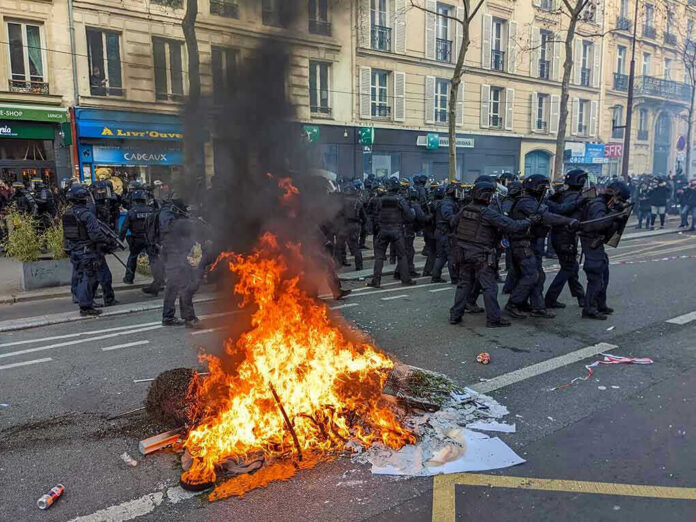
- Reports described arson, looting, and roughly 1,800 arrests during October 17 violence.
- French leaders tied the protests to living costs, schools, and radical-left agitators, not immigrants.
- Competing explanations reflect deeper worries about order, inequality, and government credibility.
What Trump Said And Why It Landed With Force
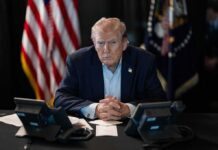
On October 18, President Trump said, “France is burning,” and blamed immigration, warning leaders to “close your Borders” and “take control.” He called immigration the cause of France’s turmoil and described arrivals as coming from “an entirely different world” with “hatred in their hearts”. He repeated the theme across statements, saying the unrest was not about schools. The message hit core concerns in the United States about border control, social order, and whether leaders can protect everyday people.
Trump’s framing came as images of fires, smashed storefronts, and street clashes spread online. News reports counted about 1,800 arrests during the worst night, with government buildings and shops targeted. Those numbers and scenes made a simple cause tempting: stop the flow, stop the fires. But a strong image is not the same as strong evidence. A claim about motive needs data on who acted and why, not only what burned.
What French Authorities And Reporters Said Happened
French reporting traced the protests to high-school students in poorer northern Paris suburbs. Students cited teacher shortages, crowded classrooms, and crumbling buildings. The movement grew to include anger over living costs and weak public services. That is when violence surged. French officials spoke of radical-left groups and criminals who hijacked marches, not immigrants as a cause. They pledged order while saying many protesters had “legitimate demands”.
French police and national leaders reinforced that split. They blamed far-left agitators for targeting public buildings and clashing with officers. They also described widespread looting by opportunists. Reporters highlighted fuel prices, inequality, and public-spending fights as core drivers. None of those statements prove immigration is irrelevant. But they do contradict a claim that immigration was the primary cause of the unrest.
What We Know, What We Do Not, And Why It Matters Here
Right now, no official arrest breakdown links the violence mainly to immigrants or to any single group. There is no public dataset showing participants’ nationality, immigration status, or motive. Without that, firm blame is risky. Past French unrest often mixed young populations, deprived neighborhoods, strained schools, and tense police encounters. Immigration can overlap with those patterns, but it is usually one layer in a stack, not the only layer.
President Donald Trump said on Monday that he had warned French President Emmanuel Macron years ago to “close your border, or you will lose France,” as he blamed immigration for the unrest sweeping France. pic.twitter.com/xWV4iKVqQe
— CBS News (@CBSNews) October 20, 2026
For Americans, the fight over “what caused France” mirrors a larger fear: leaders sell tidy stories, but skip hard fixes. Conservatives see open borders, rising crime, and elites who call concerns “phobic.” Liberals see shrinking social support, rising costs, and elites who protect the rich. Both camps see government that talks a lot and delivers little. That gap feeds anger, fuels street chaos abroad, and deepens distrust at home.
How To Test The Claims Instead Of Guessing
Authorities could release incident-level records for every arrest: age, residence, alleged offense, nationality, and immigration status. Courts could later match charges to convictions. Analysts could compare riot hot spots with data on unemployment, school quality, poverty, recent migration, and police presence. Investigators could review protest leaflets, speeches, and interviews to see what participants actually said motivated them.
That approach would not please partisans. It would, however, respect citizens who want the truth more than a talking point. If immigration drove the unrest, data should show it. If schools, prices, and service cuts did, the data should show that too. Either way, people in both camps get what they deserve from government: clear facts, honest trade-offs, and policies that put public safety and opportunity ahead of elite spin.
Sources:
youtube.com, trumpstruth.org, timesofisrael.com, aol.co.uk, democracynow.org