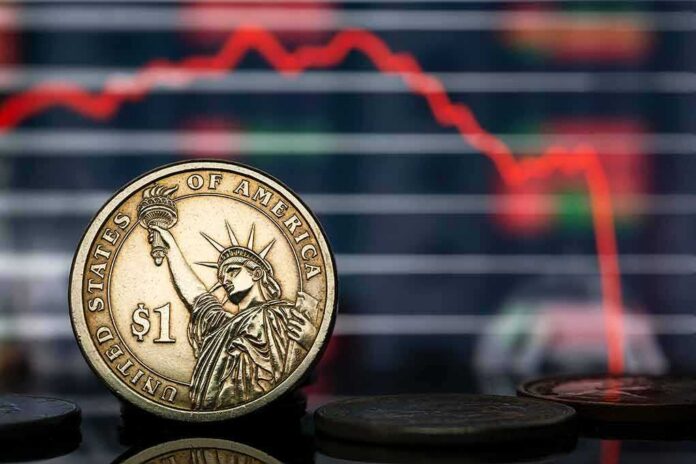
Against a tradition that kept living leaders off U.S. money, the Mint put President Trump on a new $1 coin to mark America’s 250th birthday.
Story Snapshot
- The Treasury Department said the U.S. Mint began producing Trump $1 coins for the Semiquincentennial.
- The Mint said the coins are now in circulation and for sale to the public.
- Critics argue federal law and long-standing norms bar living people from currency.
- Supporters cite a 1926 coin with Calvin Coolidge as a rare precedent.
What Happened: Trump $1 Coins Move From Plan To Circulation
The Treasury Department said in July that the United States Mint started producing a new $1 coin with President Donald Trump’s face for the nation’s 250th anniversary. On September 2, the Mint said the coins are now in circulation and available for purchase, confirming a wider public release beyond collectors. The Mint described the piece as a golden-colored dollar. Officials framed the coin as part of a larger set of Semiquincentennial tributes, linking it to a year-long national commemoration.
The rollout marks a rare break with modern practice. The Washington Post reported it is only the second time in United States history that a living president has appeared on coinage, underscoring how unusual this choice is. The Commission of Fine Arts approved a related commemorative design earlier in the year, clearing a key design hurdle often required for special issues. The move set the stage for production and supported the Treasury’s timeline for a fall release window.
Why It Matters: Law, Tradition, And A Nation Split On Symbols
Democratic senators urged Treasury Secretary Scott Bessent to reject Trump coin designs, citing a tradition against showing current officials on circulating money and calling the idea inconsistent with congressional intent. Legal critics point to statutes and program rules that bar living people from currency, and in some cases from presidential coin designs until two years after death. A constitutional law scholar told National Public Radio that current law prohibits living persons on currency, raising questions about this coin’s status.
Treasury officials and supportive voices point to precedent. During the nation’s 150th anniversary, a 1926 half dollar depicted President Calvin Coolidge while he was alive, and supporters say that shows coins can differ from paper money rules. That precedent is rare and contested. Most modern laws and practices kept living people off circulating designs. The clash shows how legal text, program-specific rules, and unwritten norms can collide when politics and national milestones meet.
Public Impact: Everyday Money, Collector Hype, And Trust In Institutions
The Mint’s statement that the coins are in circulation means people may see them in change, not just in online listings or gift sets. That raises the stakes. A design that once lived in collector cases now sits in wallets and tills. Backers see a historic keepsake for a major birthday. Critics see the government bending rules for a sitting president. Both sides read the same coin through very different lenses about fairness and who gets to define national symbols.
Trump is on a $1 coin — first living president in a century
The US Mint put Donald Trump on a commemorative $1 coin for America's 250th. A roll of 25 is $61; a bag of 100 is $154.50. Hours after launch, the Mint site said not currently in stock.
Scott Bessent still wants a $250… pic.twitter.com/6UBIdS5jeB
— Tesla_Optimus (@Tesla_Optimus_K) September 3, 2026
The debate taps into wider frustration across the political spectrum. Many Americans feel Washington serves insiders before citizens. Some on the right see a win against “gatekeepers” in arts panels and media. Some on the left see power using public money for personal branding. The real test now moves from headlines to process: whether courts, Congress, or the Treasury’s own rulebooks settle the dispute, and whether agencies explain the decision in plain terms the public can trust.
Sources:
theguardian.com, reuters.com, politico.com, washingtonpost.com, foxbusiness.com, npr.org, cnn.com