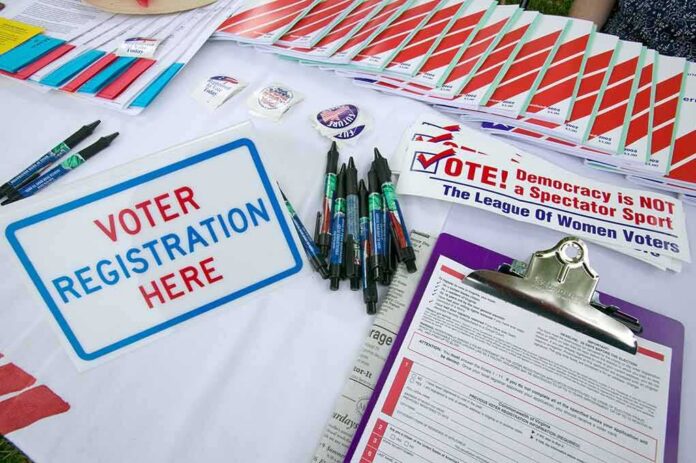
Kamala Harris’s warning about the SAVE Act puts a raw election fight back in the spotlight: should voters have to prove citizenship and show photo ID before they register or cast a ballot?
Quick Take
- Kamala Harris argued that the SAVE Act would force people to prove who they are before voting.
- The bill text says it would require documentary proof of United States citizenship for federal voter registration.
- The legislation also lays out accepted photo identification rules tied to voting and registration.
- Supporters call the bill an election integrity measure, while critics say it could block eligible voters.
Harris Targets the Bill’s Core Rule
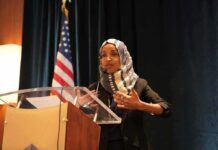
Harris criticized the SAVE Act in public remarks and said it would make voting harder for many Americans. Her argument centers on the bill’s demand for citizenship documents, which she says many people do not have ready access to. That message has become a familiar one in modern election fights, where one side talks about fraud prevention and the other side talks about barriers that can keep lawful voters away from the ballot box.
The bill’s supporters say that concern misses the point. Congress states that the SAVE Act would require documentary proof of United States citizenship when registering to vote in federal elections, and it lists acceptable forms of identification. Supporters present that rule as basic proof, not a new burden, and argue that only citizens should take part in federal elections.
Why the Fight Lands With Both Sides
This is not a new kind of clash. Election-law fights in the United States often split into two stories at once: integrity on one side and access on the other. Republicans and other supporters of voter ID say the rules are common sense and widely accepted. Democrats and voting-rights groups say the same rules can suppress turnout if the documents are hard to get, especially for married women, older voters, and people who move often.
That divide helps explain why the issue keeps coming back. Recent polling reported broad support for photo ID in general, but support drops when the rules are tied to stricter citizenship paperwork and narrower acceptable documents. The result is a policy fight that sounds simple on the surface and quickly turns into a broader argument over who trusts the system, who gets burdened by it, and who benefits when the rules get tighter.
What the Bill Would Actually Require
According to the bill text, a person registering for a federal election would need documentary proof of citizenship, and states would need to set up an alternative process for applicants who do not have the first form of proof. The legislation also ties voting to photo identification requirements. That means the debate is not about whether the bill asks people to identify themselves. It is about which documents count, how hard they are to get, and how many eligible voters could be caught in the middle.
The political stakes are clear. Republicans see a chance to tighten election rules and answer voter concerns about fraud. Democrats see a risk of shutting out lawful voters and widening distrust in government. Both reactions tap into a deeper frustration that cuts across party lines: many Americans think federal leaders are more focused on power and message battles than on building rules the public can trust.
Sources:
democracydocket.com, govinfo.gov, congress.gov, thegatewaypundit.com, politico.com, bbc.com, nypost.com, instagram.com, foxnews.com