President Trump’s clash with Pope Leo XIV shows how quickly modern politics can turn faith, war, and immigration into a single, combustible fight.
Quick Take
- The dispute escalated after Pope Leo criticized U.S. actions in Iran and condemned mass deportations as “extremely disrespectful,” prompting sharp replies from Trump.
- Trump publicly labeled the pope “very liberal,” “WEAK on Crime,” and “terrible for Foreign Policy,” and urged him to avoid politics.
- Pope Leo responded by warning against manipulating religion for “military, economic, and political gain,” widening the rift.
- An AI-generated image shared by Trump—interpreted by critics as religious imagery—intensified backlash and dominated coverage.
How Iran and immigration fused into a rare U.S.-Vatican standoff
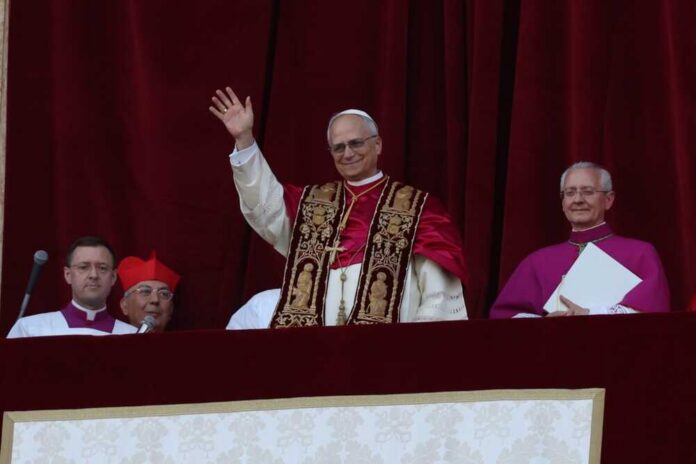
Pope Leo XIV, the Chicago-born successor to Pope Francis, collided with President Donald Trump on two of the most polarizing issues in American life: immigration enforcement and war. The pope’s criticisms sharpened after the U.S.-Israel air campaign against Iran, launched Feb. 28 under “Operation Epic Fury,” and after ongoing deportation efforts. The confrontation is unusual because it features direct, personal jabs between a sitting U.S. president and a reigning pontiff.
Trump’s supporters see the administration’s posture toward Iran and border enforcement as core “America First” priorities—deterrence abroad and rule of law at home. Pope Leo framed the same events through Catholic moral teaching, urging an end to what he called a “spiral of violence” and criticizing rhetoric that threatened catastrophic outcomes for Iran. The competing frameworks—national sovereignty versus religious moral authority—set the stage for a public blowup rather than quiet diplomacy.
Trump’s public messaging targeted the pope, not just Vatican policy
Trump moved the dispute from policy disagreement to personal conflict on April 12, when he posted on Truth Social calling Pope Leo “WEAK on Crime” and “terrible for Foreign Policy,” while also praising Leo’s brother, Louis Prevost, a Trump supporter who visited the Oval Office. Trump repeated his criticism in remarks to reporters and in a CBS interview, arguing the pope should steer clear of political commentary.
On April 14, Trump posted again, citing an alleged death toll of 42,000 Iranian protesters—numbers described in reporting as unverified—while emphasizing U.S. opposition to Iranian nuclear ambitions. The White House line was reinforced publicly by border czar Tom Homan, who told Catholic leaders to “stay out of politics.” In practical terms, this dispute became less about what the Vatican said and more about who gets to define moral legitimacy in public life.
Pope Leo’s counterstrike warned against using faith for power
Pope Leo answered on April 16 with a statement posted on X warning that religion can be manipulated for “military, economic, and political gain.” The wording signaled that he viewed the conflict as broader than a single operation or a single deportation program. It also placed the pope in the role of moral referee at a time when many Americans—left and right—already suspect institutions are being weaponized to serve elites.
Trump responded the same day by insisting he had a right to disagree “in the real world,” denying a personal feud and ruling out a meeting with the pope. Vice President J.D. Vance also weighed in, warning the pontiff about theology, according to coverage of the back-and-forth. The effect was to deepen the impression of a standoff with no offramp: two leaders with massive audiences, each framing the other as overstepping.
The AI image controversy magnified the stakes—and the outrage
The dispute expanded beyond war and immigration after Trump shared an AI-generated image that critics interpreted as portraying him in a Jesus-like manner, prompting accusations of blasphemy and a wave of condemnation from religious voices. Separate reporting described Trump characterizing the image differently, including as a “doctor,” underscoring the ambiguity that often comes with AI-driven content and meme politics. Regardless of intent, the episode shifted attention from policy debate to cultural offense.
How the dispute between Trump and Pope Leo escalated https://t.co/GRG7fhsaIg
— CBSColorado (@CBSNewsColorado) April 18, 2026
For conservatives frustrated with “woke” institutional pressure and politicized culture, the lesson is not that religion should be dragged into partisan warfare, but that digital politics rewards escalation—especially when symbolism replaces substance. For liberals worried about discrimination and hardline enforcement, the episode reinforces fears of leaders courting outrage rather than persuasion. With the Iran ceasefire announced April 7 but the rhetoric continuing, the broader signal is institutional dysfunction: Washington and other centers of influence appear increasingly unable to lower the temperature.
Sources:
How dispute between Trump and Pope Leo escalated
Kansas City Catholics respond to Trump’s escalating criticism of Pope Leo