
President Trump just called a key European populist ally “without courage”—and the fallout exposes how fragile NATO unity looks when real war and real energy shocks hit.
Story Snapshot
- President Donald Trump criticized Italian Prime Minister Giorgia Meloni in an interview with Italy’s Corriere della Sera, saying he was “shocked” by her refusal to back U.S.-led military action in the Iran war.
- Trump argued Meloni is not helping with NATO efforts against a nuclear-armed Iran and revived his long-running critique of NATO as ineffective.
- Italian political reactions split along predictable lines: Meloni’s allies defended her independence, while opposition leaders accused Trump of disrespect and pointed to Italy’s constitutional limits on war.
- The dispute lands amid Strait of Hormuz disruptions and energy-market volatility, raising the stakes for European governments balancing security, prices, and domestic stability.
Trump’s Direct Rebuke Puts a Populist Alliance on Public Trial
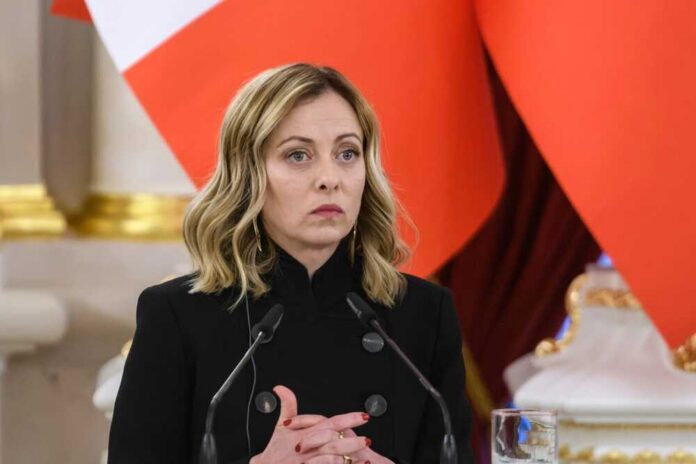
President Donald Trump used a published interview with Corriere della Sera to publicly rebuke Italian Prime Minister Giorgia Meloni, a leader often viewed as ideologically aligned with him. Trump said he believed Meloni had “courage” but concluded he was wrong, and he framed her position as a refusal to support U.S.-led action during the Iran war. Trump also suggested Meloni was not helping with NATO, a message aimed as much at Europe broadly as at Italy specifically.
Trump’s comments also revived his broader complaint that NATO looks strong on paper but struggles when member states hesitate to commit to hard-power choices. That line resonates with many U.S. conservatives who are tired of one-sided burden sharing and open-ended commitments. At the same time, the episode underscores a political reality: even friendly governments will prioritize national constraints and energy vulnerability when war threatens supply routes and domestic budgets.
Meloni’s Constraints: Constitution, Energy Exposure, and Domestic Pressure
Italian reactions quickly highlighted that Meloni faces constraints that do not bend easily to Washington’s timeline. Italian opposition leader Elly Schlein pointed to Italy’s constitution and its rejection of war as a political and legal boundary. Meloni’s allies responded by portraying her as a leader who speaks plainly and defends Italian interests. That clash matters because it shows how quickly foreign policy becomes domestic politics in Europe when the public fears higher energy costs and wider conflict.
Hormuz Disruptions Turn Security Debates Into Household Economics
The war’s impact on shipping lanes and energy flows has made the Strait of Hormuz more than a map reference for voters. Reporting tied the broader conflict to disruptions and price pressures, adding a practical reason for European caution. Italy’s exposure to energy shocks strengthens the argument that allied unity is not just about values; it is also about resilience. When energy supplies tighten, voters tend to punish leaders for inflation first and ask strategic questions later.
NATO Tensions Reflect a Bigger Problem: Shared Threats, Different Risk Tolerance
Trump’s critique of NATO and his push for allied participation rest on a straightforward premise: a nuclear-armed Iran is a strategic threat with global consequences. European reluctance, however, often stems from a different risk calculation—fewer military options, higher exposure to immediate energy blowback, and political systems that fracture under prolonged crises. The dispute with Meloni makes that mismatch visible. It also raises questions about how sustainable alliance cohesion is when partners disagree on urgency and acceptable costs.
Why This Matters for Americans Watching Washington’s “Forever Debates”
For U.S. voters already cynical about elites and institutions, the Trump–Meloni rupture feeds a familiar concern: major systems can look impressive until tested by real-world stress. Conservatives see a warning about allies expecting U.S. protection while declining shared sacrifice. Many on the left see a warning about escalation and the domestic fallout of war. What’s clear is that the conflict is pressurizing diplomacy, energy markets, and public trust all at once.
Trump says Italy’s Meloni lacks ‘courage’ on Iran war: report | Arab News https://t.co/OgibXt9j4F
— SilviaAM⚓️ (@sissiisissi2) April 15, 2026
In fast-moving conflicts, leaders communicate through media, markets react before negotiations settle, and citizens pay the bill in prices and instability. The next developments will likely hinge on whether peace talks resume credibly and whether NATO governments can agree on shared operational commitments.
Sources:
Trump says Italy’s Meloni lacks ‘courage’ on Iran war: report
Trump says Italy’s Meloni lacks ‘courage’ on Iran war
“Shocked At Her”: Trump says Italy’s Meloni lacks courage on Iran war
Trump says Italy’s Meloni lacks ‘courage’ to help in Iran war
Trump says Italy’s Meloni lacks ‘courage’ on Iran war: report