

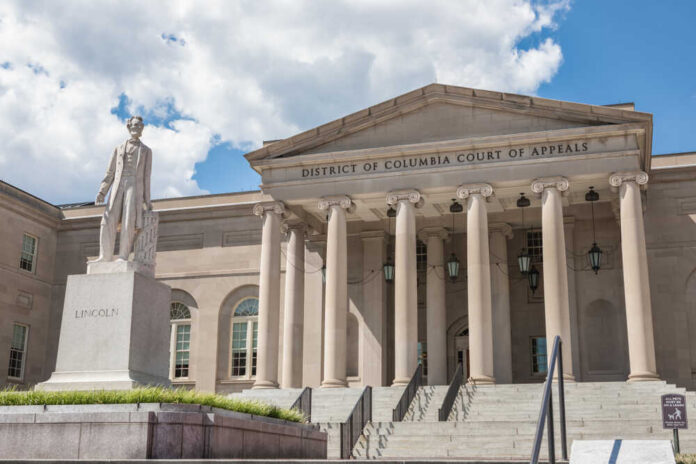
A federal appeals court has delivered a major victory for executive authority over immigration enforcement, shutting down a year-long criminal contempt investigation that threatened to criminalize Trump administration officials for deporting suspected gang members despite a district judge’s order.
Story Highlights
- D.C. Circuit Court terminates contempt probe against Trump officials over Venezuelan deportation flights, ruling it an abuse of judicial power
- Judge Neomi Rao’s majority opinion blocks district judge’s attempt to criminally investigate Former DHS Secretary Kristi Noem and other officials over national security decisions
- Case involved use of 1798 Alien Enemies Act to deport Venezuelan migrants suspected of Tren de Aragua gang affiliation to El Salvador
- Ruling reinforces separation of powers, limiting federal judges’ ability to second-guess executive branch immigration enforcement decisions
Appeals Court Halts Year-Long Contempt Investigation
A federal appeals panel ordered an immediate end to criminal contempt proceedings against Trump administration officials who proceeded with deportation flights of Venezuelan migrants suspected of gang ties. The U.S. Court of Appeals for the District of Columbia Circuit ruled 2-1 that U.S. District Judge James Boasberg overstepped his authority by launching the probe after officials defied his order to turn around planes carrying suspected Tren de Aragua gang members to El Salvador. Judge Neomi Rao authored the majority opinion, declaring the investigation a “legal dead end” that threatened an “open-ended inquiry into Executive Branch decisionmaking on national security.”
Constitutional Battle Over Executive Authority
The dispute originated in early 2025 when Judge Boasberg, an Obama appointee, issued an oral order during fast-moving litigation to halt two deportation flights under the Alien Enemies Act. Former DHS Secretary Kristi Noem issued the final directive to proceed despite the order, and the planes departed U.S. airspace before a written order was issued. Boasberg subsequently found probable cause for criminal contempt and pursued government officials for more than a year. Acting Attorney General Todd Blanche hailed the ruling as ending “Boasberg’s year-long campaign against Department of Justice attorneys fighting illegal immigration,” underscoring the administration’s view that the probe represented judicial activism against legitimate enforcement efforts.
Separation of Powers at Stake
The appellate panel’s decision centered on constitutional separation of powers, with the majority warning that the contempt probe encroached on executive branch autonomy in matters of national security and foreign policy. This marked the second time appellate judges intervened to protect administration officials from Boasberg’s contempt proceedings; an August 2025 panel had previously granted relief before the full court allowed the probe to continue. Judge Walker’s concurrence emphasized a technical point: the planes were already airborne when the written order was issued, meaning no violation occurred. The dissenting judge argued that willful defiance was evident, stressing that executive officials remain duty-bound to obey court orders regardless of policy disagreements.
Implications for Immigration Enforcement
The ruling establishes significant precedent limiting federal judges’ contempt powers over executive immigration decisions, particularly those involving national security considerations. The Trump administration invoked the rarely-used Alien Enemies Act of 1798 to expedite deportations of Venezuelan nationals suspected of affiliation with the transnational Tren de Aragua gang, amid heightened U.S.-El Salvador cooperation on migration and security. ACLU attorney Lee Gelernt, representing the migrants, criticized the decision, stating there was “no question” the administration “willfully violated the court’s order.” This conflict reflects broader tensions between those who believe the executive branch requires operational flexibility to protect Americans from criminal threats and those who fear unchecked power erodes rule of law protections for all individuals, regardless of immigration status.
Ongoing Legal Questions
While the contempt probe has been terminated, Judge Boasberg’s February 2026 order directing the government to facilitate the return of certain deportees who challenged their removal remains under appeal by the Justice Department. The Supreme Court previously ruled that venue for the case was improper in Washington D.C. rather than Texas where migrants were detained, yet Boasberg persisted with contempt proceedings. The case highlights growing frustration among many Americans who see unelected judges blocking elected officials from enforcing immigration laws designed to protect communities from gang violence. Whether courts will continue to defer to executive authority in fast-moving national security situations, or whether judges retain power to enforce orders even when they conflict with enforcement priorities, remains an open constitutional question with profound implications for governance.
Sources:
Appeals court shuts down criminal contempt probe over deportation flights – CBS News
Appeals court ends contempt probe over deportation flights – Politico
Judge ordered to end contempt probe over deportation flights – Courthouse News