President Trump just turned a foreign-policy dispute into a public showdown with America’s pope and it’s exposing how fast faith, war, and politics can collide.
Story Snapshot
- President Donald Trump attacked Pope Leo XIV on Truth Social as “weak on crime” and “terrible for foreign policy” after the pope criticized U.S. military actions involving Iran and Venezuela.
- The White House–Vatican tension intensified after Pope Leo condemned Trump’s Iran rhetoric as “truly unacceptable” and called the war “unjust,” with the pope departing on an Africa trip days later.
- Trump also criticized the pope’s meeting with Democratic strategist David Axelrod and praised the pope’s brother as a “MAGA type,” adding a domestic culture-war edge to a global dispute.
- U.S. Catholic leaders responded with dismay, defending the pope’s role and warning against reducing religious authority to partisan combat.
Trump’s Truth Social broadside turns Vatican friction into a campaign-style fight
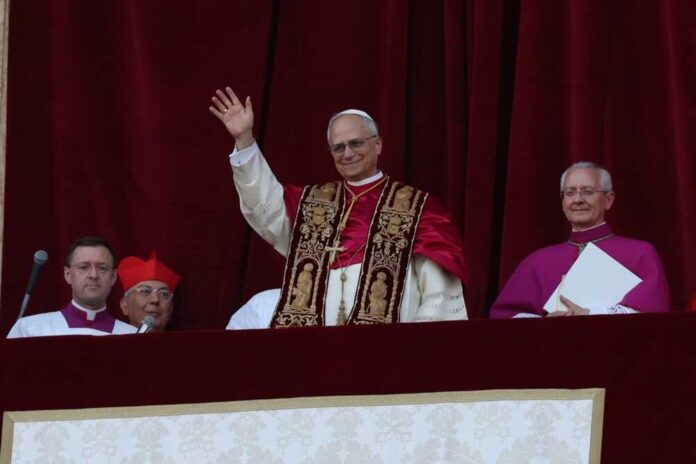
President Donald Trump’s April 12 Truth Social post escalated an already tense split with Pope Leo XIV into a personal clash. Trump labeled the American-born pontiff “WEAK on Crime” and “terrible for foreign policy,” while calling him “a very liberal person.” The dispute centers on Pope Leo’s public opposition to U.S. actions tied to Venezuela and the U.S.-Israel military operation against Iran that began Feb. 28.
Trump reinforced the message in remarks to reporters, saying he was not a fan of Pope Leo and portraying the pope’s statements as political interference rather than pastoral concern. In the same online volley, Trump circulated an AI-generated image depicting himself in a Christ-like way—an attention-grabbing move that shifted discussion from policy to symbolism. The result is a story where social-media tactics and wartime messaging increasingly drown out careful diplomacy.
The Iran war backdrop explains why the rhetoric is suddenly so heated
Pope Leo’s criticism intensified on April 7, when he condemned Trump’s talk about “destroy[ing] an entire civilization” in Iran as “truly unacceptable” and described the war as “unjust.” Those statements came as fighting and international pressure continued, with Pope Leo urging peace. Trump’s response fused his “America First” defense of military action with a claim that the Vatican’s opposition is naïve about security threats and deterrence.
Trump also suggested the pope’s views were aligned with progressive politics, pointing to the pope’s April 9 meeting with David Axelrod. It frames the Vatican dispute through the same partisan lens many Americans already apply to media, universities, and federal agencies. It wasn’t shown that Pope Leo endorsing Iranian nuclear weapons; rather, his comments emphasized moral objections to war and to maximalist rhetoric, which undercuts Trump’s framing on that specific point.
A pope with U.S. roots amplifies the domestic political consequences
Pope Leo’s American identity makes this confrontation different from earlier U.S.-Vatican spats because it lands directly inside U.S. partisan divisions. Trump went further by claiming he had helped Leo get elected pope in May 2025. Trump also praised the pope’s brother, Louis Prevost, as a “MAGA type,” highlighting how quickly even papal family references can become political branding in the U.S. context.
For many conservative voters, the argument will sound familiar: a powerful institution abroad commenting on U.S. border, war, and national-interest questions that Americans believe should be decided by elected leaders. For many liberal voters, the fight looks like an effort to bully a religious figure who is urging restraint. Either way, the episode feeds the broader public sense—shared by people across the spectrum—that elite institutions often talk past ordinary citizens while pursuing their own power and influence.
U.S. bishops push back as the Vatican stays quiet and Leo heads to Africa
American Catholic leadership responded publicly after Trump’s comments, with the U.S. Conference of Catholic Bishops defending Pope Leo’s office and expressing that they were “disheartened.” That response underscores a practical risk for the administration: millions of U.S. Catholics span both parties, and a direct attack on the pope can quickly become a test of loyalty between faith identity and political identity. A
Trump Blasts Pope Leo As ‘Weak on Crime,’ Expands Iran Clash Into Full-Blown Fighthttps://t.co/RZ4XlH2VH7
— RedState (@RedState) April 13, 2026
Pope Leo proceeded with his Africa trip starting April 13, a schedule that suggests the Vatican intends to project stability while the political storm rages elsewhere. Politically, the confrontation could energize Trump’s base by casting the pope as part of a familiar “liberal” establishment. Strategically, it could also distract from the administration’s case for the Iran campaign by shifting headlines to personalities and imagery. The episode illustrates how modern politics can pull even religious leadership into the same viral outrage cycles many Americans want government to rise above.