
Prosecutors say a Queens driver with a prior drunk-driving case sped through a stop sign while impaired by cocaine and THC, killing a 1-year-old in a stroller.
Story Snapshot
- Queens prosecutors allege cocaine and THC impairment in a fatal stroller crash.
- The driver allegedly ran a stop sign and accelerated into the intersection.
- Reports say he failed a field-sobriety test and had a pending DWI case.
- Charges include manslaughter, vehicular manslaughter, and reckless driving.
What Prosecutors Allege Happened at the Intersection
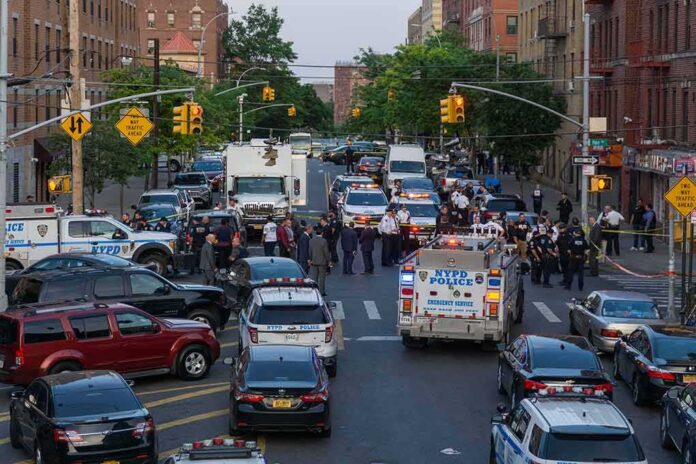
Queens District Attorney Melinda Katz’s office says the driver, identified as Elvin Rivera, drove a white 2016 Chevrolet Silverado north on Murray Street toward 32nd Avenue around 8:35 a.m. on October 11. Prosecutors say he ran a stop sign, then accelerated into the cross street, where he struck a stroller in the crosswalk, killing a 1-year-old boy and injuring the child’s nanny. Police and prosecutors cite these driving actions to support their claim of reckless operation tied to impairment.
A scene drug screening detected cocaine and THC, according to reports that quote the Queens District Attorney’s office. Officers also administered a field-sobriety test that Rivera allegedly failed. Those facts, prosecutors argue, show he should not have been behind the wheel. The Legal Advocate and the New York Post both report the drug screen and failed field test were recorded after the crash. Rivera pleaded not guilty at arraignment, according to coverage.
The Charges Filed and What They Mean
Prosecutors charged Rivera with second-degree manslaughter, second-degree vehicular manslaughter, assault, impaired or intoxicated driving, reckless driving, and unlicensed operation. These charges reflect two linked claims: that his driving was criminally reckless or impaired, and that this conduct caused the child’s death. Each count gives a different legal path to punishment if proven. Courts in New York require proof of functional impairment, not just drug presence, in vehicular cases.
New York case law explains why prosecutors focus on behavior and impairment together. Appellate rulings state that a conviction for vehicular manslaughter based on drugs turns on whether drug use reduced a driver’s ability to operate a car as a reasonable and prudent person. That standard aims to tie any chemical finding to what happened on the road. It links the legal question to the driver’s actual control and decision-making at the time.
The Prior Case, License Status, and Accountability Gaps
The Daily News reports Rivera had a pending Bronx driving-while-intoxicated case from April and that his license had been suspended. He reportedly pleaded not guilty in that earlier case and was released without bail. The new Queens charges say he drove anyway and caused a fatal crash. The reports do not yet detail how enforcement worked or why he could still access and operate a vehicle on October 11.
These facts hit a nerve across politics. People on the right and left see a system that warns, suspends, and charges, yet still leaves families at risk. Conservatives point to weak follow-through on repeat impaired drivers and court policies that send the wrong message. Liberals point to unequal safety in working neighborhoods and demand stronger prevention on the front end. Both sides ask why a suspended, repeat defendant was on the road at all when a stroller was in the crosswalk.
What Comes Next in the Case and on the Streets
Investigators will seek video, crash reconstruction, and lab toxicology to confirm timing, concentrations, and causation. Prosecutors will need to link any drug findings to the driver’s condition at the exact moment of the crash and to the deadly result. Defense attorneys may examine testing methods and the scene. The community will look for action on license enforcement and on dangerous intersections, where a stop sign and a split-second choice can decide a life.
Sources:
nypost.com, ground.news, hoodline.com, abc7ny.com