
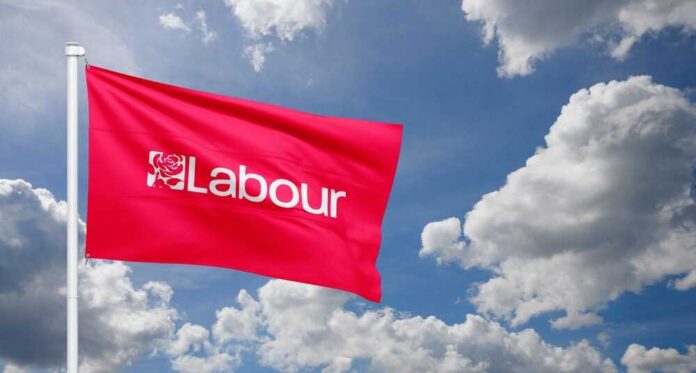
UK voters just sent Prime Minister Keir Starmer a blunt message at the ballot box—and the early results suggest his Labour government is bleeding support faster than Westminster expected.
Quick Take
- Polls closed May 7 across England, Scotland, and Wales in the UK’s biggest set of elections since Labour’s 2024 national landslide.
- Early overnight declarations in England pointed to Labour losing council control in multiple areas while Reform UK notched headline-making gains.
- Projections ahead of the vote warned Labour could lose around 1,850 English council seats, underscoring broad midterm-style backlash.
- Counts for Scotland’s Parliament and Wales’ Senedd were scheduled to ramp up Friday, with polling suggesting major volatility and coalition math.
Why these elections hit Starmer so hard
UK polling stations closed Thursday, May 7, in elections spanning 136 English local authorities and major contests for Scotland’s Parliament (129 seats) and Wales’ Senedd (96 seats). The scale matters: England alone had more than 5,000 council seats up, with tens of thousands of candidates and thousands of polling places involved. British outlets framed the vote as Starmer’s largest leadership test since Labour’s 2024 general election victory.
Early declarations overnight in England began building a familiar “government fatigue” picture—one that many American readers will recognize from midterm cycles. Local councils may seem small compared with Westminster, but they shape daily life through planning decisions, local taxes, policing coordination, and public services. When voters swing hard in locals, party leaders treat it as a real-time verdict on competence, priorities, and economic management.
Early England results: Labour losses, Reform gains, and a protest-vote pattern
Initial overnight results from dozens of English councils indicated Labour was losing ground and, in some places, control of councils outright, while Reform UK recorded significant gains. Projections reported ahead of the vote had already set expectations for a rough night for Starmer’s party, with one forecast suggesting Labour could lose roughly 1,850 council seats. With results still rolling in, the direction of travel became the story: voters appeared ready to punish the governing party.
Reform UK’s rise is central to understanding the shift. Reform has positioned itself as a populist alternative, tapping frustration over immigration, cultural issues, and a broader sense that the political class is unresponsive. That dynamic mirrors trends across Western democracies, where working- and middle-class voters increasingly distrust establishment parties that promise “stability” while daily costs, housing pressures, and public-service performance keep worsening. The early returns suggested Reform’s protest message is converting into seats.
Scotland and Wales: volatility, coalitions, and a warning about legitimacy
While England’s overnight declarations drove headlines, Scotland and Wales were poised to deliver their own political shockwaves as counting began Friday. Both devolved parliaments use proportional systems that can quickly turn a shift in voter mood into complex coalition negotiations. Pre-election polling described dramatic movement in Wales, with Labour’s traditional dominance under pressure and other parties positioned to gain leverage in a potentially fragmented Senedd.
For conservatives who worry about government bloat and elite insulation, this kind of fragmentation can cut two ways. Coalition politics can restrain sweeping agendas and force compromise, but it can also make accountability harder when multiple parties share power and blame. Regardless of ideology, voters tend to sour on systems that feel like they produce endless bargaining while basic problems—housing affordability, public safety, and economic opportunity—remain unsolved.
Leadership pressure inside Labour: Burnham rumors and a familiar establishment reflex
The political consequences were not limited to seat tallies. UK coverage highlighted fresh leadership speculation around Starmer, including reporting that Greater Manchester Mayor Andy Burnham dropped a planned post-election speech amid swirling rumors. Foreign Secretary David Lammy also faced questions about Starmer’s position. Even if leadership challenges do not materialize, this is how governing parties behave when they detect real weakness: internal rivals reposition, and the media hunts for the next succession storyline.
That instinct—protect the party brand, manage internal factions, and contain the damage—often deepens public cynicism. In the United States, many voters on both the right and the left argue that leaders focus more on career survival than on outcomes. The UK’s election-night atmosphere reflected a similar sentiment: when voters feel unheard, they do not just punish policies; they punish the entire governing class, sometimes elevating insurgent parties that promise disruption.
What Americans should take from a UK election night
These UK results are not directly transferable to U.S. politics, but the underlying forces rhyme: high cost of living, migration pressures, distrust of institutions, and backlash against top-down cultural management. Reform’s gains show how quickly a challenger can scale when major parties appear disconnected from everyday realities. For Americans watching from a conservative perspective, the lesson is straightforward—governments that overpromise, overspend, or dismiss public concerns eventually meet the voters, and the voters eventually respond.
Sources:
Local election results live: Polls close across UK in major test of Starmer’s leadership
Local elections 2026 live results: map, UK results today
Local election results map 2026