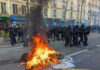
Russia’s barrage of drone and missile strikes on Ukraine just days before a proposed ceasefire reveals a calculated strategy of military escalation masked by diplomatic engagement, leaving Ukrainian civilians without heat and power amid freezing conditions.
At a Glance
- Russia proposed a 3-day ceasefire (May 7-9) coinciding with Victory Day, but Zelenskyy rejected it as inadequate, demanding a month-long truce instead
- A massive Russian barrage killed at least 4 and wounded 30+ across Ukraine, with Kharkiv hit particularly hard, leaving 47+ wounded
- Energy infrastructure targeted systematically, leaving hundreds of residential buildings without heating during freezing weather
- Ukraine received critical air-defense missiles just before the attack, suggesting Western allies anticipated Russian escalation
- The pattern demonstrates Russia’s strategy of combining diplomatic proposals with military pressure to negotiate from a position of demonstrated strength
Diplomatic Contradiction Exposes Negotiating Tactics
Russia’s proposal for a 3-day ceasefire window coinciding with Moscow’s Victory Day parade on May 9 appears designed more for political messaging than genuine conflict resolution. Zelenskyy swiftly rejected the proposal as “theatrical,” countering with a demand for a month-long truce that would allow meaningful negotiations and stabilization. The fundamental disagreement on ceasefire duration reflects deeper strategic divergence: Russia seeks a brief pause to consolidate territorial gains, while Ukraine requires extended time to stabilize its military and civilian situation. This gap exposes the limitations of ceasefire proposals lacking enforcement mechanisms or commitment from both parties.
The timing of Russia’s proposal immediately before its international Victory Day celebration raises questions about negotiating sincerity. By scheduling the parade during active conflict negotiations, Russia signals that domestic political messaging takes priority over substantive peace discussions. International observers invited to the Moscow parade now witness ongoing military operations, complicating Russia’s narrative of strength and stability.
Military Escalation Contradicts Peace Messaging
The Russian barrage that struck Ukraine immediately before ceasefire discussions demonstrates the contradiction between diplomatic engagement and military pressure. Documented casualties include at least 4 killed and 30+ wounded across multiple locations, with Kharkiv particularly affected by strikes that wounded 47 people. This pattern—military escalation coupled with ceasefire proposals—suggests a deliberate Russian strategy of negotiating from a position of demonstrated military capability. The timing sends a clear message: Russia maintains the ability to inflict significant damage regardless of diplomatic discussions.
Energy infrastructure emerged as a primary Russian target, with strikes leaving hundreds of residential buildings without heating during freezing conditions. This focus on civilian infrastructure indicates a strategy aimed at degrading civilian morale and creating humanitarian pressure for Ukraine to accept unfavorable ceasefire terms. The systematic targeting of heating and power systems during winter months reflects Russia’s multi-faceted approach combining military operations with civilian hardship.
Western Military Support Anticipates Escalation
Ukraine’s receipt of critical air-defense missiles on the day before the major barrage suggests Western allies anticipated Russian escalation. This timing demonstrates intelligence coordination between Ukrainian and Western defense officials, allowing partial mitigation of incoming attacks. However, Ukrainian air defense capabilities remain insufficient against the scale of coordinated Russian drone, guided bomb, and missile operations. The barrage deployed hundreds of weapons across a single week, overwhelming defensive systems despite recent Western support.
The delivery of air-defense systems immediately before the assault underscores the ongoing nature of Ukraine’s military vulnerability. While Western support has improved Ukrainian defensive capabilities, the sheer volume of Russian attacks continues to inflict civilian casualties and infrastructure damage. This dynamic perpetuates Ukraine’s dependence on sustained Western military aid to maintain defensive operations, creating strategic leverage for countries providing support.
#Zelenskyy blasts ‘absolute cynicism’ as deadly Russian barrage hits #Ukraine before planned ceasefire. Glide bombs hit Kramatorsk, Zaporizhzhia and Chernihiv on Tuesday afternoon. https://t.co/H5zmr5Lb6k
— #War_in_Ukraine #Facts #Opinions #Trends #Kharkiv (@HarZizn) May 6, 2026
Pattern of Escalation During Negotiations Suggests Protracted Conflict
The current cycle of military escalation preceding ceasefire discussions follows an established pattern dating back to 2024-2025. Each diplomatic initiative has been interrupted by intensified Russian military operations, suggesting that Russia views ceasefire negotiations as tactical pauses rather than genuine peace efforts. This pattern indicates that fundamental disagreements on territorial control, NATO membership, and security guarantees remain unresolved. Without breakthrough progress on these core issues, the current ceasefire discussions appear likely to follow the trajectory of previous failed attempts.
Zelenskyy’s firm rejection of inadequate ceasefire terms strengthens his domestic political position by demonstrating unwillingness to accept unfavorable agreements. His demand for a month-long truce aligns with US-backed negotiating positions, indicating coordination between Ukrainian and American diplomatic efforts. The scheduled resumption of talks following the Victory Day period suggests both sides maintain minimal commitment to diplomatic engagement, even as military operations continue.
Sources:
Russian Barrage Strikes Ukraine with Casualties Reported Across Multiple Locations
Ukraine Receives Urgent Air-Defense Missiles as Russian Assault Intensifies