
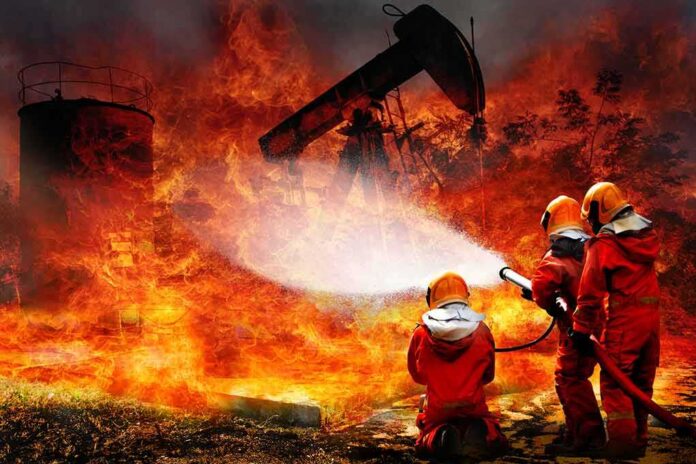
A late-night natural gas pipeline fire near Ward, Alabama lit the sky across parts of two states, but officials reported no injuries as crews shut and depressurized the line.
Story Snapshot
- Southern Natural Gas reported a release and fire near Ward at 11:27 p.m. Central Time on November 21.
- The company shut and depressurized the affected segment; no injuries were reported by the operator or county leader.
- An outage reduced capacity on a South Main Loop Line segment east of the York compressor station.
- The cause remains under investigation; dramatic videos spread while facts came in.
What Happened Near Ward, Alabama
Southern Natural Gas said a natural gas release and fire occurred near Ward in Sumter County at about 11:27 p.m. Central Time on November 21. Company personnel and local responders moved to secure the area and close the impacted segment. The operator stated the line was shut and depressurized after the incident. Reporters and residents shared videos showing flames visible from miles away, and a volunteer department described a secondary brush fire near the scene.
Sumter County Commission Chairman Marcus Campbell said no one was hurt and no structures were damaged. Southern Natural Gas also reported no injuries tied to the event. Local coverage described residents seeing a glow and tall flames, with some reports of brief evacuations as a safety step. The operator said the cause is under review, which means investigators have not yet identified whether corrosion, equipment failure, or other factors played a role.
Pipeline Operations and Service Impact
An operations notice identified an unscheduled outage on Southern Natural Gas’s South Main Loop Line east of the York compressor station. Reporting described a temporary reduction in carrying capacity as crews isolated the impacted section. Southern Natural Gas said customer deliveries were not affected at that time. Those two facts can both be true, because operators can reroute flows or draw on linepack while a segment is down, at least for a period.
Capacity reductions can still stress the system if the outage lasts or demand jumps. Market effects depend on duration, season, and alternate routes. The operator has not publicly shared a restoration estimate in the reports we reviewed. Officials have also not posted a full timeline for 911 calls, road closures, and reopening steps. That level of detail often comes later, after responders confirm that gas readings are safe and the scene is stable.
Safety Pattern and Why Cause Takes Time
Government Accountability Office analysis of federal pipeline data shows an average of 61 significant onshore natural gas transmission incidents each year from 2010 to 2022. Equipment or material failure made up about 43 percent, and corrosion about 16 percent, during that period. Excavation damage also plays a role in many events. These base rates help explain why an early photo or video cannot tell us what failed below ground on a given night.
Investigators typically review pipe samples, welds, and coating, along with pressure logs and valve records. They check for third‑party digging, prior repair history, and corrosion control. They also collect accounts from workers and residents. Southern Natural Gas has said the cause remains under investigation. That is normal in the first days. A careful root‑cause report can take months, but it is vital for fixing the right risk and preventing repeat failures.
Community Risk, Trust, and the Information Gap
Residents saw flames and heard reports of evacuations, which is frightening even when no one is hurt. People on both the left and the right share a concern here: large systems that power our lives can fail without warning, and official updates often come slowly. That gap feeds worry and rumor online. Clear, frequent updates on air monitoring, road access, and repair steps help calm nerves and keep families informed while crews work.
Massive Natural Gas Pipeline Explosion ROCKS Alabama — Flames Shoot More Than 100 Feet Into the Air, Lighting Up Night Sky Across Two States (VIDEO)https://t.co/Z1dpYMXO5o
— Freedom Friendly (@FreedomFriend42) November 23, 2026
Local leaders and the operator did move fast to shut and depressurize the line, which likely limited harm. The next test is transparency. People deserve to see what failed, what was inspected before, and what will change now. Publishing the outage notice details, the repair plan, and the cause findings would show respect for the community. It would also help energy users and businesses plan around any lasting capacity limits in the area.
Sources:
thegatewaypundit.com, blackbeltnewsnetwork.com, yahoo.com, queencitynewsfeed.com, al.com, energywar.net