

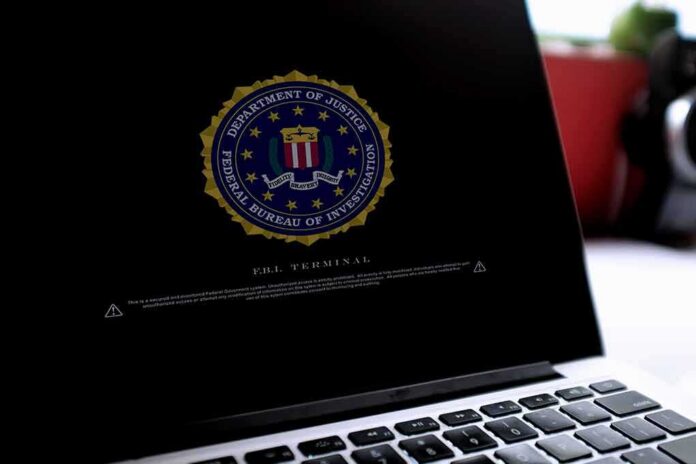
Hackers reportedly hit the FBI’s National Crime Information Center, a backbone database for police nationwide, prompting an active federal probe into how far the breach went.
Story Snapshot
- CNN-based reports say the FBI is investigating a suspected breach of the National Crime Information Center.
- The database links federal, state, and local agencies for warrants, missing persons, stolen property, and criminal history data.
- This would be the second FBI-related cyber incident in recent months, after a September case tied to an employment site.
- It is not yet clear whether attackers accessed, changed, or stole any records, according to multiple outlets.
What Reporters Say Happened
Multiple outlets reported that the Federal Bureau of Investigation (FBI) is probing a suspected intrusion at the National Crime Information Center. CNN’s account, cited by others, says two people briefed on the matter described an apparent breach and an active investigation. The reports did not name the sources. The FBI had not issued a public confirmation at the time of those stories. Outlets described the situation as evolving while agents worked to learn what systems were touched and how.
The National Crime Information Center is a core law-enforcement database that helps officers and agencies share time-sensitive information. Police use it to check warrants, flag stolen vehicles and guns, find missing persons, and see protection orders and some criminal histories. The system supports daily work for federal, state, tribal, and local partners across the country. Any disruption or misuse can slow police response, mislead officers in the field, or risk exposing sensitive records.
Why This System Matters To Everyday Safety
Officers run NCIC checks during traffic stops, arrests, and rescue work. Courts and jails rely on it for warrants and holds. If attackers viewed, changed, or copied entries, that could affect who gets stopped, who gets released, or what property appears flagged. Even brief outages can force manual workarounds and delay safety calls. That is why investigators treat any sign of intrusion as serious, even before they know if data was stolen or altered.
Reports stressed unknowns at this stage. Outlets said it was not clear when attackers gained access, what path they used, or whether they reached database records. Journalists also noted that no public evidence yet shows information was stolen or changed. That distinction matters. A foothold on a network is one level of risk; confirmed access to records is another. The investigation aims to define those lines and guide any fixes or notifications.
A Second FBI-Linked Cyber Incident In Months
Coverage tied this probe to a broader pattern of attacks on government systems. Several reports said this would be the second FBI-related cyber event in recent months. A September incident involved claims about data tied to an FBI employment website. Grouping them does not prove they are linked, but it shows pressure on public systems that hold personal and justice data. Each case pushes agencies to harden defenses and verify safeguards.
🇺🇲 FBI crime database breach: what is confirmed so far
The FBI is investigating an apparent breach of the National Crime Information Center, the nationwide database police use for warrants, criminal histories and missing persons, according to CNN, NBC, AP and Fox News. All four…
— The Tectonic (@thetect0nic) November 21, 2026
The timing also fuels a familiar worry that crosses party lines: large federal systems often feel slow to secure and quick to hide details. People on the right point to bloated costs and missed basics. People on the left point to unequal harms if errors hit the wrong person. Both sides fear powerful institutions that fail simple duties. A police database is not abstract—it affects traffic stops, court orders, and daily safety. If trust slips, everyone pays a price.
What To Watch Next
Watch for an official FBI statement that confirms the scope: which parts of the National Crime Information Center were affected, when the window opened and closed, and whether records were viewed, changed, or copied. Look for guidance to state and local agencies on auditing their connections and logs. Signs of password resets, network segmentation, and integrity checks would show concrete steps to contain risk and prevent repeat attempts.
How Agencies Can Limit Damage Now
Agencies that connect to the database can run quick safeguards while the probe continues. Leaders can force multifactor logins, rotate keys, and review recent admin actions. Technicians can compare backups to live records, looking for unexplained edits. Dispatch centers can ready paper or local digital backups in case of brief slowdowns. These steps are basic, but they keep officers working while federal teams trace the incident and close any gaps.
The Bigger Lesson On Government Tech
America runs on aging public systems that carry life-and-death data. When they work, we barely notice. When they stumble, the fallout lands on citizens and street cops, not on the well-connected. Clear, timely facts from investigators can calm the moment. Stronger basics—patching, least-privilege access, and fast integrity checks—can prevent the next scare. The goal is simple: keep truth in the records and bad actors out of the systems that protect us.
Sources:
facebook.com, bleepingcomputer.com, news10.com, english.mathrubhumi.com