While government officials scramble to respond to Hawaii’s historic flooding, a Hollywood actor stepped up to deliver what the state’s bureaucracy couldn’t—immediate relief to displaced families on O’ahu’s devastated North Shore.
Story Snapshot
- Jason Momoa evacuated from North Shore flooding, then distributed over 200 meals with local partners instead of fleeing to safety
- 230 residents rescued from life-threatening floods as Wahiawa Dam reached dangerous failure levels with more storms inbound
- Native Hawaiian actor leveraged Instagram to mobilize community support while officials issued evacuation alerts
- No fatalities reported despite widespread displacement, infrastructure collapse, and 10 hospitalizations for hypothermia
Celebrity Steps Up Where Government Falls Short
Actor Jason Momoa evacuated his North Shore home on March 21-22, 2026, as powerful storms pummeled O’ahu with torrential rains, triggering flash floods, landslides, and power outages. Instead of retreating to luxury accommodations, the native Hawaiian immediately partnered with local organizations including Zippy’s, Kanaka Solutions, and community coordinators to distribute meals to displaced residents. Momoa posted Instagram videos confirming his family’s safety while urging followers to “check in on your neighbors” and “spread aloha,” mobilizing grassroots relief efforts that complemented slow-moving official responses.
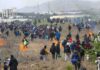
Two consecutive storms saturated O’ahu’s ground throughout the week prior to March 22, overwhelming the island’s infrastructure. The Hawaii Emergency Management Agency issued evacuation alerts at 2:13 a.m. for Waialua residents west of Kaukonahua Stream as roads deteriorated and Wahiawa Dam reached high-risk failure levels. Emergency responders rescued 230 residents and treated 10 for hypothermia, underscoring the severity officials downplayed initially. Governor Josh Green reported “few serious injuries” by Saturday afternoon, though the displacement crisis continued affecting North Shore families and the island’s unhoused population hardest.
Community Action Versus Government Bureaucracy
Momoa’s hands-on approach highlights what conservatives recognize as a fundamental truth: private citizens and local partnerships respond faster and more effectively than government agencies during crises. While state officials focused on issuing alerts and tracking statistics, Momoa coordinated with Zippy’s and grassroots organizations to deliver tangible aid directly to those who lost power and shelter. His Instagram mobilization demonstrated how individual initiative and community bonds—rooted in Hawaii’s “aloha spirit”—achieve results bureaucrats can’t match. This contrasts sharply with typical celebrity virtue-signaling, as Momoa personally distributed food rather than simply posting hashtags from afar.
The flooding exposed infrastructure vulnerabilities stemming from years of neglect and mismanagement. O’ahu’s North Shore faces chronic flood risks due to steep terrain and saturated soils, yet government preparedness remained inadequate despite precedents from 2022-2023 storms. Roads failed under pressure, the Wahiawa Dam teetered on collapse, and emergency responses scrambled to catch up with rapidly deteriorating conditions. Momoa’s immediate action filled gaps left by slow bureaucratic processes, proving that empowered individuals solving problems locally outpace top-down government interventions every time. His efforts also spotlighted the plight of displaced families and the unhoused, populations often overlooked in official disaster narratives focused on infrastructure metrics.
Resilience Through Traditional Values
Momoa’s response embodies principles conservatives champion: personal responsibility, neighbor-helping-neighbor solidarity, and localized problem-solving without waiting for government permission. His native Hawaiian heritage and connection to the land motivated action rooted in traditional community values rather than political posturing. By leveraging his celebrity platform to rally support for Zippy’s and local coordinators, Momoa demonstrated how cultural identity and family values drive meaningful change. This stands in stark contrast to government dependency models that foster helplessness and erode self-reliance, values that built America’s resilience through countless disasters.
The story also contrasts responsible citizenship with reckless endangerment. While Momoa organized relief, viral videos showed a surfer riding floodwaters—behavior that risked first responders’ lives and diverted resources from legitimate rescues. Such antics trivialize genuine crises and reflect the self-centered mindset plaguing modern culture, where social media clout trumps common sense. Momoa’s call to “spread aloha” and support displaced neighbors underscores the difference between contributing citizens and attention-seekers who burden communities. As storms persist and infrastructure remains at risk, his example offers a blueprint for disaster response grounded in tradition, duty, and mutual aid rather than bureaucratic red tape.
Sources:
Jason Momoa safe, helping others in wake of Hawaii floods – UPI
Hawaii Flooding Sparks Heroics From Jason Momoa – Parade
Jason Momoa Posts About Hawaii Storm – TMZ
Jason Momoa Rallies Aloha Spirit After Oahu Flood Disaster – Surfer