

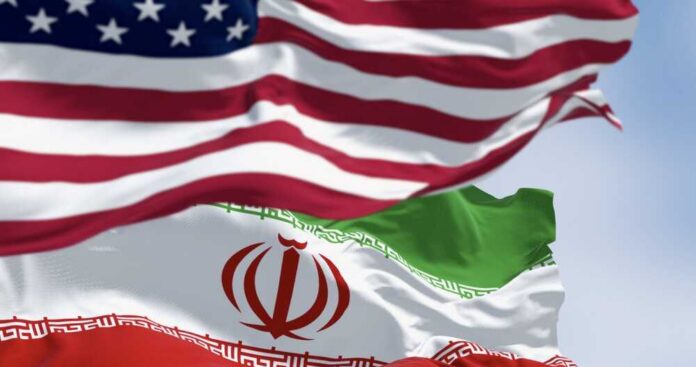
When Washington and Tehran cannot even agree on whether a war-ending deal is real, ordinary Americans are the ones left paying the price at the pump and wondering who to trust.
Story Snapshot
- The United States and Iran both claim to have an Iran peace deal, yet publicly contradict each other on almost every key detail.
- A signed Memorandum of Understanding promises a 60‑day ceasefire and toll‑free shipping through the Strait of Hormuz, but Iran has also announced new closures.
- U.S. leaders talk about “victory” and a dismantled Iranian nuclear program, while the written deal mostly freezes the status quo and leaves big questions unanswered.
- Conflicting statements fuel public anger on both left and right, who see rising gas prices, mixed messages, and a distant political class playing games with the truth.
Two Governments, One Deal, Totally Different Stories
United States officials say President Donald Trump has signed a Memorandum of Understanding with Iran that ends the war, reopens the Strait of Hormuz, and starts a 60‑day roadmap for talks on nuclear limits and sanctions relief.[4][8] The text, now public, confirms a 60‑day ceasefire and a pledge by Iran not to pursue nuclear weapons, while freezing its program at current levels.[8] Yet Iranian leaders and media have openly called Trump’s description of the deal “a mixture of truth and falsehood” and accuse Washington of trying to manufacture a victory.[2]
Iran’s foreign ministry and state outlets say no final agreement has been made and insist that parts of the supposed deal are still under review in Tehran.[2] At the same time, three senior Iranian officials have confirmed to reporters that a short, vague framework text does exist, designed in a way that allows both sides to spin it differently for their own audiences.[1] This means both governments can claim success while still fighting over what the words actually mean, leaving citizens in both countries stuck in the fog.
Is the Strait of Hormuz Open or Closed Today?
The Strait of Hormuz is one of the world’s most important shipping lanes, carrying about one fifth of global oil supply.[3] The MOU says Iran will make “best efforts” to allow safe passage for commercial ships with no charge for 60 days and to restore pre‑war traffic within 30 days.[8][10] U.S. Central Command has already reported dozens of merchant vessels moving through the strait with millions of barrels of oil, and American officials point to this traffic as proof the deal is working.[7]
Iran’s military command, however, has declared the strait closed more than once, including after Israeli strikes in Lebanon, and has warned foreign ships to stay away or face attack.[8][9] That hard line message clashes with Iran’s written promise to reopen the waterway, and even with statements from some Iranian diplomats who say shipping will resume under the framework. The result is real‑world confusion for shipping companies, which now must weigh U.S. claims of safe passage against Iranian threats and rising risk premiums on every barrel of oil that moves.[7][8]
What the MOU Actually Says About Nukes and Money
President Trump and Vice President JD Vance have told Americans that Iran’s nuclear program is “already dismantled” and that enriched uranium will be removed as part of the agreement.[3][21] The text of the MOU does not go that far. It simply restates Iran’s promise not to build nuclear weapons and commits both sides to a later mechanism that will down‑blend enriched material in Iran under inspection by the International Atomic Energy Agency.[8] It also freezes Iran’s nuclear activities for the 60‑day window, but does not demand immediate reductions.[7][8]
On sanctions and money, the deal says the United States will end all types of sanctions against Iran, including United Nations measures and U.S. primary and secondary sanctions, on a schedule to be set in a final agreement.[8][10] Critics across the political spectrum call this a strategic defeat, arguing it strengthens Iran’s economy while leaving its missile and proxy forces untouched.[5][7] Supporters say the plan keeps U.S. leverage, because sanctions only fully end if Iran follows through on nuclear steps and keeps the strait open.[10]
Americans See Contradictions, Not Leadership
These mixed messages fit a pattern that many analysts have tracked through the Iran war: presidential claims often overshoot the facts on the ground or even contradict each other from week to week.[15][21] Trump has shifted between threatening to wipe out Iranian civilization, boasting that all military goals are met, and promising quick peace and permanent toll‑free shipping through Hormuz.[16][17][19] Yet the written deal only guarantees toll‑free passage for 60 days and allows Iran to help run the strait with Oman after that, possibly with future fees.[5][8]
Dear foreign minister. @araghchi proclaim openly in international media that Iran until come to peace table that U,S. would not give respect
of equality to Iran. Stop to give reprimand to Iran sovereignty.— Shadiq Ali (@shadiq870775) June 22, 2026
For Americans watching gas prices near four dollars a gallon and hearing that the war was “not worth the cost,” the confusion feels familiar and infuriating.[4][20] Conservatives see a costly war and a deal that fails to crush Iran’s power. Liberals see a rushed agreement after a war they opposed from the start. Both sides increasingly share one belief: the federal government and its foreign policy elites are not being straight with them, and ordinary people are left to absorb the economic and security fallout while leaders argue over talking points.[15][20]
Sources:
[1] Web – What we know as U.S., Iran contradict each other publicly
[2] Web – Trump threatens new attacks as US-Iran peace talks open … – Reuters
[3] Web – US and Iran agree deal to end war as Trump says Strait of Hormuz …
[4] Web – U.S.-Iran Peace Talks Advance as Traffic Returns to Strait of Hormuz
[5] Web – U.S.-Iran deal signing sets stage for nuclear negotiations, but …
[7] Web – Hormuz dispute clouds Iran peace talks – NPR
[8] YouTube – Is the Strait of Hormuz open or closed? | US-Iran peace deal
[9] Web – Iran says it is closing Strait of Hormuz, testing fragile agreement …
[10] YouTube – US-Iran peace talks to begin, after Tehran closed Strait of Hormuz
[15] Web – Iran, United States issue conflicting statements on nuclear …
[16] Web – Contradictory statements from U.S. and Iran on talks
[17] Web – What we know as U.S., Iran contradict each other publicly
[19] Web – How the Iran War Confirmed, Contradicted, and Complicated U.S. …
[20] Web – Fact-checking Trump and Hegseth’s claims of U.S. ‘victory’ in the Iran …
[21] Web – President Trump made two starkly contradictory statements about …