

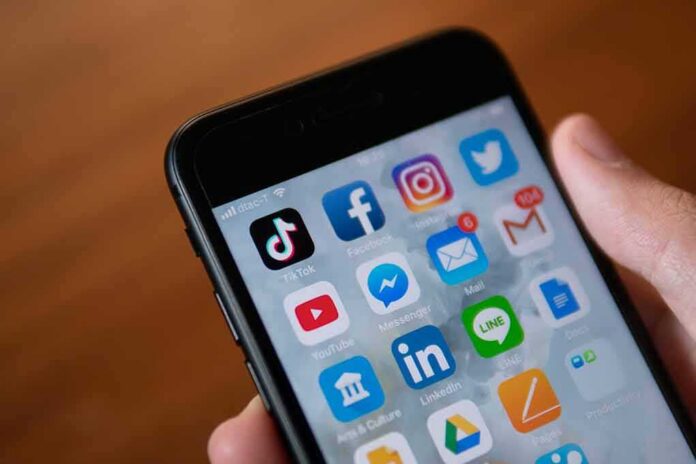
France just became the first country in Europe to legally lock kids under 15 out of social media, and it is doing it by making every user prove their age.
Story Snapshot
- France passed a nationwide ban on social media access for children under 15, framed as a child-protection law.
- Every user in France will face age checks, raising major questions about privacy, enforcement, and government power online.
- Supporters point to bullying, mental health problems, and teen suicide linked to platforms like TikTok as reasons for the ban.
- Critics warn the law may be easy to dodge, hard to enforce, and a step toward wider online surveillance.
What France’s New Social Media Ban Actually Does
French lawmakers in both the National Assembly and the Senate approved a law that bans social media access for anyone under 15, making France the first country in the European Union to impose a blanket age limit on these platforms. The text says access to online social network services provided by platforms is prohibited for minors under 15, and it pairs that rule with a ban on smartphones in high schools, expanding earlier phone bans in primary and middle schools. President Emmanuel Macron backed the bill and pushed for it to take effect with the new school year in September, underscoring how strongly the political class supports this move. Under the plan, children under 15 will not be allowed to open new accounts, and existing accounts must be deleted within a few months after the law starts.
The law is not just aimed at kids; it reshapes how everyone in France connects to social media. To make the ban work, platforms must use age verification tools approved by the national privacy regulator, and users who browse without logging in may have to prove they are over 15 every time they connect. Major platforms in the government’s sights include TikTok, Instagram, Snapchat, Facebook, and likely some features inside apps like WhatsApp and Roblox. Lawmakers say encyclopedias and clear educational sites will remain open, but the rule still covers most interactive spaces where people share and comment. This turns what looks like a child-safety rule into a nationwide identity checkpoint for big parts of the internet, which is exactly what worries many civil-liberties advocates.
Why Lawmakers Say France Must Act Now
Supporters of the ban argue that children’s mental health has been damaged by constant online bullying, harmful content, and endless screen time. French media and officials have pointed to the case of a 15-year-old girl named Marie, whose mother says her suicide followed heavy TikTok use and exposure to content that encouraged self-harm and offered instructions. The new law builds on a parliamentary report that urged a full ban for under-15s and even a “digital curfew” at night for older teens. Macron has said France is “leading the way in Europe” to protect children and teenagers, calling the measure a “major step forward” and linking it to wider global worries over the effects of social media on young minds. For many parents, already angry at tech giants and skeptical of political elites, this sounds like long-awaited action rather than more talk.
France is not moving alone, which adds to the sense that something bigger is changing in how governments treat the internet. Australia already restricts social media access for those under 16, and the French bill’s author has said the plan will resemble the Australian framework. Across Europe, other nations are weighing rules to limit youth access or to force platforms to redesign their services for safety. At the same time, the European Union’s Digital Services Act is pushing companies to remove harmful content and be more transparent about their algorithms, offering another path that seeks to fix platforms instead of blocking young users. This wider pattern matters to American readers who feel both parties in Washington talk tough about Big Tech but rarely deliver clear, simple protections.
The Price: Age Checks, Privacy Fears, and Real-World Enforcement
Critics of the French ban do not only complain about “censorship.” They point to the nuts and bolts of how this law works. Because everyone must verify their age to access social media, the rule chips away at online anonymity and piles new data demands onto already powerful tech companies. Le Monde reports that even watching a YouTube video on a shared computer without logging in could trigger an age check, which could mean frequent friction for adults and kids alike. Experts interviewed by Deutsche Welle say the ban may be easy to bypass using virtual private networks and other tools, raising doubts that a determined teen will truly be kept out. France 24 notes that the text sets duties for platforms but leaves questions about which services are covered and how regulators will enforce compliance, feeding a sense this may be more symbolic than solid.
France Approves Landmark Social Media Ban for Children Under 15
FOR MORE DETAILS: https://t.co/C2L7KC12Oy#France #Approves #Landmark #SocialMedia #Ban #Children #Under15#Paris #TTI pic.twitter.com/6cUcHSCa67
— The Truth International (@ttimagazine) July 22, 2026
The law also lacks clear penalties for children or parents, putting most of the burden on companies and the French state to police access. Sonia Livingstone, a scholar of digital childhood, has argued that bans like this can distract from the harder work of making platforms safer for everyone, work that the Digital Services Act already started at the European level. Teens themselves have voiced anger and mockery, telling Le Monde that “we’re going back to the stone age” and predicting that many will simply find ways around the system. For citizens on both the left and right who already think elites use “safety” language to grow control over daily life, the combination of vague enforcement, sweeping age checks, and open talk of expanding phone bans in schools looks less like careful child protection and more like another step toward a managed, monitored internet where ordinary people have little say.
Sources:
reason.com, bbc.com, theguardian.com, lemonde.fr, cnbc.com, bloomberg.com, youtube.com, franceinenglish.com, jurist.org, usnews.com