
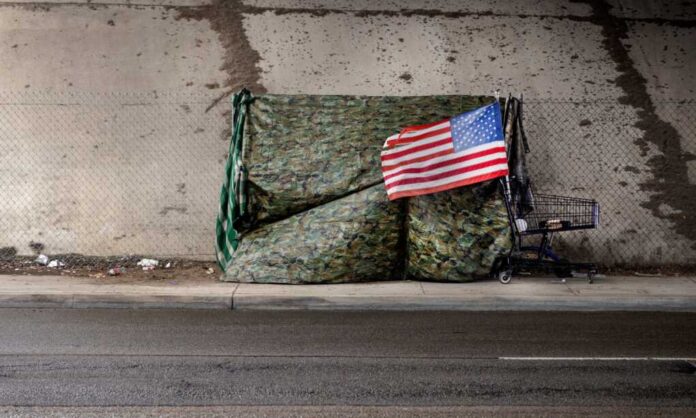
Trump’s federal takeover of Washington D.C. now threatens homeless Americans with jail time for refusing government-mandated shelter, marking an unprecedented expansion of federal control over individual liberty and local governance.
Story Snapshot
- Federal emergency declaration federalized D.C. police and deployed National Guard troops
- Homeless individuals face fines and imprisonment for refusing shelter or treatment
- 800 National Guard troops authorized despite crime rates at historic lows
- 23 arrests made immediately following federal intervention
Federal Emergency Powers Override Local Authority
President Trump signed an executive order on August 11, 2025, declaring a crime emergency in Washington D.C., federalizing the Metropolitan Police Department under the District of Columbia Self-Government and Governmental Reorganization Act. The order cited a surge in violent crime threatening public safety and federal operations. This unprecedented move places local law enforcement under direct federal control, effectively eliminating D.C.’s limited autonomy over policing decisions and setting a dangerous precedent for federal overreach in local governance.
Massive Federal Deployment Despite Low Crime Statistics
Federal agencies including the FBI, ATF, DEA, Park Police, U.S. Marshals, and Secret Service began active patrols throughout D.C. following the emergency declaration. The administration authorized 800 National Guard troops, with 100-200 deployed at any time for administrative, logistical, and physical support. This military-style response contradicts independent data showing D.C. crime rates at historic lows, raising serious questions about the proportionality and necessity of such extensive federal intervention in civilian law enforcement operations.
Homeless Americans Face Criminalization Under Federal Mandate
The White House announced that homeless individuals in D.C. will face fines and potential jail time if they refuse government-provided shelter or treatment services. This policy represents a fundamental shift from voluntary assistance programs to coercive government control over citizens experiencing homelessness. The criminalization of poverty and housing instability violates basic principles of individual liberty and due process, forcing Americans into government facilities under threat of imprisonment for the “crime” of being unable to afford housing.
Federal officials claim the takeover enables federal employees to work in peace, but the rapid deployment and harsh enforcement measures suggest broader political motivations. The administration’s approach prioritizes visible demonstrations of federal power over constitutional protections and individual rights. This heavy-handed response threatens to establish a troubling norm where federal authorities can override local governance whenever they deem local policies insufficient, effectively nullifying the principle of federalism that protects communities from centralized government control.
Constitutional Concerns Over Federal Overreach
The emergency declaration exploits D.C.’s unique federal status to expand executive power in ways that would be unconstitutional in states with full sovereignty. Legal scholars highlight the constitutional complexities of federalizing local police under the Home Rule Act, noting the dangerous precedent for future federal interventions. This action undermines the balance of power between federal and local authorities, potentially paving the way for similar federal takeovers in other jurisdictions. The forced compliance requirement for D.C.’s mayor demonstrates how federal emergency powers can effectively eliminate local democratic governance and accountability to residents.
Homeless People in DC to Face Fines, Jail if They Refuse Shelter, Treatment: White Househttps://t.co/kNw1uvqWGe
— cindy horswell (@chorswell) August 12, 2025
While supporters argue the intervention protects federal interests and public safety, the evidence suggests a politically motivated expansion of federal authority that threatens constitutional principles. The discrepancy between official claims of a crime surge and actual crime statistics raises serious concerns about the administration’s motives and methods. This federal overreach sets a concerning precedent that could be used to justify similar interventions across the country, fundamentally altering the relationship between federal power and local self-governance in ways that should alarm all Americans who value constitutional limits on government authority.
Sources:
President Donald J. Trump Declares a Crime Emergency to Restore Safety in the District of Columbia
Trump federalizes D.C. police, says takeover will enable federal employees to work in peace
Declaring a Crime Emergency in the District of Columbia