
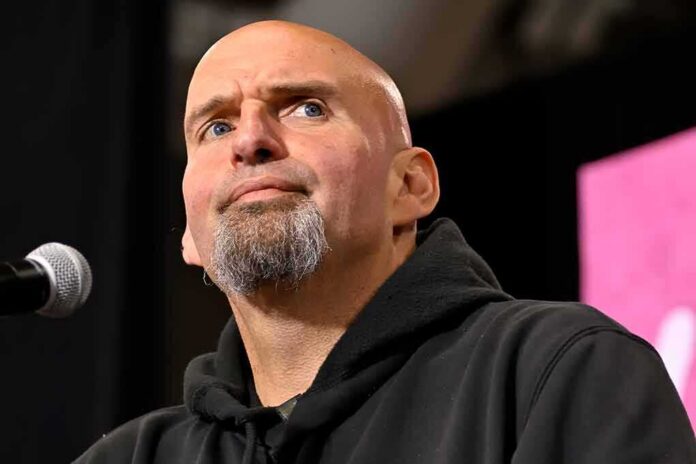
A sitting House Democrat just told Republicans they “can have” Senator John Fetterman, sharpening a rare public feud inside Pennsylvania’s Democratic ranks.
Story Highlights
- Rep. Chris Deluzio blasted Sen. John Fetterman’s attendance and visibility, saying Republicans “can have him.”
- Deluzio said Fetterman failed basic duties and helped Republicans with media and fundraising moves.
- Fetterman has voted with Democrats most of the time and says he is not switching parties.
- Party-switch fears grew after Fetterman engaged with Republicans, including a GOP convention video.
What Deluzio Said and Why It Landed Hard
Rep. Chris Deluzio of Pennsylvania said on cable news that Republicans could recruit “the guy with one of the worst attendance records in the U.S. Senate,” adding that Fetterman “didn’t do a public event for nearly a year in Pennsylvania.” He capped it with, “they can have him.” Deluzio still said Fetterman should remain a Democrat through the rest of his term, softening the edge of a full break, but not the sting of the critique or the headline.
Deluzio later broadened the charge. He said Fetterman failed “the basic part of the job—the duty,” pointing to policy splits and public outreach choices. He argued Fetterman’s media hits and fundraising with Republicans helped the other side and hurt Democrats trying to win back Congress. He called it “a failure of leadership” and a “betrayal of the party” and the voters who backed him. These are sharp words, and they came with an ask for party discipline.
Fetterman’s Record, His Words, and the Numbers
Fetterman has pushed back on talk of a switch. He says he is a lifelong Democrat who votes with his party a large share of the time and will keep caucusing with Democrats. Coverage of his record shows his party-line voting rate dropped after President Trump took office again, but still remained a clear majority of his votes with Democrats. One public tracker pegs his alignment with the Democratic caucus near 88 percent across more than a thousand votes.
The Philadelphia Inquirer reported that Fetterman’s party-line rate fell from near 100 percent during the end of the Biden years to below 80 percent during President Trump’s first two years. That shift fed doubts among Democrats, but it did not show a formal break. Fetterman says he remains with his party on core issues like abortion rights, protections for lesbian, gay, bisexual, transgender, and queer Americans, and labor unions. Those claims match his stated identity as a “common-sense Democrat.”
The GOP Convention Moment and Why It Matters
Concerns spiked when Fetterman addressed a Republican midterm convention by video. Reports say he praised Republican Senator Dave McCormick and vowed to back President Trump on steel industry issues. Afterward, he said he would not switch parties and stressed he still votes with Democrats the vast majority of the time. The event fed a public impression of distance from Democrats even as he denied any plan to join Republicans.
Deluzio’s camp cites more than one clip or vote. They point to Fetterman’s breaks with Democrats on Iran-related measures and say his media choices lift Republican narratives. Fetterman’s team stresses the larger voting picture and his stated alliances on social rights and labor. Both sets of facts can be true: he can vote with Democrats most of the time and still take high-salience stands that anger party leaders and voters who prioritize those issues.
Why This Feud Hits a Nerve Beyond Pennsylvania
This story taps into a wider frustration that many Americans share: leaders look more focused on party games than on results. When a Democrat says “Republicans can have him” about a sitting Democratic senator, it signals a breakdown of trust inside the party. Voters on both the right and left already suspect that elites protect their own and dodge accountability. Public fights like this deepen that sense that the system serves itself first.
Party switches in the Senate are rare but not unheard of. History shows only a few dozen over many decades. That is why solid proof matters before anyone claims a flip is coming. Today, the facts show rhetoric, policy splits, and public moments that upset Democrats, but not a formal change of party. The durable test will be votes on concrete bills next year, not soundbites or a single convention video.
The Evidence We Have—and What Is Still Missing
Deluzio alleges poor attendance and a long pause on public events in Pennsylvania. The reports quote him but do not include verified Senate attendance rankings, missed vote totals for a fixed period, or a public event calendar that proves “nearly a year” without events. Without those records, the strongest claims remain assertions, not settled fact. Readers should watch for official attendance data and schedules to confirm or correct these points.
On the other side, Fetterman’s message is clear: he is not switching parties and still stands with Democrats on key social and labor issues. Voting trackers and news reviews back up that he sides with Democrats most of the time, even if the rate fell under the current administration. The bottom line: this is a live fight over duty, message, and identity—not yet a party switch. The work and the votes ahead will tell the real story.
Sources:
mediaite.com, nextnewsnetwork.com, thebulwark.com, thehill.com, inquirer.com, fettermanvoting.com, newsweek.com, congressvotetracker.org