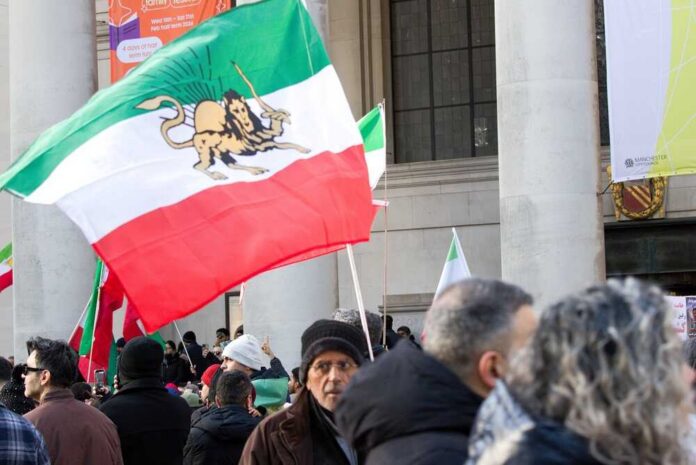
Claims of Iranians celebrating in the streets after U.S.-Israel strikes on Tehran have sparked widespread attention, but a thorough investigation reveals zero credible evidence of such jubilation—exposing yet another narrative pushed without factual backing.
Story Snapshot
- No verified reports, videos, or eyewitness accounts confirm Iranians dancing in celebration following the U.S.-Israel strikes on February 28, 2026.
- The narrative stems from optimistic regime change rhetoric by Trump, Netanyahu, and opposition leader Reza Pahlavi, urging Iranian uprising rather than documenting actual public reactions.
- Iranian airspace remains closed amid ongoing military retaliation, with 201+ dead and 700+ injured, including 53 students killed in a school strike.
- Experts warn that while economic hardship and regime brutality fuel dissent, street protests alone won’t topple the theocracy without military defections—a scenario far from certain.
The Missing Evidence of Street Celebrations
Despite viral claims circulating on social media, no credible news outlet or independent observer has documented Iranians dancing in the streets after the February 28, 2026, U.S.-Israel strikes targeting Supreme Leader Ayatollah Ali Khamenei’s offices and IRGC facilities. Multiple searches across major news sources, including FOX29, Jerusalem Post, CBS News, and the Atlantic Council, yield no visual evidence, eyewitness testimony, or journalistic confirmation of widespread public rejoicing. Instead, reports focus on massive retaliation strikes, civilian casualties exceeding 201 dead and 700 injured, and closed Iranian airspace—conditions hardly conducive to street parties.
The narrative appears rooted in hopeful speculation rather than observable reality. President Trump, Israeli Prime Minister Benjamin Netanyahu, and exiled opposition figure Reza Pahlavi have all urged Iranian civilians and military to seize the moment and overthrow the regime, framing the strikes as liberation assistance. Pahlavi called the attacks “humanitarian aid” and proclaimed “the time to return to the streets is near,” while Trump offered immunity to defecting Iranian forces. These calls for action reflect a strategic message campaign aimed at encouraging regime collapse, not documentation of actual celebrations unfolding in Tehran or other Iranian cities.
Regime Change Rhetoric Versus Ground Reality
The optimistic framing by Western leaders contrasts sharply with Iran’s brutal track record of crushing dissent. Trump referenced 32,000 Iranians killed by the regime during recent protest crackdowns, underscoring the theocracy’s willingness to use lethal force against its own people. Historical context matters: while thousands protested over economic collapse, water shortages, and repression in recent years, none of those movements succeeded without security forces defecting or standing aside—a dynamic seen during the 1979 Islamic Revolution but absent in modern uprisings. The regime’s IRGC and Basij militias remain the primary enforcers of Ayatollah rule, and without their fracture, street protests face overwhelming violent suppression.
Israeli officials reported Khamenei killed during the strikes, citing anonymous sources, but Iranian Foreign Minister Abbas Araghchi denied the claims and emphasized regime resilience, pointing to a school strike in Minab that killed 53 students as evidence of Western aggression harming civilians. Independent confirmation of Khamenei’s death remains unavailable, highlighting the fog of war and conflicting narratives. Iran’s immediate missile and drone retaliation toward Israel and U.S. bases further signals the regime’s operational capacity remains intact, complicating narratives of imminent collapse or public celebration.
Expert Skepticism on Uprising Prospects
Analysts at the Atlantic Council caution against assuming a linear path from military strikes to regime overthrow or mass public jubilation. They note that while the attacks may embolden protesters who view strikes on oppressors favorably, progression to a successful uprising is “far from certain.” Iran’s unique combination of economic pain, environmental crises, and mass casualties from regime violence creates conditions for unrest, but history shows protests alone fail without military defections. The targeted killings of IRGC leaders, including Defense Minister Amir Nasirzadeh and Commander Mohammed Pakpour, could weaken the regime’s coercive apparatus, but whether rank-and-file forces will abandon their posts remains speculative.
Trump’s declaration of “major combat operations” and Netanyahu’s statement that strikes aim to “enable the Iranian people to overthrow the regime” reflect strategic intentions rather than achieved outcomes. For American conservatives, this situation underscores the importance of distinguishing between desired policy goals and verifiable facts on the ground. Supporting Iranian freedom from theocratic tyranny aligns with principles of individual liberty and opposition to oppressive regimes, but claiming victory prematurely or spreading unverified celebration reports risks credibility. The reality remains that Iranians face ongoing military conflict, civilian casualties, and an entrenched security state—not conditions for dancing in the streets, but a critical juncture where external support must be grounded in truth, not wishful narratives.
Sources:
Iran’s supreme leader Ayatollah Ali Khamenei killed in strike: report – FOX29
Iranian officials, Ali Khamenei killed in Israeli strikes – Jerusalem Post
Israel, US attack Iran: Trump says “major combat operations” – CBS News