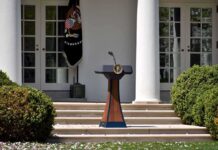

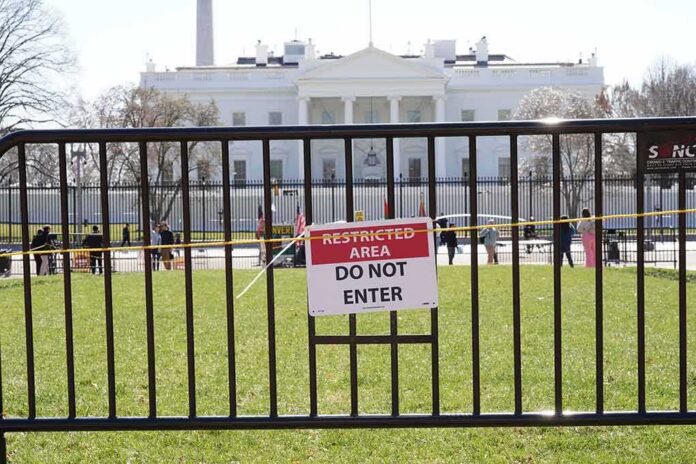
A car jumped the curb and hit a fixture in Lafayette Square, forcing a swift White House lockdown while officers wrestled the driver into custody.
Story Snapshot
- Secret Service locked down the White House after a car struck an object in Lafayette Square.
- Officers detained the driver after a visible struggle; the area was later cleared.
- Agents searched the vehicle and lifted the lockdown after giving the all-clear.
- Officials have not released the driver’s identity, motive, or charges based on current reports.
What Happened Across From The White House
On Monday morning in Washington, a vehicle left the roadway and hit a sign or barrier at the north end of Lafayette Square, across from the White House. The United States Secret Service ordered a temporary lockdown as officers rushed to secure the area and control the driver. Reporters on scene described agents converging quickly. Video and photos showed a silver sedan stopped on the brick walkways of the park. The crash did not breach the White House fence.
After the car came to a stop, the driver got out and confronted security. Footage and witness accounts described a struggle with United States Secret Service personnel and National Guard members. Officers took the person into custody at the scene. The confrontation ended by late morning, and officials said the situation was contained. Nearby streets and pedestrian routes were restricted as standard protective steps remained in place during the response.
Lockdown, Search, And All-Clear
Agents treated the car as a possible threat until they could search it. The United States Secret Service inspected the vehicle near Lafayette Square and then issued an all-clear. The White House lockdown was lifted after that search, and movement around the area began to return to normal. The sequence followed common protective playbooks: contain, sweep for hazards, and restore access. Officials have not shared a detailed timeline, but coverage places the custody and clearance within the late morning.
Authorities have not said why the driver left the road or whether the impact was intentional. Early reports varied on what the car hit, using terms like sign, signpost, or security barrier. That kind of variation is common in fast-moving scenes with many witnesses and limited official detail. The absence of a named suspect, listed charges, or a posted incident number limits what can be confirmed today. Those records often follow after initial safety steps and interviews are complete.
How This Fits A Wider Security Pattern
Recent history shows that any vehicle strike near the presidential perimeter triggers fast lockdowns. In 2018, a separate vehicle hit a barrier and the White House was locked down for about an hour. The United States Secret Service said the barrier held and officers were not hurt. In 2023, a box truck struck barriers near Lafayette Square, and the driver faced several charges. That case underscored why agents treat each crash as a potential threat until cleared.
Security around the White House has hardened for decades. Fencing is taller, streets are closed, and agents screen more space than in past eras. Those steps grew after major attacks and repeated perimeter tests. Monday’s response followed that built-in caution: move fast, lock down, and then reopen after checks. That can feel heavy to the public, but it aims to protect the president, staff, and visitors when seconds matter.
Shared Concerns About Safety And Transparency
People across the political spectrum worry about safety, rising tensions, and whether public officials level with them. Monday’s quick lockdown shows security can work on short notice. It also shows why clear details matter. When agencies do not release names, charges, or incident logs early, rumors fill the gap. That vacuum fuels talk of blame, bias, or cover-ups from both left and right. A basic facts sheet would calm much of that anger.
WASHINGTON, D.C. – The White House was placed on lockdown following a vehicle crash nearby, prompting an immediate security response from the United States Secret Service and raising concerns about safety around one of the nation's most heavily protected government buildings.…
— Twincitieslocalnews (@twincitieslocal) November 9, 2026
Officials can help by releasing the timeline, the findings from the car search, and any injuries if they occurred. They should also state whether the driver faces charges for assault or resisting. Those points are standard and do not reveal secret methods. Publishing them builds trust while keeping the protective mission intact. For now, the firm facts are clear: a car hit a fixture in Lafayette Square, the driver was detained after a struggle, and the White House reopened after an all-clear.
Sources:
redstate.com, nbcdfw.com, abcnews4.com, townhall.com, fr.jpost.com