

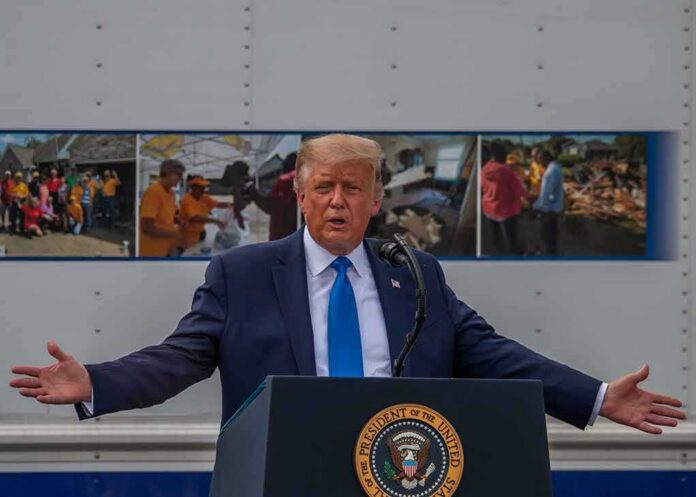
President Trump said he will slap a “tremendous tax” on American companies that build artificial intelligence data centers overseas, but he admitted his own staff had not been briefed on the plan before he announced it.
Quick Take
- Trump said at a November 20 press briefing he would tax U.S. firms that build AI data centers in other countries.
- He tied the move to fears that China could gain control of advanced computing power built abroad.
- Google’s $13 billion Finland data center project was singled out as an example Trump wants stopped.
- No tax rate, legal basis, or timeline has been released, and Trump said his administration hadn’t been told yet.
Trump Announces Plan to Tax Overseas Data Centers
Trump told reporters at the White House on November 20, 2026, that American companies “can” build data centers outside the country, but warned, “we’re going to put a tremendous tax on them” if they do. He first said, “We’re not going to allow our companies to build data centers outside of our country,” before softening the statement into a tax threat instead of an outright ban.
Trump framed the issue as a matter of national security, not just economics. “We’re not allowing data centers to go into other countries, because China will take all of them,” he said, calling for “tremendous penalties” against companies that build facilities abroad. He did not offer evidence showing how China could seize or control data centers owned by U.S. companies in other countries.
Google’s Finland Project Becomes a Flashpoint
Trump pointed to a specific project as the kind of investment he wants kept inside the United States. Google announced plans in September 2026 to spend 13 billion euros building three data centers in Finland. Trump said his administration was “not allowing that to happen,” even though Finland is a NATO ally, not China. Reporting has not detailed who would own or operate the Finnish facilities, or whether construction has already begun.
Trump also pitched a carrot alongside the stick, urging U.S. communities to welcome data centers rather than fight them. He said local governments should make developers “pay you” and “pay your community” for hosting the massive facilities, framing the buildings as a source of local revenue instead of a burden. The pitch is aimed at keeping both the investment dollars and the construction jobs on American soil.
No Legal Plan or Tax Rate Yet Exists
Despite the forceful language, Trump did not name a tax rate, an effective date, or which companies would be covered. He did not cite any law that would let him impose such a charge on a private company’s overseas construction. Legal authority for taxing American firms on infrastructure they build in foreign countries has not been identified in any statute, regulation, or proposed bill so far.
Trump also acknowledged his own team had not been looped in before he made the announcement, meaning there’s no interagency review, drafted legislation, or revenue estimate behind the idea yet. That gap leaves companies like Google, Microsoft, Amazon, Meta, and Oracle without clear guidance on whether their existing overseas facilities, future expansions, or planned projects would be affected.
Where This Fits in the Broader AI Security Fight
The announcement builds on a wider U.S. effort to control not just where advanced computer chips go, but where the massive data centers that run them are located. Export rules already try to stop advanced chips from reaching China directly. Government researchers have warned that Chinese companies can still tap that computing power remotely through data centers in countries like Malaysia or Singapore.
That loophole gives Trump’s security argument a real foundation, even though his own comments focused on Finland, a close U.S. ally, rather than a country with documented Chinese ownership ties. Data centers are also becoming a bigger piece of the U.S. power grid, with some estimates projecting they could use up to 12% of the nation’s electricity by 2028. That growing energy demand adds another layer to the fight over where these facilities get built, and who profits from them.
Industry groups have pushed back gently, noting that member companies are “investing hundreds of billions of dollars” to build digital infrastructure inside the United States already, and that the industry “wants to continue investing in America”. Whether Trump’s threat becomes an actual policy, or stays a warning aimed at shaping corporate decisions, remains to be seen as companies weigh billions in planned overseas projects against the risk of a future American tax bill.
Sources:
youtube.com, hk.ibtimes.com, us-brief.com, gizmodo.com, co.ibtimes.com, kivorent.news, news.bloomberglaw.com, x.com